Blanford’s foxInteresting facts and information
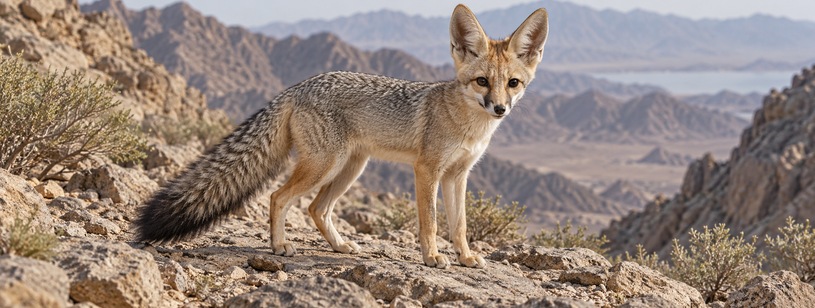
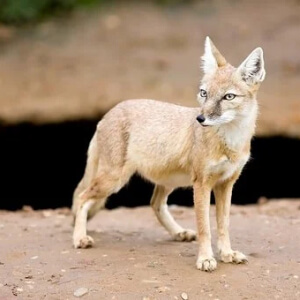
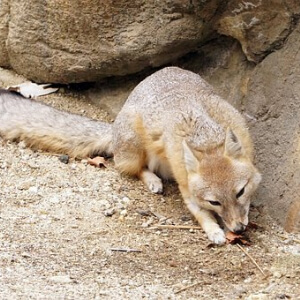
AI illustration of blanford's fox.
Blanford’s fox is a very small fox adapted to rocky terrain and arid slopes. It lives in parts of the Middle East and south-western Asia. It has large ears and a long, very bushy tail; insects and fruit make up an important part of its diet.
Its scientific name is Vulpes cana. Rocky terrain is one of its most important habitat features. It has its own adaptations, distinct from those of a dune-dwelling fennec or a red fox.
Quick facts
| Species | Vulpes cana |
| Class / order / family | Mammalia / Carnivora / Canidae |
| Distribution | The Middle East and south-western Asia |
| Habitat | Arid mountains, canyons and rocky slopes |
| Size | Approximately 0.8–1.3 kg; head and body around 39–47 cm |
| Diet | Omnivorous; insects and fruit are important |
| Reproduction | Monogamous pairs; gestation about 50–60 days, usually 1–3 kits |
| Young | Born alive and raised in a shelter |
| Conservation | Least Concern (LC), global status |
- Primary category:Mammals
- Explore this animal's categories:
Interesting facts
- It can climb steep slopes and rocks. Leaping between footholds allows it to use difficult terrain.
- Fruit can be very important in its diet. Studies have found both invertebrate remains and plant material in many samples.
- It weighs around one kilogram. It is much lighter than a typical adult red fox.
- Desert landscapes can include canyons and rocks. Desert animals do not all live on sand.
- It may forage alone while belonging to a pair. A pair bond does not require hunting together on every outing.
Records and remarkable features
Blanford’s fox is among the very small foxes. For the animals described, the Canid Specialist Group gives approximately 0.8–1.3 kg and a head-and-body length of around 39–47 cm, excluding the tail.
Its long, bushy tail is almost as long as its body and makes it look larger than it is.
It is a remarkable climber. Curved, cat-like claws and hairless foot pads give it a good grip, and it can scale steep cliffs and leap onto high ledges.
Characteristics
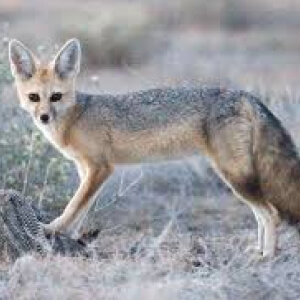
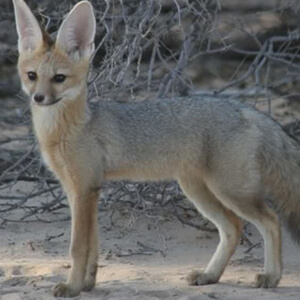
The coat mixes grey, brown and reddish shades, with a paler underside. It has large ears, a fine muzzle and a long-haired tail, usually with a dark tip.
| Feature | Role in the animal’s life |
| Small size | Moving among boulders and through narrow spaces |
| Large ears | Hearing and exchanging heat with the surroundings |
| Long tail | Helps balance during movement |
| Grey-brown coat | Blends with shadows and colours of rocky ground |
Large ears alone do not identify a fennec. For Blanford’s fox, the long tail, body proportions and stony habitat together provide better clues.
Its teeth and digestive system allow it to use different foods. Its actual diet is omnivorous, with a substantial component of fruit and invertebrates.
Habits and behaviour
It is mainly nocturnal. By day it can retreat to sheltered spots among rocks; after sunset it searches for food along routes around its shelter.
Radio-tracking studies have helped researchers follow these difficult-to-see animals. Recorded positions show movements, while direct observation helps explain how they search for insects and fruit.
Pairs may share an area while individuals feed separately. The bond between partners is distinct from a pack pursuing large prey together.
For such a small fox, hiding places and familiarity with the terrain are valuable. Boulders and crevices offer protection, while activity at night reduces exposure to intense heat.
Habitat and geographic distribution
It lives in arid, rocky parts of the Middle East and south-western Asia. Populations are known from the Arabian Peninsula, regions farther east towards Iran, Afghanistan and Pakistan, and parts of the Levant.
It uses arid mountains, canyons, steep slopes and boulder-strewn ground. It lives from near sea level up to about 2,000 m.
- Rocks and crevices provide shelter.
- Shrubs and fruiting plants provide some food.
- Stony ground supports invertebrates it can catch.
- Low disturbance and connected habitat allow movement between areas it uses.
Distribution is known from scattered records, and new sightings can fill gaps on the map.
Diet and feeding
Insects and fruit play a major role in Blanford’s fox diet. Research in two arid areas of Israel examined samples from known individuals and found differences between sites.
Invertebrate foods include beetles, grasshoppers and ants. Fruit from local shrubs supplements the diet. It rarely eats small vertebrates.
It searches near the ground and in vegetation while moving among rocks. A rich resource, such as a shrub with ripe fruit, can attract it without a prey chase.
It rarely needs to drink, getting most of the water it needs from its food.
Reproduction and life cycle
Blanford’s fox forms pairs and raises its young in a shelter. The shelter and nearby food resources are important for pup growth.
Initially, pups depend on milk and adult protection. Later they explore their surroundings and start eating solid food. Moving over rocky ground requires coordination that develops as they grow.
| Stage | What matters |
| Birth and early weeks | A sheltered site and nursing |
| First outings | Safe access around the resting site |
| Growth | Food and practising movements |
| Independence | Access to an area with resources |
In Israel, mating takes place in winter, from about December to February. After a gestation of about 50–60 days, the female gives birth to a litter of usually 1–3 kits.
Name and history
The common name commemorates naturalist William Thomas Blanford. He described the species in 1877 as Vulpes cana; canus is Latin for "grey".
Field studies have changed our understanding of it. Its fox-like appearance might suggest a focus on hunting small mammals, but observations and food samples have highlighted the importance of fruit and invertebrates.
It illustrates the distinction between relatedness and lifestyle: it shares a genus with the red fox but uses its environment and food resources differently.
Conservation status and threats
The global status is Least Concern (LC), according to the Canid Specialist Group. Its range is wider than early records suggested, although some regions are better documented than others.
Local risks may include habitat change, capture and proximity to infrastructure or human activity. A small, nocturnal species can easily be missed in a rapid wildlife survey.
Camera monitoring and diet research help identify important sites. Retaining native vegetation matters too: for a fruit-eating fox, protecting rocks alone does not meet all habitat needs.
Discover other foxes
Read about Red fox or explore: Culpeo · Pale fox · Cape fox · Corsac fox · Tibetan sand fox · Swift fox · Kit fox · Bengal fox · Fennec fox · Arctic fox.
Frequently asked questions
- Where does Blanford’s fox live? In arid, rocky parts of the Middle East and south-western Asia. It uses mountains, canyons and stony slopes, rather than only sand dunes.
- What is its scientific name? Vulpes cana. It is a distinct species in Canidae, sharing a genus with the red fox but having its own habitat and feeding adaptations.
- How much does it weigh? The Canid Specialist Group reports approximately 0.8–1.3 kg for the animals described. It is very small, although its fur and long tail can make it look bulkier.
- What does it eat? Insects and fruit are important. It also eats other invertebrates and, rarely, small vertebrates.
- Can it climb rocks? Yes. Agility on slopes and among boulders is an important feature. The long tail helps balance, and rocky refuges form part of its habitat.
- Is it the same as the fennec? No. The fennec is Vulpes zerda, a different species. Large ears alone are insufficient for identification; the tail, proportions and association with rocky terrain also matter.
- Does it live in a pack? It does not form wolf-like hunting packs. It may live as a pair and share space with its partner while searching individually for insects and fruit.
- Is it threatened with extinction? Its global status is Least Concern. Some regions remain insufficiently studied, and conserving habitat and native vegetation remains important for food and shelter.