Domestic sheepInteresting facts and information
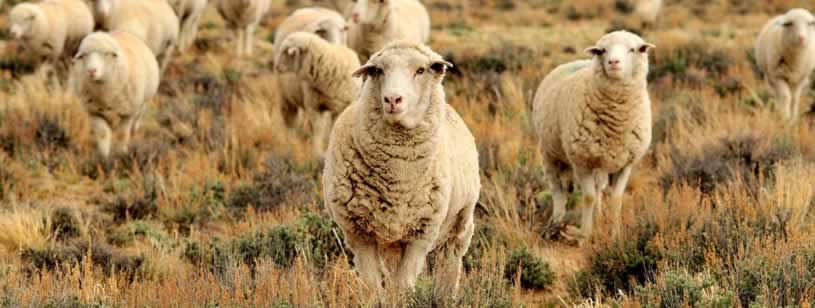
Domestic sheep (Ovis aries) are plant-eating mammals kept for products including wool, milk and meat. Breeds differ in size, coat and horns. Their feeding and care needs depend on age, health and living conditions.
Thanks to their thick fleece and adaptability, sheep can live in very different climates, from dry regions to alpine pastures. They are social animals that live in flocks and develop a close relationship with the shepherds who care for them.
Quick facts
| Common name | Domestic sheep |
| Scientific name | Ovis aries |
| Typical lifespan | Usually 10-12 years; some live to about 20 |
| Maximum speed | About 30-40 km/h over short distances |
| Height | 55-100 cm at the withers |
| Length | 120-180 cm |
| Weight | 45-160 kg, depending on breed and sex |
| Diet type | Herbivore (grass, leaves, hay) |
| Main predators | Wolves, foxes, bears, jackals, feral dogs |
| Conservation status | Domestic animal; conservation of domestic breeds is separate from the assessment of wild relatives |
| Geographical distribution | Worldwide, on every continent except Antarctica |
| Social behaviour | Lives in flocks with a social order |
| Special adaptations | Digestive system specialised for fermenting fibre, insulating wool, very wide field of view |
- Primary category:Mammals
- Explore this animal's categories:
Interesting facts
- Sheep have an excellent memory - They can remember the faces of about 50 other sheep, and of some people, for up to two years.
- A panoramic view - Their eyes are on the sides of the head, giving them a field of view of almost 300-360°, which helps them spot predators quickly.
- They can read human faces - Sheep can tell the difference between smiling and angry human faces and prefer the smiling ones.
- The first mammal cloned from an adult cell was a sheep - Dolly (born in 1996) marked a historic moment in biology and genetics.
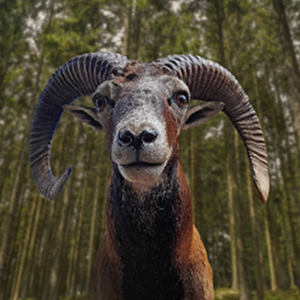
- Some sheep have huge horns - Rams of some breeds, such as the Hungarian Racka, have long spiral horns, and Jacob sheep can have four or even six horns.
- Their wool keeps growing - Most modern breeds must be shorn every year. Shrek, a Merino in New Zealand, hid from shearers for six years and produced about 27 kg of wool at his first shearing.
- Sheep are very vocal - They communicate by bleating and can recognise the voices of other members of their flock.
Records and remarkable features
- Domestic sheep (Ovis aries) are plant-eating mammals kept for products including wool, milk and meat. Breeds differ in size, coat and horns. Their feeding and care needs depend on age, health and living conditions.
Characteristics
The domestic sheep (Ovis aries) is a ruminant herbivore adapted to grazing in many environments. Over the centuries, selective breeding has produced more than 1,000 breeds, which differ in size, type of wool and use.
Appearance
- Variable size - Sheep weigh about 45-160 kg, depending on breed and sex. Males (rams) are usually larger and more muscular than females (ewes).
- Different coats - From fine, soft wool (e.g. Merino) to coarse, thick fleece (e.g. Karakul).
- Strong legs - Split hooves help them move over rough ground and steep mountain pastures.
- Eyes on the sides of the head - Give them a very wide field of view, so they can spot predators quickly.
- Varied horns - Some breeds, such as the Jacob, have several horns, while others have none.
Special adaptations
- An efficient digestive system - Sheep have a four-chambered stomach and digest grass fibre with the help of microbes.
- Cold resistance - Wool is an excellent insulator that protects them from low temperatures.
- Recognising faces and voices - Sheep can recognise the faces and voices of other sheep and of people.
- Flocking - Staying together in a group is their main protection against predators.
Habits and behaviour
Sheep are social animals with a strong instinct to graze and stay together in flocks. Their wild ancestors lived in groups with a clear hierarchy, and domestic sheep have kept much of this behaviour.
Social behaviour
- Flock living - Sheep prefer to stay in large groups, which reduces the risk of being attacked.
- A social order - Some sheep become dominant and influence where the flock moves.
- Communication - Sheep bleat to communicate with each other, and mothers and lambs recognise each other's voices.
Territory and defence
- Not territorial - Sheep do not defend a territory, but they have favourite grazing places.
- Running from danger - Their main defence is to bunch together and flee as a group.
- Rams fight for dominance - In the breeding season, rams butt heads to decide which is strongest.
Living with people
- Domesticated about 10,000 years ago - Sheep were among the first animals domesticated, providing food and wool.
- They recognise their shepherds - Sheep can tell people apart and respond to the voice of a familiar shepherd.
- They can be trained - Although they are not as easy to train as dogs, sheep can learn simple routines and grazing routes.
Habitat and geographic distribution
Domestic sheep live on every continent except Antarctica. Their adaptability means they can be raised in places with extreme temperatures, from deserts to mountains.
| Region | Notes | Approximate number of sheep |
|---|---|---|
| Europe | Many traditional and modern breeds | Over 100 million |
| South America | Wool and meat breeds | Tens of millions |
| North America | Mainly meat breeds | A few million |
| Asia | The largest numbers; also home to wild sheep such as the mouflon and argali | Hundreds of millions |
| Australia and New Zealand | Major wool and meat producers | About 70 million (Australia), about 25 million (New Zealand) |
| Africa | Many hardy local breeds | Hundreds of millions |
Types of habitat
- Meadows and hills - Most sheep are raised in temperate areas with plenty of grass.
- Dry and semi-desert regions - Some breeds can survive in dry environments, eating tough plants and needing little water.
- Cold and mountainous areas - Breeds with dense wool are raised in cold areas, where their fleece protects them.
Human impact and problems
- Overgrazing - In some regions, too many sheep have caused soil damage and erosion.
- Climate change - Higher temperatures affect pasture quality and can increase parasitic diseases.
- Predators - Wolves, foxes and jackals attack flocks, so shepherds use guard dogs and electric fences.
Diet and feeding
Sheep are ruminant herbivores with a digestive system specialised for fermenting plant fibre. They eat mainly grass, leaves and hay, but they also eat other plants when they are available.
| Type of food | Examples |
|---|---|
| Grasses | Ryegrass, fescue, meadow grasses |
| Legumes and leaves | Clover, alfalfa, tree leaves |
| Hay and straw | Extra food in the cold season |
| Herbs and wild plants | Thyme, mint, dandelion |
| Mineral supplements | Salt and mineral licks (on farms) |
Feeding techniques
- Selective grazing - Sheep choose what they eat and prefer young, juicy plants.
- Chewing the cud - Their four-chambered stomach allows them to ferment and digest plant fibre efficiently.
- Grazing for many hours - Sheep spend about 7-8 hours a day grazing, mainly in the morning and late afternoon.
Coping with harsh conditions
- Eating dry plants - Sheep can survive in dry areas by eating drought-resistant plants.
- Water needs - Sheep usually need several litres of water a day, but they can manage with less in harsh environments.
Reproduction and life cycle
Most sheep breed seasonally: they mate in autumn and lambs are born in spring, when food is plentiful. Ewes look after their lambs closely, and lambs grow quickly in their first months.
| Feature | Details |
|---|---|
| Age at maturity | 5-12 months (depending on breed) |
| Breeding season | Usually autumn (September-November in the Northern Hemisphere) |
| Pregnancy | About 145-155 days (about 5 months) |
| Lambs per birth | 1-3 (depending on breed) |
| Nursing | About 2-3 months |
| Fully grown | 12-18 months |
| Lifespan | Usually 10-12 years; some sheep live to about 20 |
Breeding
- Mating - Rams are put with the flock in autumn, and ewes come into heat about every 17 days.
- Pregnancy - Pregnant ewes are given extra food to keep the lambs healthy.
- Birth and growth - Ewes recognise their lambs by smell and nurse them for about 8-12 weeks.
- Growing up - Lambs start nibbling grass at 3-4 weeks and are weaned at about 2-3 months.
Name and history
The domestic sheep (Ovis aries) was one of the first animals domesticated, about 10,000 years ago in the Middle East, where early farmers raised it for meat, milk and later wool.
Origin of the name
- The English word "sheep" comes from Old English scēap.
- The scientific name Ovis aries was given by Carl Linnaeus in 1758; ovis is the Latin word for sheep.
- The wild ancestor of the domestic sheep is the Asiatic mouflon (Ovis gmelini, often listed as Ovis orientalis).
Sheep in human history
- Mesopotamia - Sheep were an essential part of the economy of the Sumerians and Babylonians.
- Ancient Egypt - Sheep were raised for wool, meat and religious sacrifices.
- Across Europe and Asia - Farmers and nomadic peoples developed many breeds suited to different climates.
- The Industrial Revolution - The growth of the textile industry increased demand for wool and led to more intensive sheep farming.
Sheep in culture and symbolism
- A symbol of innocence and gentleness - In many cultures, the sheep is linked with purity and sacrifice.
- Religion and mythology - In Christianity, Jesus is called the "Good Shepherd", and believers are compared to sheep. In Greek mythology, the Golden Fleece was a symbol of power and kingship.
- Heraldry - Some European noble families had sheep in their coats of arms as a symbol of prosperity.
Cultural significance and mythology
Sheep have played a key role in the culture and mythology of many peoples as symbols of purity, prosperity and sacrifice. From religion to art and literature, they are deeply rooted in human history.
Sheep in mythology and religion
- The Golden Fleece - In Greek mythology, the Golden Fleece sought by Jason and the Argonauts came from a magical winged ram.
- Christianity - In the Bible, the lamb is linked with sacrifice and innocence, and Jesus is called the Lamb of God.
- Islam - Sacrificing a sheep or another animal is an important ritual during Eid al-Adha.
- Abrahamic traditions - Many key figures, such as Abraham, Moses and David, are described as shepherds.
Sheep in folklore and superstition
- The black sheep - In many cultures, a black sheep stands for someone who is different or rebellious.
- Counting sheep to fall asleep - A traditional way of trying to get to sleep by imagining sheep jumping over a fence.
- Sheep and the weather - A popular saying claims that when sheep huddle closely together, a storm is coming.
Modern symbolism
- A symbol of conformity - Calling people "sheep" or saying they "follow the herd" means they do what others do without thinking.
- Art - Sheep often appear in paintings of countryside life and in nativity scenes.
- A symbol of traditional farming - Today sheep are often seen as symbols of traditional and organic farming.
Conservation status and threats
The domestic sheep (Ovis aries) is not at risk of extinction, but some of its wild relatives are threatened by habitat loss and hunting.
| Status | Examples |
|---|---|
| Domestic animal, not threatened | Ovis aries (domestic sheep) |
| Near Threatened (NT) | Asiatic mouflon (Ovis gmelini) |
| Near Threatened (NT) | Argali (Ovis ammon) |
Main threats to wild sheep
- Habitat loss - Farming and development affect the areas where wild sheep live.
- Overhunting - Rams with large horns are targets for trophy hunters.
- Competition with livestock - Domestic animals compete with wild sheep for grazing and can spread diseases to them.
Conservation efforts
- Reserves and national parks - Mouflons and other wild sheep are protected in national parks in Europe and Asia.
- Reintroduction - European mouflons have been introduced or reintroduced to many areas.
- Rare breeds - Many traditional sheep breeds are protected to preserve their genetic diversity.
In popular culture
Sheep often appear in books, films and video games, usually as gentle and friendly animals, but sometimes as a symbol of conformity.
Literature and folk tales
- The Bible - The lamb is a classic image of purity and sacrifice.
- Animal Farm (George Orwell, 1945) - The sheep stand for blind conformity and the manipulation of the masses.
- "Miorița" - One of the best-known Romanian folk ballads, in which a little ewe warns her shepherd of a plot to kill him.
- A Wild Sheep Chase (Haruki Murakami, 1982) - A mysterious novel about a search for an unusual sheep.
Films and cartoons
- Shaun the Sheep (2007-present) - A British animated series about a clever sheep and his adventures.
- Babe (1995) - A film about a pig who learns to herd sheep.
- Wallace & Gromit: A Close Shave (1995) - A classic animated film in which sheep play an important role.
Video games
- Minecraft - Sheep are useful animals that provide wool and food.
- Sheep (2000) - A puzzle game in which players guide flocks of sheep to safety.
Wool as a product
- Fashion - Fine wool, such as Merino, is used for high-quality clothing.
- Logos - Sheep often appear in logos for wool and organic products.