Corydoras catfishCorydoras — habitat, diet and reproduction
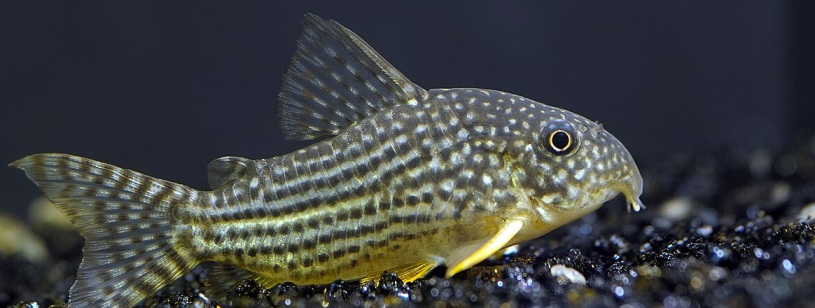
Sterba’s cory (Corydoras sterbai) in an aquarium. · Matthew Mannell / Public domain ().
Corydoras are small South American catfish with bony plates covering the body and short barbels at the mouth. In aquariums they move in groups along the bottom, sifting sand for food. They can dart to the surface to gulp air, which they use for breathing.
Quick facts
| Common name | Corydoras, cory catfish |
| Scientific name | Corydoras (genus) |
| Lifespan | About 5 years; some species live over 15 |
| Length | About 2.5–12 cm, by species |
| Diet | Omnivore: worms, larvae, small crustaceans, plant debris |
| Predators | Larger fish, waterbirds |
| Conservation status | Varies; many species not assessed |
| Distribution | South America, east of the Andes |
| Habitat | Slow streams and rivers with sandy or muddy beds |
| Family | Callichthyidae |
| Reproduction | Eggs stuck to plants and glass |
- Primary category:Fish
- Explore this animal's categories:
Interesting facts
- Corydoras is the catfish genus with the most species, over 160.
- They can gulp air at the surface and absorb it through the gut.
- When spawning, male and female form a “T”, with the female’s head near the male’s belly.
- Corydoras can “wink”, rolling their eyes downwards to clean them.
Characteristics
Corydoras have a short, stocky body covered with two rows of bony plates on each side, which protect them like armour instead of scales.
Two or three pairs of barbels at the mouth sense food in sand. Dorsal and pectoral fins have stiff spines that can release an irritating substance. Colours vary: spotted, striped, golden, albino or black-and-white like the “panda” species.
Behaviour
Corydoras are peaceful, social fish living in large groups in the wild; in aquariums they need groups of at least six.
They are active by day and evening, resting on the bottom or broad leaves and rising occasionally for air. When threatened, they raise their spines to be hard to swallow.
Habitat and distribution
The genus lives in South America east of the Andes, from Colombia and Venezuela to Argentina, including Amazonia.
They favour shallow water with gentle current and soft sandy or muddy bottoms where they can forage.
Diet and feeding
Corydoras eat small worms, insect larvae, small crustaceans and plant debris found on the bottom.
In aquariums they should not live only on other fish’s leftovers; they need sinking tablets and frozen food such as bloodworms. Fine sand protects their barbels, which sharp gravel can injure.
Reproduction and life cycle
When spawning, male and female form a “T”. The female holds a few eggs between her pelvic fins, then sticks them to plants, stones or the aquarium glass.
This is repeated many times, up to a few hundred eggs. Parents give no care, and larvae hatch after a few days.
Name and history
The name Corydoras comes from Greek: “kory” means helmet and “doras” means skin, after the armour-like plates.
With their barbels, corydoras are distant relatives of the large wels catfish of European waters, but far smaller.
Conservation and threats
Conservation status varies: many species have not yet been assessed, and some live in only a few streams, making them vulnerable to pollution, mining and dams.
Some corydoras are captive-bred, but others are still caught wild for the trade. Choosing captive-bred fish is better.
Frequently asked questions
How many corydoras should be kept together?
At least six, because they live in groups and are stressed alone.
Why do corydoras swim to the surface?
To gulp air, which they can absorb through the gut.
What do corydoras eat?
Sinking tablets, worms, larvae and frozen food.
Do corydoras clean the aquarium?
They forage for leftovers but do not replace cleaning and need their own food.