OrangutanInteresting facts and information
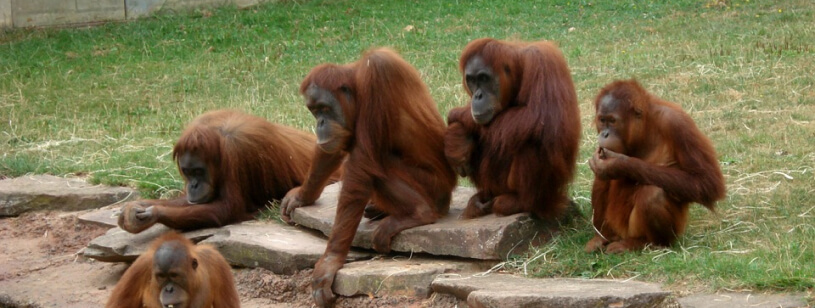
Orangutans are great apes in the genus Pongo, native to Borneo and Sumatra. The three recognised species spend much of their lives in trees. Fruit is an important food, and habitat loss and other human pressures threaten their survival.
Orangutans have long arms and grasping hands and feet that help them move in trees. Some populations use tools. Habitat loss and illegal capture are important threats.
Currently, there are three distinct species of orangutans:
- Bornean orangutan (Pongo pygmaeus) — native to Borneo.
- Sumatran orangutan (Pongo abelii) — native to northern Sumatra.
- Tapanuli orangutan (Pongo tapanuliensis) — a distinct species described in 2017, from a restricted area of Sumatra.
Quick facts
| Common name | Orangutan |
| Scientific name | Pongo pygmaeus, Pongo abelii and Pongo tapanuliensis |
| Typical lifespan | About 35-45 years in the wild, up to about 60 years in captivity |
| Maximum speed | Slow climbers; on the ground they walk on all fours |
| Height | About 1.2-1.5 m (males), 1.0-1.2 m (females) |
| Weight | About 50-100 kg (males), 30-50 kg (females) |
| Diet type | Omnivore (mainly fruit, but also leaves, bark, insects) |
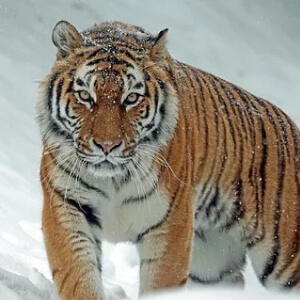
| Main predators | Sumatran tigers, clouded leopards, people (hunting, habitat destruction) |
| Conservation status | Critically Endangered; assess each of the three species separately |
| Geographical distribution | Borneo and Sumatra Islands (South East Asia) |
| Habitat | Lowland, swamp and mountain rainforests |
| Social behaviour | Semi-solitary; mothers live with their young |
| Special adaptations | Very long arms, grasping feet, high intelligence, tool use |
Interesting facts
- Orangutans are among the most intelligent animals on Earth - They use tools, learn from experience and solve complex problems.
- Very long arms - A large male's arm span can reach about 2.2 metres, much more than his height.
- A new bed every night - Each evening, an orangutan builds a nest of branches and leaves high in a tree, sometimes adding a "pillow" or a leafy "roof" against the rain.
- Learning from others - Young orangutans learn by watching their mothers and other orangutans; in some areas they use sticks to get honey, insects or seeds.
- A very slow metabolism - Orangutans use less energy for their size than almost any other mammal, which helps them survive when fruit is scarce.
- Cheek pads - Some adult males develop large cheek pads called "flanges" and a big throat sac, signs of maturity and status.
- They recognise themselves in a mirror - Orangutans pass the mirror test, a sign of self-awareness found in only a few animals.
Records and remarkable features
- Orangutans are great apes in the genus Pongo, native to Borneo and Sumatra. The three recognised species spend much of their lives in trees. Fruit is an important food, and habitat loss and other human pressures threaten their survival.
- The largest tree-living animal - Orangutans are the largest animals in the world that live mainly in trees.
- The slowest breeder - A female usually gives birth only once every 7-9 years, the longest gap of any mammal.
- The longest childhood - Young orangutans nurse for up to about 6-8 years, longer than any other animal.
Characteristics
Physical aspect
- Size - Wild males usually weigh about 50-100 kg and stand about 1.2-1.5 m tall, while females are much smaller, about 30-50 kg.
- Long, strong arms - Orangutans climb and move slowly through the trees, hanging from branches and grabbing with both hands and feet.
- Grasping feet - Their feet work like hands and can hold branches firmly.
- Long, reddish hair - Their shaggy orange-red coat is unique among great apes.
- Cheek pads in some males - Called "flanges", these large pads are a sign of maturity and social status.
- A throat sac in males - It helps adult males make their loud "long call", which can be heard about 1 km away or more.
Special adaptations
- A powerful grip - Orangutans can hang from branches for long periods.
- Slow metabolism - They use little energy, which helps them survive when food is scarce.
- Using tools - They use sticks to get insects, honey and seeds, and large leaves as umbrellas against the rain.
- Learning - Orangutans learn new behaviours by watching others, and different populations have different "cultures".
Habits and behaviour
Orangutans are largely semi-solitary. Mothers remain with dependent young, individuals can meet around food, and mating is not confined to a single annual season.
Social behaviour
- Mostly alone - Adult males usually live alone in large home ranges, and females live with their young.
- Meeting at food - Orangutans may gather in fruiting trees, and young orangutans like to play together.
- Fights between males - When two flanged males meet, they may fight fiercely, biting and grappling.
Survival Techniques
- Building nests - Every night, orangutans build a new bed of branches and leaves, high up in the trees.
- Long calls - Flanged males make loud long calls to announce their presence to females and other males.
- Excellent memory - Orangutans remember where fruit trees are and when they produce fruit.
- Self-medication - In 2024, scientists saw a wild Sumatran orangutan treat a wound on his face by chewing a medicinal plant and applying it to the wound, which healed.
Habitat and geographic distribution
Orangutans live only on the islands of Borneo and Sumatra, in the tropical forests of Southeast Asia.
| Region | Species present | Habitat Preferred |
|---|---|---|
| Borneo (Malaysia, Indonesia) | Bornean orangutan (Pongo pygmaeus) | Lowland rainforests and peat swamp forests |
| Northern Sumatra (Indonesia) | Sumatran orangutan (Pongo abelii) | Lowland and mountain rainforests |
| Batang Toru, Sumatra (Indonesia) | Tapanuli orangutan (Pongo tapanuliensis) | Hill and mountain forests |
Types of Habitat
- Lowland rainforests - The best habitat for orangutans, with plenty of fruit.
- Mountain forests - In Sumatra, orangutans live up to about 1,500 m above sea level.
- Peat swamp forests - Some important populations live in swampy forests.
Human Impact and Threats
- Deforestation - The spread of oil palm and other plantations destroys orangutan forests.
- Poaching and illegal trade - Mothers are killed so that their babies can be sold as pets.
- Conflict with farmers - Orangutans that raid crops are sometimes killed.
- Fires and drought - Forest fires, often started to clear land, destroy huge areas of habitat.
Diet and feeding
Orangutans are mainly fruit eaters, but they also eat many other foods. Their diet changes with the seasons, and their intelligence helps them reach food that is hard to get.
What does the orangutan eat?
| Type of food | Species |
|---|---|
| Fruit (figs, durian, rambutan, mangosteen) | All species |
| Leaves and young shoots | All species |
| Tree bark and soft wood | All species, especially when fruit is scarce (Bornean orangutans eat more bark) |
| Honey and flowers | All species |
| Insects (ants, termites, bees) | All species |
| Birds' eggs and small animals (occasionally) | All species |
Feeding methods
- Using sticks - Some Sumatran orangutans use sticks to get honey, insects and the seeds of spiky fruits.
- Eating unripe fruit - Orangutans can eat some fruits before they are ripe, before other animals get them.
- Seasonal changes - When fruit is scarce, they eat more leaves and bark; when fruit is plentiful, they eat as much as they can and build up fat reserves.
Reproduction and life cycle
Orangutans breed more slowly than any other mammal, which makes their populations very vulnerable.
| Characteristic | Details |
|---|---|
| Age at first birth | About 15 years (females) |
| Breeding season | All year round |
| Type of reproduction | Viviparous |
| Number of young per birth | 1 young (rarely twins) |
| Pregnancy duration | About 8.5 months |
| Nursing period | Up to about 6-8 years |
| Independence of young | At about 7-9 years old |
| Lifetime | About 35-45 years in the wild, up to about 60 years in captivity |
Mating
- Females often prefer flanged males, with large cheek pads and loud long calls.
- Pregnancy lasts about 8.5 months, almost as long as in humans.
- A female does not have another baby until her young is almost independent, usually 7-9 years later.
Raising young
- Baby orangutans depend completely on their mothers and are carried for their first years.
- Learning by watching - Young orangutans spend years watching their mother and learning how to find food and build nests.
- Protective mothers - Mothers care for their young alone, without help from the father.
Name and history
Orangutans and humans share ancient ape ancestors. A precise DNA similarity percentage depends on which sequences and comparison method are used.
Origin and etymology of the name
- The word "orangutan" comes from Malay and Indonesian: orang means "person" and hutan means "forest", so it means "person of the forest".
- The scientific name Pongo comes from a word from the Congo region that 16th-century travellers used for African apes; it was later applied to orangutans by mistake.
Orangutan in the History of Humanity
- In the 17th century, the Dutch physician Jacobus Bontius gave one of the first European descriptions of orangutans, from Java.
- For a long time, Europeans were confused about orangutans and other apes and sometimes described them as "wild people of the forest".
- In the 20th century, researchers such as Biruté Galdikas spent decades studying wild orangutans in Borneo.
Orangutan in Folklore and Superstition
- People of the forest - In some local stories of Borneo and Sumatra, orangutans are people who went into the forest and could talk, but chose to stay silent so that they would not have to work.
- Respect - Some Indigenous peoples of Borneo traditionally avoided killing orangutans because they saw them as close to humans.
Cultural significance and mythology
Because they look and act so much like people, orangutans have long fascinated humans and have become a symbol of the fight to save tropical rainforests.
- A symbol of conservation - The orangutan is one of the best-known symbols of rainforest destruction caused by oil palm plantations.
- Sign language - An orangutan named Chantek learned to use about 150 signs.
Conservation status and threats
All three orangutan species are Critically Endangered, mainly because of deforestation, poaching and illegal trade.
| IUCN Status | Species Affected | Affected Regions |
|---|---|---|
| Critically Endangered (CR) | Bornean orangutan (Pongo pygmaeus) | Borneo (Indonesia, Malaysia) |
| Critically Endangered (CR) | Sumatran orangutan (Pongo abelii) | Northern Sumatra (Indonesia) |
| Critically Endangered (CR) | Tapanuli orangutan (Pongo tapanuliensis), fewer than about 800 animals | Batang Toru, Sumatra (Indonesia) |
Main threats
- Deforestation - Huge areas of rainforest have been cleared for oil palm and other plantations, logging and mining.
- Poaching and illegal trade - Baby orangutans are captured and sold as pets, and their mothers are killed.
- Conflict with farmers - As their forests disappear, orangutans enter farms and plantations and are sometimes killed.
- Fires - Forest fires, worsened by drought, destroy habitat and food.
Conservation efforts
- National parks - Protected areas such as Gunung Leuser National Park (Sumatra) and Tanjung Puting National Park (Borneo) are vital for orangutans.
- Rescue centres - Organisations such as Orangutan Foundation International and the Borneo Orangutan Survival Foundation rescue orangutans and return them to the wild.
- Sustainable palm oil - Campaigns push companies to stop clearing forests for palm oil.
- Education and ecotourism - Programmes teach people about orangutans and support local communities.
In popular culture
- The Jungle Book (Disney, 1967) - King Louie, the "king of the swingers", is an orangutan; he does not appear in Kipling's original book.
- Every Which Way but Loose (1978) - Clint Eastwood's co-star is Clyde, an orangutan.
- Rise of the Planet of the Apes (2011) - The wise orangutan Maurice is one of the main ape characters.
- Discworld - In Terry Pratchett's novels, the Librarian of the Unseen University is an orangutan.
- "The Murders in the Rue Morgue" (Edgar Allan Poe, 1841) - In one of the first detective stories, the culprit turns out to be an orangutan.