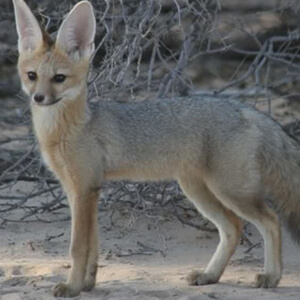
JackalInteresting facts and information
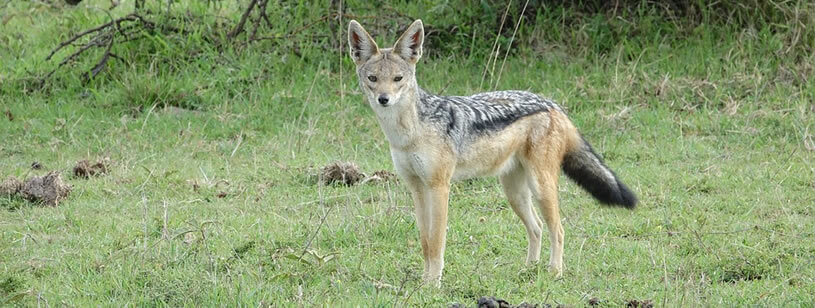
Jackals are members of the dog family (Canidae). The golden jackal is Canis aureus, while the black-backed and side-striped jackals of Africa are now placed in the genus Lupulella. Together they live in parts of Africa, Europe and Asia.
Jackals are adaptable feeders that hunt small animals, eat fruit and scavenge. Their diet and behaviour vary with the species and local conditions, and some live close to people.
Jackal-like animals appear in ancient art and stories, most famously as the Egyptian god Anubis.
Quick facts
| Common name | Jackal |
| Scientific name | Canis aureus (golden jackal); Lupulella mesomelas (black-backed jackal); Lupulella adusta (side-striped jackal) |
| Typical lifespan | Usually about 8-12 years in the wild, up to about 16 years in captivity |
| Maximum speed | About 40 km/h or more over short distances |
| Length | About 60-105 cm (without tail) |
| Weight | About 6-15 kg |
| Diet type | Omnivore (small mammals, birds, insects, fruit, carrion, food scraps) |
| Main predators | Leopards, hyenas, wolves, large eagles (for pups), humans |
| Conservation status | All three species are Least Concern (IUCN); local pressures can differ |
| Geographic distribution | Africa, southeastern and central Europe, the Middle East, South and Southeast Asia |
| Habitat | Savannas, forests, wetlands, dry areas, the edges of towns and villages |
| Social behaviour | Usually pairs, often with grown-up young that help raise the next litter |
| Special adaptations | Intelligence, agility, a flexible diet and the ability to live in many environments |
- Primary category:Mammals
- Explore this animal's categories:
Interesting facts
- Jackals often pair for life - The male and female usually form a stable pair, raise their young together and often hunt as a team.
- They communicate in many ways - They use howls, yelps, growls and barks to signal danger, keep in touch and mark their territory.
- They eat almost anything - From small mammals and birds to insects, fruit and carrion, jackals are among the most flexible feeders in the dog family.
- They can hunt as a team - Pairs or family groups sometimes work together to catch larger prey, such as young antelopes.
- They share feeding sites with other scavengers - Jackals often gather with vultures and hyenas at carcasses, trying to snatch their share.
- The golden jackal is the only jackal in Europe - It has spread from the Balkans and Romania to Hungary, Austria, Germany and even further north and west.
- They can interbreed with dogs - Golden jackals and domestic dogs can produce hybrids.
Records and remarkable features
- The largest jackal - The golden jackal (Canis aureus) can weigh up to about 14-15 kg and reach about 105 cm in body length.
- Speed - Jackals are fast runners and can reach about 40 km/h or more over short distances.
- The most widespread jackal - The golden jackal lives from southeastern Europe through the Middle East to South and Southeast Asia.
- An ancient lineage - The black-backed jackal (Lupulella mesomelas) belongs to one of the oldest living branches of the dog family.
- The most adaptable - The golden jackal lives in forests, wetlands, dry grasslands, farmland and even on the edges of cities.
Characteristics
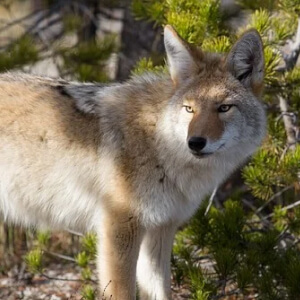
The jackal is a medium-sized member of the dog family, with a slim, agile body, large ears and a pointed snout that help it find prey and survive in many environments.
Appearance
- A slim, athletic body - Built for speed and stamina, so jackals can trot long distances in search of food.
- Dense fur of varied colours - Golden, reddish, grey, black and white, depending on the species and habitat.
- A bushy tail - About 20-40 cm long, used for balance and communication.
- Large, pointed ears - Help them hear prey and danger.
- Sharp teeth and strong jaws - Adapted for tearing meat, crunching small bones and eating fruit.
Special adaptations
- Active at dusk and night - Jackals are mostly active in the early morning, evening and at night, especially near people.
- Coping with dry conditions - They can live in dry areas, getting part of the water they need from their food.
- Teamwork - Pairs and family groups can cooperate to catch prey larger than a single jackal could manage.
- Natural camouflage - Their fur colour helps them blend into grass and bushes.
Habits and behaviour
The jackal is an intelligent and opportunistic animal that usually lives in pairs or small family groups.
Social behaviour
- Pair bonds – Jackals may form lasting pairs and share care of young. This does not mean every individual remains with one mate for life.
- Small family groups - Groups of 2-6 animals are usually a breeding pair and their young, which may help raise their younger brothers and sisters.
- Scent marking - They mark their territory with urine and droppings to warn other jackals to stay away.
- Varied calls - They howl to call family members, bark to warn of danger and growl as a threat.
Survival techniques
- Flexible hunting - They hunt alone, in pairs or in small groups, depending on the prey.
- Scavenging - They eat carrion and help clean up the remains of dead animals.
- Night visits - Near people, they come out mainly at night to avoid conflict.
Habitat and geographic distribution
Jackals live on three continents, in habitats ranging from African savannas to European wetlands and forests.
| Region | Species present | Habitat examples |
|---|---|---|
| Africa | Lupulella mesomelas (black-backed jackal), Lupulella adusta (side-striped jackal) | Savannas, open woodland, dry areas |
| Europe | Canis aureus (golden jackal) | Wetlands, forests, farmland |
| Middle East, South and Southeast Asia | Canis aureus (golden jackal) | Dry grassland, forests, mangroves, farmland |
Habitat types
- Savannas and open grassland - Home of the black-backed jackal; the side-striped jackal prefers moister, more wooded areas.
- Forests and city edges - The golden jackal has adapted well to landscapes changed by people.
- Dry areas - Some populations live in arid habitats with little water. Desert animals.
Human pressures and threats
- Spreading towns - Bring jackals closer to people, which increases conflict.
- Hunting and trapping - In some regions, jackals are killed because they attack livestock.
- Climate change - Can reduce food supplies, especially in dry regions.
Diet and feeding
The jackal is an opportunistic omnivore that eats a wide variety of foods, from small mammals and birds to fruit, insects and carrion. This flexibility makes it one of the most successful small predators.
What do jackals eat?
| Type of food | Species that eat it |
|---|---|
| Rodents, hares and other small mammals | All jackal species |
| Birds and eggs | Golden jackal, black-backed jackal |
| Reptiles and amphibians | Side-striped jackal, golden jackal |
| Insects and other arthropods | Golden jackal, black-backed jackal |
| Fruit and seeds | All species, especially when fruit is in season |
| Carrion | Golden jackal, side-striped jackal, black-backed jackal |
| Human food waste | Golden jackal (near settlements) |
Feeding techniques
- Hunting together - Jackals can work together to corner and tire larger prey.
- Stalking and pouncing - They creep through vegetation and pounce on rodents, like foxes.
- Stealing food - They take eggs, leftovers from larger predators and human food.
- Eating plants - When prey is scarce, jackals eat more fruit and other plant food.
Adapting to the food available
- On the savanna, they hunt small mammals more often.
- In forests and wetlands, they eat more rodents, insects, fruit and birds.
- Near towns and villages, they eat food waste and hunt rodents.
Reproduction and life cycle
Jackals usually live in faithful pairs that work together to raise their young and defend their territory.
| Feature | Details |
|---|---|
| Age at maturity | About 11-12 months |
| Breeding season | Once a year; timing depends on the species and region |
| Pregnancy | About 60-63 days |
| Pups per litter | Usually 2-6 |
| Time with parents | About 6-8 months, sometimes longer |
| Lifespan | Usually about 8-12 years in the wild, up to about 16 years in captivity |
Breeding
- The pair defends its territory together, and usually only the pair breeds.
- Pregnancy lasts about two months, and the pups are born blind and completely dependent on their parents.
- The pups drink milk for about 2 months, but soon also eat food that their parents bring back and regurgitate for them.
- Older siblings help - Some young jackals stay with their parents for a year and help care for the next litter.
Survival strategies
- Jackal pairs use dens dug in the ground, often old burrows of other animals, as a safe place for the pups.
- The pups are hidden in dens or thick vegetation to keep them safe from predators such as leopards and hyenas.
- The family stays together - Grown-up pups may stay with their parents for protection and help.
Name and history
People have known jackals since ancient times, and they play an important role in mythology, literature and science.
Origin of the name
- The word "jackal" came into English through Turkish çakal, from the Persian shagal, which in turn comes from Sanskrit.
- The genus name Canis ("dog") shows that the golden jackal is a close relative of wolves and dogs; the African black-backed and side-striped jackals are now placed in a separate genus, Lupulella.
- In ancient Egypt, the god Anubis was shown as a man with the head of a jackal-like canine, and he protected the dead.
Jackals in human history
- Ancient Egypt - Anubis, the jackal-headed god, was linked with death, embalming and guiding souls. Modern research shows that the Egyptian "jackal" was probably the African golden wolf (Canis lupaster), long thought to be a golden jackal.
- A scientific surprise - In 2015, genetic studies showed that the golden jackals of Africa are a separate species, the African golden wolf, more closely related to wolves.
Jackals in folklore
- In Indian fables such as the Panchatantra, the jackal is a cunning trickster, much like the fox in European tales.
- In many stories from southern Africa, the clever jackal tricks the lion, the hyena or the wolf.
- In English, a "jackal" can mean a person who does dirty work for someone more powerful.
Cultural significance and mythology
Over the centuries, jackals have been seen both as wise, spiritual creatures and as symbols of cunning and deceit.
Jackals in mythology and religion
- Ancient Egypt - Anubis, protector of the dead, was shown as a man with a jackal's head. Egyptians may have linked jackal-like canines with the dead because they were seen near cemeteries.
- India - In Hindu tradition, jackals are linked with cremation grounds and with fierce goddesses such as Kali.
- Kalila and Dimna - In this famous collection of fables, translated from Sanskrit into Persian and Arabic, two jackals are the main characters.
Jackals in folklore and symbolism
- A trickster - In many cultures of Africa and Asia, the jackal is a clever animal that outwits stronger ones.
- A scavenger - Because jackals feed on carrion, they are often linked with death and the afterlife.
- A survivor - The jackal's ability to live almost anywhere makes it a symbol of adaptability.
Conservation status and threats
Jackals adapt well to environmental change, and none of the three species is threatened globally. Locally, however, they are affected by hunting, habitat loss and conflict with people.
| IUCN status | Species | Regions |
|---|---|---|
| Least Concern (LC) | Canis aureus (golden jackal) | Southeastern and central Europe, Middle East, South and Southeast Asia |
| Least Concern (LC) | Lupulella mesomelas (black-backed jackal) | Southern and East Africa |
| Least Concern (LC) | Lupulella adusta (side-striped jackal) | Central, East and southern Africa |
Main threats
- Spreading towns and farms - Habitat loss brings jackals closer to people, which leads to conflict.
- Hunting and trapping - In many countries, jackals are killed as "pests" because they take poultry, lambs and other small livestock.
- Climate change - Affects food supplies, especially in dry regions.
- Disease - Jackals can catch and spread rabies and other diseases that also affect pets and people.
Conservation work
- Protecting natural habitats - National parks and reserves help maintain natural balance.
- Reducing conflict - In some countries, guard dogs, fences and other non-lethal methods are used to protect livestock.
- Disease control - Rabies vaccination campaigns are carried out in some areas with many jackals.
- Education - Local people learn about the useful role of jackals in controlling rodents.
In popular culture
Jackals appear in books, films and art, usually as cunning tricksters or as mysterious creatures linked with death.
Literature and stories
- Panchatantra - In these ancient Indian fables, jackals are clever, scheming characters.
- Kalila and Dimna - The Persian and Arabic version of these fables is named after its two jackal heroes.
- African stories - Many tales describe the jackal as a clever survivor who escapes from dangerous lions and hyenas.
- The Jungle Book (Rudyard Kipling, 1894) - Tabaqui, a jackal, is the sneaky servant of the tiger Shere Khan.
Film and television
- The Day of the Jackal - Frederick Forsyth's 1971 thriller about an assassin code-named "the Jackal" became a 1973 film and a 2024 TV series.
- The Mummy Returns (2001) - The film features an army of jackal-headed Anubis warriors.
Jackals in art
- Ancient Egyptian art - Statues and paintings of Anubis, such as the famous jackal statue from Tutankhamun's tomb, are among the best-known images of jackals.