WolverineGulo gulo — habitat, diet and reproduction
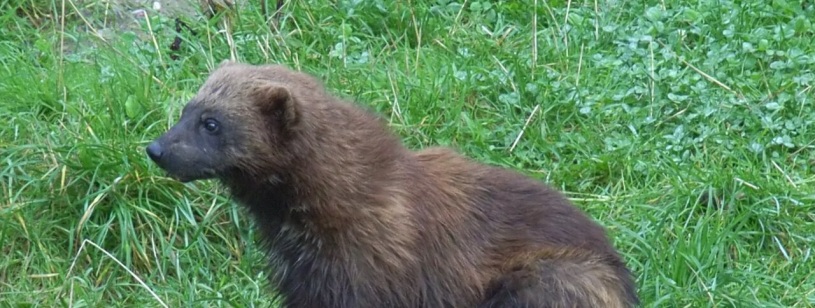
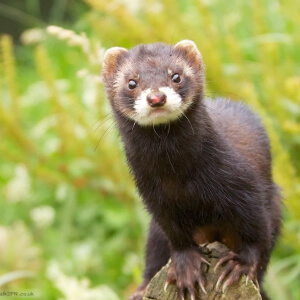
A wolverine, Gulo gulo, showing its brown coat and powerful build. · Zefram / CC BY 2.5 (https://creativecommons.org/licenses/by/2.5). Cropped and resized.
The wolverine is a robust mustelid related to martens, weasels and otters. It may resemble a small bear but belongs to a different family. Across cold northern regions, it travels widely to find scattered food, using powerful jaws and considerable endurance to exploit difficult resources.
Quick facts
| Common name | Wolverine |
| Scientific name | Gulo gulo |
| Longevity | Few wild individuals exceed 5–7 years; some reach 12–13 |
| Diet | Opportunistic carnivore; hunting and scavenging |
| Main predators | Larger predators, particularly wolves; adults have few natural enemies |
| Conservation context | Varies regionally; the contiguous-US population is threatened |
| Distribution | Northern Europe, Asia and North America |
| Habitat | Boreal forest, tundra and cold mountain regions |
| Length | Head and body: approximately 65–105 cm, excluding tail |
| Weight | Commonly 8–18 kg in North America; males are larger |
| Family | Mustelidae |
| Reproduction | Usually 2–3 kits; delayed implantation |
- Primary category:Mammals
- Explore this animal's categories:
Interesting facts
- It is among the largest land-dwelling mustelids.
- It remains active through winter rather than hibernating.
- Food can be cached for a later return.
- Stories of fearlessly attacking every opponent exaggerate its behaviour.
Characteristics
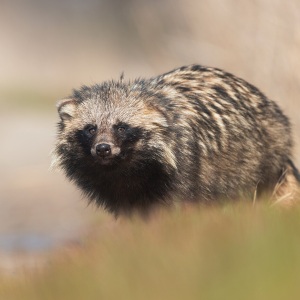
A broad head, small rounded ears, short legs and a bushy tail give the wolverine its sturdy outline. Dense dark fur often carries lighter bands along the sides.
Each paw has five toes and claws useful for digging and climbing. Broad feet help distribute weight on snow. Males are larger than females, but a compact muscular body does not make this mustelid a bear.
Behaviour
Wolverines spend much of their lives alone. They can be active by day or night and throughout the year. Large movement areas may span valleys, forest and mountain slopes, while scent provides information about other individuals.
Endurance does not mean invulnerability. Wolves and other large predators can kill a wolverine, so avoiding encounters may be more useful than fighting. Its fierce reputation describes only a small, often exaggerated part of its life.
Habitat and distribution
The range covers northern Europe, Asia and North America. Boreal forest, tundra and cold mountains offer suitable landscapes when enough space and food remain available.
Snow can support denning and food storage, but it works alongside food supply and low disturbance. Wolverines naturally occur at low densities and require large connected areas rather than isolated patches of apparently suitable vegetation.
Diet and feeding
Small and medium-sized animals are hunted, while carcasses and remains left by other predators are also important. Carrion can be particularly valuable in winter.
Powerful jaws and neck muscles help process frozen meat and difficult carcass parts. Finding a large animal in the diet does not prove it was killed by the wolverine. Cached food turns a brief feeding opportunity into a resource for later days.
Reproduction and life cycle
Mating occurs in the warmer part of the year, followed by delayed implantation rather than uninterrupted embryo development. Other mustelids share this adaptation.
Females usually produce two or three helpless kits, often in snow-associated dens. Maternal care and food are essential. Successful breeding depends on resources, and females do not necessarily raise a litter every year. Young later need time to establish their own living areas.
Name and history
Gulo gulo is the scientific name. Popular accounts of the wolverine emphasise strength and persistence in searching for food.
Real adaptations underlie that reputation, but stories can amplify them. Avoiding danger, conserving resources and raising young are also central to its biology. Tracks and remote monitoring often reveal more about this elusive animal than direct encounters.
Conservation and threats
Habitat loss and fragmentation can disconnect populations. Disturbance affects denning areas, while changes in snow conditions can alter shelter availability.
The North American population in the contiguous United States is listed as threatened, a regional status that should not be assigned automatically to every population worldwide. Conservation requires connected wild landscapes and attention to populations with slow reproductive recovery.
Frequently asked questions
Is a wolverine a bear?
No. It belongs to Mustelidae, alongside martens, weasels and otters.
Does it hibernate?
No. It stays active and searches for food through winter.
Does it eat only animals it kills?
No. It also scavenges carcasses and remains left by other predators.
Why does it need large areas?
Food is scattered, so it travels widely to find enough resources.