MouseInteresting facts and information
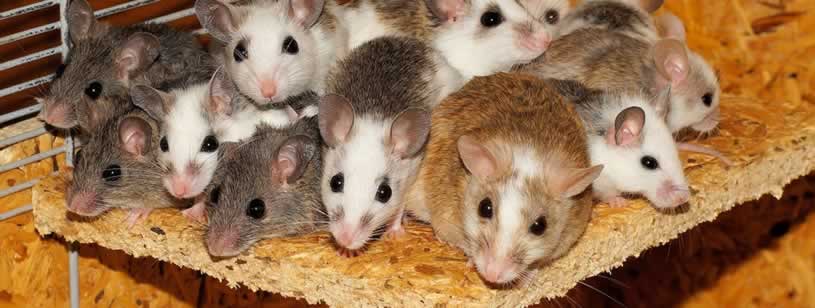
Mice are small rodents. The genus Mus includes the house mouse (Mus musculus), but the common name mouse is also used for rodents in other groups. Their diets, habitats and conservation situations differ between species.
Because they breed quickly and adapt easily, mice are important in many ecosystems as food for predators, but some are also pests where people live. They are very important in scientific research, because their genes and bodies work in many ways like ours.
Quick facts
| Common name | Mouse |
| Scientific name | Mus spp.; Mus musculus is the house mouse |
| Typical lifespan | Usually under a year in the wild; 2-3 years in captivity |
| Maximum speed | House mice can run at about 13 km/h |
| Size | About 5-12 cm long (without tail) |
| Weight | About 3-50 g, depending on the species |
| Diet type | Omnivore (seeds, fruit, insects, human food) |
| Main predators | Cats, owls, snakes, foxes, weasels, birds of prey |
| Conservation status | Assess separately by species and population; different taxa and regions have different needs |
| Geographical distribution | On all continents except Antarctica |
| Habitat | Forests, grasslands, deserts, farmland, towns |
| Social behaviour | Some species live alone, others in family groups |
| Special adaptations | Fast breeding, excellent senses of smell and hearing, ability to survive in many environments |
- Primary category:Mammals
- Explore this animal's categories:Animals of AfricaAnimals of AsiaAnimals of AustraliaAnimals of EuropeAnimals of North AmericaAnimals of Romania’s forestsAnimals of Romania’s gardens and parksAnimals of Romania’s grasslands and plainsAnimals of South AmericaBurrowing animalsInsect-eating animalsLive-bearing animalsMMammalsMammals of RomaniaOmnivoresRodentsVertebrates
Interesting facts
- Mice are great jumpers - Thanks to their strong hind legs, house mice can jump about 30 cm high, many times their own height.
- A mouse can squeeze through a gap about 6 mm wide - Its flexible skeleton lets it slip through holes no wider than a pencil.
- Their front teeth never stop growing - Mice must gnaw all the time on hard materials, such as seeds, wood or plastic, to keep their teeth from growing too long.
- They need very little water - Mice get much of the water they need from their food, so some can go a long time without drinking.
- They "sing" in ultrasound - Mice make high-pitched calls that people cannot hear, especially when courting or warning each other of danger.
- Excellent memory - Once they have learned a route, mice can find their way through complicated mazes.
- Population explosions - Because mice breed so fast, a single pair could in theory have thousands of descendants in a year.
Records and remarkable features
- Mice are small rodents. The genus Mus includes the house mouse (Mus musculus), but the common name mouse is also used for rodents in other groups. Their diets, habitats and conservation situations differ between species.
- The African pygmy mouse (Mus minutoides) is one of the smallest rodents in the world, weighing only about 3-12 g.
- After humans, the house mouse is probably the most widespread mammal on Earth, living on every continent except Antarctica.
Characteristics
Mice are small, very agile rodents with bodies adapted to survive in many environments. Although they look fragile, they are excellent at hiding, climbing and breeding, which makes them some of the most successful and widespread mammals on Earth.
Appearance
- A small, flexible body - Lets them slip through narrow gaps and hide in places most predators cannot reach.
- Soft fur of varied colours - Usually grey or brown, sometimes sandy; domestic mice may be white or other colours.
- Large, dark eyes - Mice do not see very well; they rely more on smell, hearing and touch.
- Long whiskers - Very sensitive, they help mice find their way in the dark.
- Ever-growing front teeth - Mice must gnaw constantly to keep them short and sharp.
- A long, almost hairless tail - Covered with scaly rings, it helps with balance and with losing heat.
Special adaptations
- Saving water - Mice get water from their food and from their own metabolism, which helps them live in dry areas.
- Versatile movement - They can run, jump, climb and even swim if they need to.
- Fast reflexes - They react instantly to danger and dash for cover.
- Constant gnawing - They gnaw through wood, cardboard, plastic and even electric cables, both to get food and to wear down their teeth.
Habits and behaviour
Most mice are active at night. They are very adaptable and can live alone or in groups, depending on the species and conditions.
Social behaviour
- Some mice live alone, while others, such as house mice, live in family groups.
- Females in a group sometimes raise their young together in a shared nest.
- Males can be aggressive, defending their territory and females from other males.
- Groups of house mice usually have a dominant male.
Survival techniques
- Hiding - Mice avoid danger by hiding in tunnels, cracks and small holes.
- Moving quietly - They run quickly and quietly, usually along walls, to avoid being seen.
- Learning fast - Once they find a safe route to food, they use it again and again.
- Ultrasonic calls - They use high-pitched calls to communicate with each other.
- A flexible diet - They can eat almost anything they find.
Habitat and geographic distribution
Mice live on every continent except Antarctica, in a huge range of habitats, from forests and grasslands to cities and people's homes.
| Region | Example species | Preferred habitat |
|---|---|---|
| North America | Mus musculus (house mouse, introduced), Peromyscus maniculatus (deer mouse) | Farmland, forests, homes |
| South America | Pygmy rice rats (Oligoryzomys), grass mice (Akodon) | Forests, grasslands, savannas |
| Europe | Apodemus sylvaticus (wood mouse), Mus musculus (house mouse) | Woodland, fields, towns |
| North Africa and the Iberian Peninsula | Mus spretus (Algerian mouse) | Dry scrub, fields |
| Sub-Saharan Africa | Mus minutoides (African pygmy mouse) | Savannas, grasslands, forest edges |
| Asia | Mus caroli (Ryukyu mouse), Mus booduga (little Indian field mouse) | Rice fields, villages, grasslands |
| Australia | Mus musculus (introduced) and many native hopping mice | Farmland, towns, deserts |
Types of habitat
- Forests and grasslands - Wild species prefer areas with dense vegetation, where they can hide.
- Farmland - Mice live in barns, fields and haystacks, where food is easy to find.
- Towns and homes - The house mouse has adapted completely to living alongside people.
- Deserts and dry areas - Desert mice, such as Australian hopping mice, can survive almost without drinking.
Mice and people
- They are often pests that damage crops and stored food.
- They can spread diseases, such as salmonella, leptospirosis and, in some regions, hantavirus.
- Laboratory mice are used in medical research because their genes and bodies work in many ways like ours.
- Some people keep fancy mice as pets.
- They are an important food for many predators, such as cats, owls, foxes and snakes.
Diet and feeding
Mice are opportunistic omnivores that eat a wide variety of foods, depending on what is available. This flexibility helps them survive in many environments.
What do mice eat?
| Type of food | Examples of mice that eat it |
|---|---|
| Seeds and grains (wheat, maize, rice, sunflower seeds) | Almost all species, especially house mice and wood mice |
| Fruit and plants (berries, roots, green shoots) | Wood mice, deer mice |
| Insects and other invertebrates (beetles, caterpillars, snails) | Yellow-necked mice (Apodemus flavicollis), deer mice |
| Fungi and nuts | Wood mice and other woodland mice |
| Human food (bread, cereals, sweets, pet food) | House mice |
Feeding techniques
- Storing food - Some species hide seeds and nuts for times when food is scarce.
- Feeding at night - Most mice look for food at night, when they are safer from predators.
- Gnawing - Their ever-growing front teeth can gnaw through hard shells, wood and packaging.
- Many small meals - Mice eat little and often, making many short trips to food sources.
Adapting to the food supply
- Many mice can survive on dry food with very little water.
- In the wild, they eat seeds, plants and insects; in towns, they eat leftovers and stored food.
- They often live near farms and warehouses, where people store grain and other food.
Reproduction and life cycle
Mice breed faster than almost any other mammal, which helps their populations recover quickly, even after hard times.
| Feature | Details (house mouse) |
|---|---|
| Age at maturity | About 5-8 weeks |
| Breeding season | All year round indoors; mainly spring to autumn outdoors |
| Type of reproduction | Live birth |
| Young per litter | Usually 3-14 |
| Pregnancy | About 19-21 days |
| Nursing | About 3 weeks |
| Independence | At about 3-4 weeks |
| Lifespan | Usually under a year in the wild; 2-3 years in captivity |
Breeding
- A female can have up to 10 litters a year, which could add up to more than 100 young in her lifetime.
- Males compete for females, and male mice even sing ultrasonic courtship songs.
- A female can become pregnant again just after giving birth, which helps populations grow very fast.
Survival of the young
- Baby mice, called pups, are born blind, hairless and completely dependent on their mother.
- They are kept safe in hidden nests made of grass, leaves, paper, fur and other soft materials.
- They grow very fast and become independent in less than a month.
Name and history
Mice have lived alongside people for thousands of years, with a big impact on farming, medicine and stories.
Origin of the name
- The English word "mouse" comes from Old English mūs, an ancient word related to the Latin mus and the Greek mys.
- The scientific name Mus is the Latin word for mouse and is the name of the genus of "true" mice.
Mice in human history
- Following farmers - House mice spread around the world together with people, living in their villages and grain stores since the beginning of farming, about 10,000 years ago.
- Ancient Greece - The god Apollo was sometimes called Apollo Smintheus, "Apollo of the mice", as protector against mice and the diseases they were thought to bring.
- China - The Rat (or Mouse) is the first animal of the Chinese zodiac and is a symbol of cleverness and wealth.
- Modern research - Laboratory mice are among the most important animals in genetics and medicine.
Mice in folklore
Cultural significance and mythology
- Hinduism - The elephant-headed god Ganesha rides a mouse or rat called Mushika, a symbol of how even small creatures can overcome obstacles.
- Aesop's fables - In "The Lion and the Mouse", a tiny mouse frees a lion from a hunter's net, showing that small friends can be a great help; in "The Town Mouse and the Country Mouse", a simple, safe life is preferred to a rich but dangerous one.
- "Quiet as a mouse" - In many languages, mice are symbols of shyness, quietness and timidity.
Conservation status and threats
Most mouse species are very adaptable and have stable populations, but some rare species and subspecies are threatened by habitat loss and climate change.
| Status | Examples | Regions |
|---|---|---|
| Least Concern (LC) | Mus musculus (house mouse), Apodemus sylvaticus (wood mouse) | Widespread |
| Endangered (US law) | Alabama beach mouse (Peromyscus polionotus ammobates) | Coastal dunes of Alabama, USA |
| Endangered (US law) | Pacific pocket mouse (Perognathus longimembris pacificus) | Southern California, USA |
| Extinct | Bramble Cay melomys, a small mouse-like rodent | An island in the Torres Strait, Australia; the first mammal thought to have died out because of climate change |
Main threats
- Habitat loss - Deforestation, coastal building and urban growth destroy the homes of wild species.
- Pollution - Pesticides and farm chemicals harm wild mice.
- Pest control - Poisons used against house mice can also kill wild species and the predators that eat them.
- Climate change - Rising seas, storms and droughts threaten species living on islands, coasts, mountains and in deserts.
Conservation efforts
- Protecting natural habitats - Threatened species are protected in nature reserves and national parks.
- Controlling introduced predators - On islands, cats and foxes brought by people are controlled to protect native rodents.
- Monitoring and research - Scientists study rare species to prevent their extinction.
In popular culture
- Mickey Mouse - Created by Walt Disney and Ub Iwerks, he became famous in 1928 in the cartoon Steamboat Willie and is one of the best-known characters in the world.
- Jerry (Tom and Jerry) and Speedy Gonzales - Cartoon mice famous for outsmarting cats.
- Stuart Little (E. B. White, 1945) - A children's novel about a mouse born into a human family, made into a film in 1999.
- The Gruffalo (Julia Donaldson, 1999) - A clever mouse invents a monster to scare away predators in this much-loved picture book.
- The computer mouse - The computer device got its name in the 1960s because, with its cable, it looked like a mouse with a long tail.