MouflonInteresting facts and information
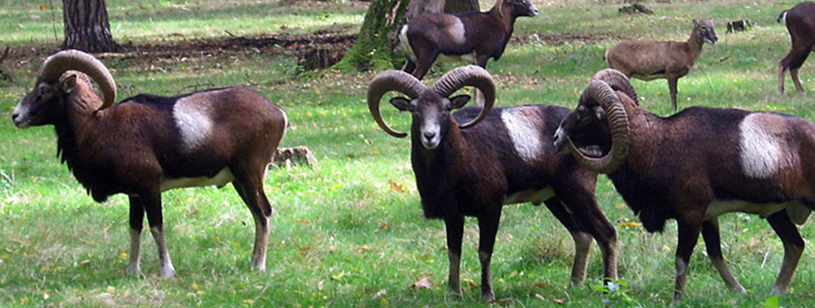
Mouflon are wild-living sheep with curved horns, especially prominent in males. Their naming and history require care: European island populations, mainland introductions and Asian mouflon are treated differently in taxonomic references.
European mouflon occur in wild-living populations, including introductions. Their origins and naming are complex and should not be reduced to a single ancestor claim for every domestic sheep breed.
Quick facts
| Common name | Mouflon |
| Scientific name | Ovis gmelinii complex; European mouflon naming varies between taxonomic treatments |
| Typical lifespan | About 8 - 12 years (wild), up to about 20 years |
| Maximum speed | Varies with species or individual, distance and conditions |
| Size | About 65 - 90 cm (height at the shoulder) |
| Weight | About 25 - 40 kg (females) / 35 - 55 kg (males) |
| Diet type | Herbivore (grass, herbs, leaves, shoots, bark) |
| Main predators | Wolves, lynx, foxes and eagles (lambs), humans |
| Conservation status | Asiatic mouflon: Near Threatened (IUCN); European mouflon not assessed separately |
| Habitat | Mountains, hills, open forests, meadows |
| Distribution (continents) | Asia, Europe; introduced in North America |
- Primary category:Mammals
- Explore this animal's categories:
Interesting facts
- Related to domestic sheep - Domestic sheep descend from wild Asiatic mouflon that were domesticated about 10,000-11,000 years ago in the Middle East.
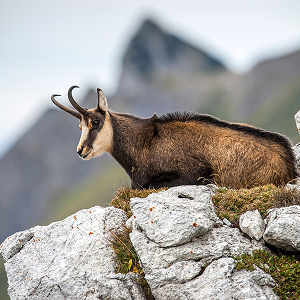
- Large horns - Mature males have thick horns that curl in a near circle and can be about 65-80 cm long along the curve; females are usually hornless or have small horns.
- Good climbers - Mouflon move easily on steep, rocky slopes thanks to strong legs and hooves.
- A winter coat - In winter, the coat becomes thicker and darker, and many males have a pale "saddle patch" on their sides.
- Good senses - Mouflon rely on sharp eyesight, hearing and smell to notice predators early.
Records and remarkable features
- Mouflon are wild-living sheep with curved horns, especially prominent in males. Their naming and history require care: European island populations, mainland introductions and Asian mouflon are treated differently in taxonomic references.
- Island mouflon - The mouflon of Corsica, Sardinia and Cyprus are thought to descend from early domestic sheep brought to the islands by Neolithic people that later returned to the wild.
- The smallest wild sheep - The mouflon is one of the smallest wild sheep in the world.
Physical characteristics and adaptations
Mouflon are small, sturdy wild sheep adapted to mountains, hills and open woodland.
Distinguishing physical appearance
- A compact body - Males are larger and heavier than females and have bigger horns.
- Seasonal coat - The coat is short and reddish-brown, with a pale belly and legs; in winter it becomes thicker and darker.
- Curved horns - Male horns grow throughout life and form a tight curl; they are used in fights for dominance.
- Hooves - Their hooves give a good grip on rocky ground.
- Short tail - Mouflon have a short tail and a light-coloured patch on the rump.
Adaptations for survival
- Endurance - Mouflon can travel long distances in search of food, even in winter.
- Camouflage - Their brown coat helps them blend in with rocks, grass and woodland.
- Warning sounds - They snort or whistle to warn other members of the group.
- Wide field of view - Eyes on the sides of the head give them a wide field of view, so they can spot danger early.
Habits and behaviour
Mouflon are social animals that live in groups whose size changes with the season.
Social structure and group behaviour
- Separate groups - For most of the year, adult males live in their own groups, apart from females and young; they join the females in the mating season.
- Female groups - Females, lambs and young animals live together in small herds.
- Hierarchy - Among males, those with the largest horns are usually dominant and mate most often.
Communication mode and responses to predators
- Warning sounds - They snort or whistle to alert the group to danger.
- Clashing horns - Males fight by running at each other and clashing their horns, to show their strength and win access to females.
- Escape - When threatened, mouflon run quickly to steep or rocky ground where predators cannot easily follow.
Defence strategies
- Staying together - Group members watch for danger and flee together.
- Rocky refuges - They prefer steep, broken terrain, where predators such as wolves find it hard to follow them.
- Active at dawn and dusk - Mouflon are most active in the morning and evening, and rest in cover during the day.
Habitat and geographic distribution
Wild mouflon are native to western Asia; European mouflon live on Mediterranean islands, and people have introduced them to many other places.
Geographical distribution
| Region | Countries and habitats |
|---|---|
| Europe | Corsica, Sardinia and Cyprus; introduced to Germany, Austria, the Czech Republic, Spain, Romania and other countries |
| Asia | Turkey, Iran, Armenia, Azerbaijan, Iraq |
| North America | USA (Texas, Hawaii - introduced populations) |
| Islands | Corsica, Sardinia and Cyprus - the oldest populations in Europe |
Habitats
- Mountains and hills - Mouflon like steep, rocky places where they can escape predators.
- Forests - In Europe they often live in open deciduous and mixed forests.
- Meadows and open land - They graze in meadows, clearings and scrub.
Habitat threats
- Habitat loss - Farming and building reduce the areas where mouflon can live.
- Poaching - In parts of Asia, mouflon are hunted illegally for meat and horns.
- Domestic livestock - Domestic sheep and goats compete with mouflon for food and can pass on diseases.
- Climate change - Hotter, drier summers and harsh winters can reduce food supplies.
Diet and feeding
Mouflon are herbivores that eat mainly grasses, as well as leaves, shoots and other plants, depending on the season.
What do mouflon eat?
| Food type | Examples of plants eaten |
|---|---|
| Grasses | Mountain and meadow grasses |
| Leaves and shoots | Oak, beech and shrub leaves |
| Herbs | Clover and other flowering plants |
| Bark and twigs | Young trees and shrubs (especially in winter) |
| Fruit and seeds | Acorns, chestnuts, berries |
Method of feeding
- Grazing - Mouflon eat mainly grasses and herbs, preferring open areas.
- Browsing - In woodland, they also eat leaves, shoots and low branches.
- Seasonal feeding - In summer they choose fresh, juicy plants, while in winter they eat dry grass, bark and twigs.
Food behaviour
- Mouflon feed mostly in the morning and evening, and rest during the hottest part of the day.
- Flexible diet - In forests they eat more leaves, and in open areas mainly grass.
- Chewing the cud - Like domestic sheep, mouflon are ruminants and chew their food again while resting.
Reproduction and life cycle
Mouflon have a clear mating season in autumn, when males fight for the right to mate.
Breeding and birthing of young
| Characteristic | Details |
|---|---|
| Sexual maturity | About 1.5 years; males usually breed only after 3-4 years |
| Breeding season | Late October - December |
| Gestation | About 5 months |
| Number of lambs | 1 (sometimes 2) |
| Nursing | About 3 - 4 months |
| Birth interval | 1 year |
Reproductive behaviour
- Fights between males - During the mating season, males clash their horns to settle who is dominant.
- Dominant males - Males with the largest horns and the most wins mate most often.
- Spring births - Lambs are born in spring, around March - May, when food is plentiful.
Longevity and Survival
- In the wild, mouflon usually live about 8-12 years, sometimes up to 20 years.
- Lambs are vulnerable to predators such as foxes and eagles, but soon learn to follow their mothers over rocks.
- In captivity, they can live about 20 years.
Name and history
Origin of the name "Mouflon"
- The word "mouflon" comes from French, which took it from the Corsican and Italian dialect word muvrone, from Late Latin mufro.
- The scientific name of the European mouflon, musimon, comes from an old Latin name for the wild sheep of Sardinia and Corsica.
Taxonomic Classification
| Kingdom | Animalia |
|---|---|
| Phylum | Chordata |
| Class | Mammalia |
| Order | Artiodactyla |
| Family | Bovidae |
| Genus | Ovis |
| Species | Ovis gmelini (Asiatic mouflon); the European mouflon is often named Ovis gmelini musimon or Ovis aries musimon |
History and discoveries
- Ancestor of domestic sheep - The Asiatic mouflon was domesticated about 10,000-11,000 years ago in the Fertile Crescent.
- Island populations - Mouflon reached Corsica, Sardinia and Cyprus with early farmers and became wild again.
- Introductions around the world - People brought mouflon to mainland Europe, North America and other places, mainly for hunting.
Cultural significance and mythology
Mouflon are important symbols on the Mediterranean islands where they have lived for thousands of years, especially in Cyprus, Sardinia and Corsica.
Mouflon in mythology and symbolism
- Cyprus - The Cyprus mouflon, or agrino, is a national symbol of Cyprus and appears on the country's euro coins (1, 2 and 5 cent).
- Ancient art - Wild sheep and rams appear in ancient art of the Middle East, including Mesopotamian and Persian works.
- Corsica and Sardinia - On these islands, the mouflon is a symbol of wild mountain nature and is protected as a valued native animal.
Mouflon in cultural symbolism
| Culture | Meaning |
|---|---|
| Cyprus | National animal, shown on coins and stamps |
| Ancient Near East | Wild sheep and rams in art and decoration |
| Hunting traditions in Europe | A prized game animal, valued for its horns |
| Corsica and Sardinia | Symbol of the islands' wild mountains |
Conservation status and threats
The Asiatic mouflon (Ovis gmelini) is listed as Near Threatened by the IUCN; some populations are declining because of poaching, habitat loss and competition with livestock.
Main threats to mouflon
- Habitat fragmentation - Farming, roads and building split up the places where mouflon live.
- Poaching - Illegal hunting reduces wild populations in Asia.
- Domestic livestock - Domestic sheep and goats compete for food and can transmit diseases.
- Interbreeding - Mouflon can breed with domestic sheep, which threatens the purity of wild populations.
Conservation status (IUCN)
| Species / subspecies | Status |
|---|---|
| Ovis gmelini (Asiatic mouflon) | Near Threatened |
| European mouflon (musimon) | Not assessed separately; descended from early domestic sheep |
| Ovis ammon (argali, a related wild sheep) | Near Threatened |
Conservation efforts
- Protected areas - In Cyprus, the mouflon is protected by law, mainly in the Paphos Forest.
- Island conservation - In Sardinia and Corsica, mouflon are protected and have been moved to new areas to strengthen populations.
- Hunting rules - In many countries, mouflon hunting is strictly regulated.
In popular culture
Mouflon are less well known than many other wild mammals, but they appear on coins, logos and in nature documentaries.
Mouflon in movies and television
- Nature documentaries - Programmes about Mediterranean islands and European mountains often show mouflon.
- Wildlife films - Mouflon are filmed as shy animals that are hard to approach in the wild.
Mouflon in literature and heraldry
- Coins and stamps - The mouflon appears on Cypriot coins and stamps.
- Logos - The mouflon was used in the logo of the former national airline Cyprus Airways.
Mouflon in video games and digital culture
- Hunting games - Mouflon appear as game animals in some hunting video games.
- Regional symbols - In Corsica, Sardinia and Cyprus, the mouflon appears on souvenirs and tourist logos.