PolecatInteresting facts and information
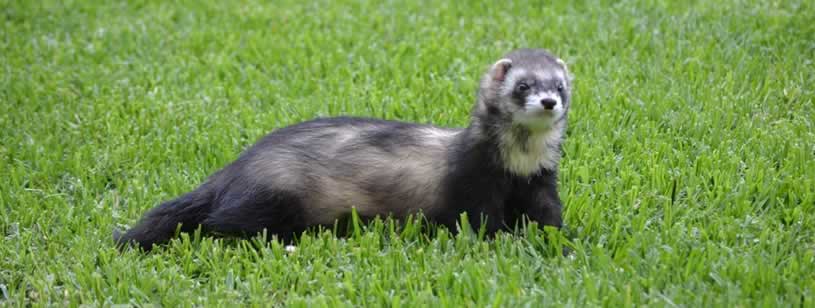
Polecats are carnivorous mammals in the family Mustelidae, related to weasels, otters and martens. They are known for their long, slender bodies, agility and defensive scent from their anal glands. Species commonly called polecats or ferrets include the European polecat (Mustela putorius), steppe polecat (Mustela eversmanii) and black-footed ferret (Mustela nigripes), a rare wild mammal.
The domestic ferret (Mustela furo, also called Mustela putorius furo in some references) comes from domestication of the European polecat. It is kept as a companion animal and should be distinguished from wild species.
Quick facts
| Common name | Polecat |
| Scientific name | Mustela putorius; Mustela eversmanii; Mustela nigripes |
| Typical lifespan | Rarely more than 4-5 years in the wild; about 10-14 years in captivity |
| Maximum speed | Not well measured; fast and agile over short distances |
| Dimensions | Length: 35-50 cm (plus 10-18 cm tail) |
| Weight | About 0.5-2 kg (males are larger than females) |
| Diet type | Carnivore (rodents, rabbits, frogs, birds, eggs) |
| Main predators | Foxes, large birds of prey, wolves, domestic dogs, humans |
| Conservation status | European and steppe polecats Least Concern; black-footed ferret Endangered (IUCN) |
| Distribution | Europe and Morocco for the European polecat; Europe and Asia for the steppe polecat; North America for the black-footed ferret |
| Living environment | Woodland edges, wetlands, steppes, prairies, farmland |
- Primary category:Mammals
- Explore this animal's categories:
Interesting facts
- Pet ferrets sleep up to 14-18 hours a day - They are very active when awake but save energy with long periods of sleep.
- They kill with a precise bite - Polecats usually bite small prey at the back of the neck or skull.
- They keep a "larder" of live frogs - European polecats sometimes bite frogs and toads in a way that leaves them paralysed but alive, then store them in their dens for later.
- They store food - Polecats hide surplus prey in their dens and eat it when hunting is poor.
- They are fast and agile for their size - They move quickly through grass, rocks and burrows.
- The steppe polecat is much paler than its European cousin - Its body fur is light yellowish, contrasting with its dark legs and face mask.
- Ferrets have been used to lay cables - Thanks to their long, thin bodies, domestic ferrets have pulled cables through narrow pipes and ducts.
Records and remarkable features
- European polecats, steppe polecats and black-footed ferrets are distinct species with different conservation needs.
- In 2020, a black-footed ferret called Elizabeth Ann became the first endangered species in the USA to be cloned, using cells frozen more than 30 years earlier.
Physical characteristics and adaptations
Polecats are small mammals that are very well adapted for hunting, with long, flexible bodies and keen senses.
Key physical adaptations
- A long, supple body - Lets them slip through narrow tunnels and burrows.
- Thick fur - Dark guard hairs over a pale, woolly underfur protect them from cold and wet; the winter coat is thicker.
- Short, strong legs - Help them dig and move quickly on the ground.
- Sharp teeth and a strong bite - Their canine teeth are used to kill prey quickly.
- Defensive scent glands - Glands near the tail can release a very strong-smelling fluid to deter predators.
- Keen smell and hearing - Help them find prey in the dark, as their eyesight is relatively poor.
Habits and behaviour
Polecats are solitary animals, except during the mating season and while the females are raising their young.
Daily life
- They are mostly active at night and at dusk.
- They rest in dens, often in old rabbit burrows, under tree roots, in woodpiles or in barns, and use them to store food.
- Each polecat has a home range, which it marks with strong-smelling scent.
- They do not hibernate, but in cold weather they spend more time in their dens.
Social interactions
- They live alone and avoid other polecats outside the mating season.
- They communicate with chuckles, hisses, screams and smells, especially when fighting or mating.
- Females defend their young fiercely, even against larger animals.
Hunting techniques
- Stealthy hunting - Polecats move quietly through vegetation or along tunnels.
- Polecats use their jaws to capture and kill prey; a bite to the back of the neck or skull usually kills quickly.
- Storing prey - They can hide rodents and frogs in their dens for times when food is scarce.
Habitat and geographic distribution
Polecats are adaptable animals that live in many environments.
Regional distribution
| Species | Distribution |
|---|---|
| European polecat (Mustela putorius) | Europe and Morocco, according to the Mammal Diversity Database |
| Steppe polecat (Mustela eversmanii) | Central and Eastern Europe to Central Asia and China |
| Black-footed ferret (Mustela nigripes) | Prairies of North America |
| Domestic ferret (Mustela furo) | Kept in captivity in many countries; this does not represent the range of wild species |
Habitat types
- Woodland edges, farmland and wetlands - Favourite habitats of the European polecat.
- Steppes and grasslands - The main habitat of the steppe polecat.
- Prairies - The black-footed ferret lives in prairie dog colonies in the North American Great Plains.
- Farms and villages - Polecats can live close to people, hunting rats and mice around farm buildings.
Climate and habitat change
- Habitat loss - Intensive farming and spreading towns reduce polecat habitats.
- Less prey - Where rodents, rabbits and frogs decline, polecats go hungry.
- Conflict with people - In farming areas, polecats are sometimes killed because they raid poultry.
Diet and feeding
Polecats are carnivores that mainly hunt small mammals, but they are also opportunists and eat other food when necessary.
What do polecats eat?
| Food group | Examples and context |
|---|---|
| Rodents and rabbits | Mice, rats, voles, rabbits; black-footed ferrets feed mainly on prairie dogs |
| Birds and eggs | Ground-nesting birds, sometimes poultry |
| Reptiles and amphibians | Frogs, toads, lizards, snakes |
| Insects and other invertebrates | Beetles, earthworms, snails |
| Carrion | Dead animals, including remains left by other predators |
| Fruit (rarely) | Berries and other fruit, eaten occasionally |
Feeding methods
- Ambush - They creep up close to their prey and attack suddenly.
- Polecats catch prey with their teeth and usually kill it with a bite to the back of the neck or head.
- Storing food - If they catch more than they can eat, they hide it in their dens for later.
- Hunting in tunnels - Their long bodies let them follow prey into burrows.
Reproduction and life cycle
Polecats breed once a year, in spring, and the female raises the young on her own.
Breeding season
- Mating takes place between March and June, depending on the region.
- Males travel widely to find females and may fight each other.
- After mating, the female raises her young alone, without help from the male.
Pregnancy and birth
| Feature | Details |
|---|---|
| Pregnancy | About 40-43 days |
| Young per litter | Usually 3-8, sometimes up to 12 |
| Weight at birth | About 9-10 g, blind and with very little fur |
| Nursing period | About 6-8 weeks |
Raising the young
- The young, called kits, depend completely on their mother for the first few weeks.
- They start eating meat at about 3 weeks old and open their eyes at about 5 weeks.
- At about 2 months, they begin to follow their mother on hunting trips.
- At about 3 months, they become independent and leave to find their own home range.
Survival
- Many young polecats die in their first year, from predators, traffic or lack of food.
- In the wild, polecats rarely live more than 4-5 years; in captivity, they can live to about 10-14 years.
Name and history
Origin of the name
- The word "polecat" may come from the French poule, "hen", and "cat", because polecats were known for raiding chicken coops.
- The word "ferret" comes, through Old French, from the Latin furittus, "little thief". The scientific name putorius comes from the Latin putor, "stench".
Taxonomic classification
| Classification | Name |
|---|---|
| Kingdom | Animalia |
| Phylum | Chordata |
| Class | Mammalia |
| Order | Carnivora |
| Family | Mustelidae |
| Genus | Mustela |
Evolution and fossils
- Polecats belong to the genus Mustela, together with weasels, stoats and minks.
- The domestic ferret was bred from the European polecat more than 2,000 years ago and was used to hunt rabbits and rats.
- The black-footed ferret, native to North America, became extinct in the wild in 1987, when the last animals were taken into captivity. Thanks to breeding programmes, it was released back into the wild from 1991.
Cultural significance and mythology
Polecats and ferrets have lived alongside people for thousands of years and are often seen as symbols of cunning, boldness and independence.
Polecats in mythology and folk belief
- In Romanian culture - The polecat (dihor) is known as a clever chicken thief, and its strong smell gave rise to the saying that something "stinks like a polecat".
- In ancient times - Greek and Roman writers described ferrets being used to drive rabbits out of their burrows, for example in the Balearic Islands.
- In medieval Europe - Ferrets were widely used for "ferreting": hunting rabbits by sending a ferret into the burrow to chase them out into nets.
- In everyday language - To "ferret out" something means to search for it persistently until you find it.
Modern symbolism
- Independence - Polecats are often linked with freedom and a solitary spirit.
- Agility and cunning - In Western cultures, ferrets are seen as quick, curious and clever.
- Persistence - Like a ferret searching every tunnel, the animal stands for curiosity and determination.
Conservation status and threats
Polecats and ferrets include several species, and their conservation status varies with their habitat and human pressures.
Conservation status
| Species | Global IUCN status |
|---|---|
| European polecat (Mustela putorius) | Least Concern (LC) |
| Steppe polecat (Mustela eversmanii) | Least Concern (LC) |
| Black-footed ferret (Mustela nigripes) | Endangered (EN) |
Main pressures
- Habitat loss - Intensive farming and urban growth reduce the areas where polecats can live and hunt.
- Rat poisons - Polecats eat rodents and can be poisoned indirectly.
- Hunting and trapping - In some regions, polecats are treated as pests because they attack poultry.
- Road traffic - Many polecats are killed by cars.
- Disease and loss of prey - Sylvatic plague kills prairie dogs and black-footed ferrets, the main threat to the ferret's recovery. In Britain, European polecats also interbreed with escaped domestic ferrets.
Protection measures
- Reintroduction programmes - Black-footed ferrets bred in captivity have been released at many sites in the USA, Canada and Mexico.
- Habitat protection - In many countries, polecats are protected by nature conservation laws.
- Fewer poisons - Farmers are encouraged to use natural pest control, letting polecats help keep rodents in check.
In popular culture
Polecats are less famous than many wild animals, but ferrets have appeared in films, books and folklore thanks to their lively personalities.
Film and documentaries
- The Beastmaster (1982) - In this fantasy film, the hero's two ferrets, Kodo and Podo, act as spies and thieves.
- Along Came Polly (2004) - In this comedy with Ben Stiller, a pet ferret called Rodolfo causes chaos.
Books and literature
- The Ferret Chronicles (Richard Bach) - A series of books about adventurous ferrets.
Ferrets in everyday life
- Pets - Domestic ferrets are popular pets in many countries, known for their playful, curious nature.
- Ferret-legging - An odd traditional contest from Yorkshire, England, in which competitors keep live ferrets inside their trousers for as long as possible.
Did you know? About polecat
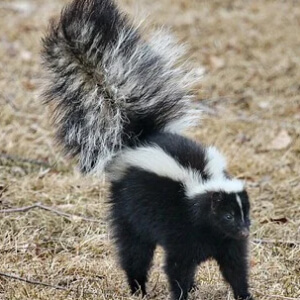
- When threatened, polecats release a foul-smelling liquid from glands near the tail.
- Several species are called polecats or ferrets, including the European polecat, the steppe polecat and the black-footed ferret.
- Polecats are solitary and mostly active at night.
- Their babies, called kits, are born blind.
- Wild polecats usually live only a few years, while pet ferrets often live 6-10 years.
- Their eyesight is relatively poor, but their hearing and sense of smell are excellent.
- Once a polecat bites, it can grip so tightly that it is hard to make it let go.
- Polecats also use their strong-smelling secretions to mark their territory.
- Females can give birth to up to 10 or more young.
- Ferrets have been tamed for more than 2,000 years.
- Adult males usually weigh about 1-1.5 kg, while females weigh only about 0.6-0.9 kg.
- Ferrets can catch human flu and are very vulnerable to canine distemper, so pet ferrets are often vaccinated.
- Pet ferrets often suffer from diseases of the adrenal glands and pancreas as they get older.
- As pets, domestic ferrets (<em>Mustela furo</em>) are energetic, curious and playful.
- Ferrets have been used to pull cables through long pipes, for example for the TV and sound cables at the 1981 wedding of Prince Charles and Diana and at the Millennium concert in London.
- In countries such as England, ferrets have long been used to hunt rabbits and to drive rats and mice out of buildings. Related profile: Mouse.