GiraffeInteresting facts and information
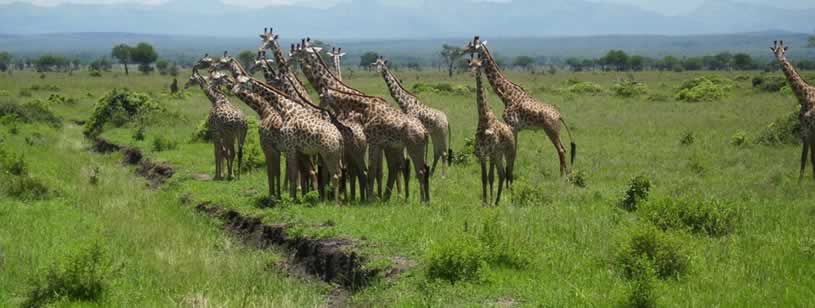
Giraffes (Giraffa) are the tallest living land animals. In 2025, the IUCN specialist group recognised four species: northern, reticulated, Masai and southern giraffes. Their long necks help them reach leaves in trees.
Giraffe populations face habitat loss, hunting and other pressures. Conservation assessments must be read for the particular species and assessment date, especially after the recognition of four species in 2025.
The giraffe has fascinated people for thousands of years and appears in rock art, myths and historical writings. In many cultures, it is a symbol of elegance, wisdom and peace.
Quick facts
| Common name | Giraffe |
| Scientific name | Giraffa spp. |
| Typical lifespan | About 20-25 years in the wild, up to about 30 years in captivity |
| Maximum speed | About 50-60 km/h in short sprints |
| Height | About 4.3-5.7 m (males), 3.5-4.7 m (females) |
| Weight | About 700 - 1,200 kg (females), 1,100 - 1,900 kg (males) |
| Diet type | Herbivore (leaves, shoots, fruit, flowers) |
| Main predators | Lions, hyenas, leopards, crocodiles, humans |
| Conservation status | Assessed separately for each species and population; different species and regions have different needs |
| Distribution | Sub-Saharan Africa |
| Habitat | Savanna, open woodland, dry areas |
- Primary category:Mammals
- Explore this animal's categories:
Interesting facts
- A giraffe can drink up to about 38 litres of water at once - but it can also go several days without drinking, thanks to the moisture in the leaves it eats.
- A giraffe has a strong heart and a circulatory system adapted to moving blood up its long neck; it does not have the largest heart of all land mammals.
- It has the same number of neck vertebrae as a human (7) - but each one can be more than 25 cm long.
- It defends itself with powerful kicks - A kick from a giraffe can kill a lion.
- It needs little sleep - Giraffes sleep only a few hours a day, often in short naps.
- They may communicate with very low sounds - Giraffes have been recorded humming at night, and scientists are still studying how they use sound.
- Their life starts with a drop - A giraffe is born standing up, so the calf falls about 1.5-2 metres to the ground, but it can stand within an hour.
- Every giraffe has its own pattern - No two giraffes have exactly the same coat pattern, rather like human fingerprints.
Records and remarkable features
- Giraffes (Giraffa) are the tallest living land animals. In 2025, the IUCN specialist group recognised four species: northern, reticulated, Masai and southern giraffes. Their long necks help them reach leaves in trees.
Characteristics
Giraffes have long legs, long necks and patterned coats. A long, flexible tongue helps them reach and grasp leaves.
Main physical features:
| Feature | Details |
|---|---|
| Height | About 4.3-5.7 m (males), 3.5-4.7 m (females) |
| Neck length | About 1.5 - 2 m |
| Weight | About 700 - 1,200 kg (females), 1,100 - 1,900 kg (males) |
| Tongue length | About 45 - 50 cm |
| Tail length | About 70 - 100 cm, with a long tuft at the end |
| Blood pressure | About twice as high as a human's |
| Sleep | A few hours a day, in short naps |
Special adaptations:
- A long neck - Lets giraffes feed high in trees, out of reach of other herbivores, so they face less competition for food.
- A long, flexible tongue helps giraffes grasp leaves among branches.
- Thick skin and unique patches - The coat pattern varies between individuals and helps giraffes blend in among trees.
- The circulatory system supports blood flow along the long neck; the claim that giraffes have the largest heart of any land mammal is incorrect.
- Long, muscular legs - Let giraffes run at about 50-60 km/h and deliver powerful kicks.
- Ossicones - Both sexes have horn-like structures made of bone and covered with skin; males use them in fights.
Habits and behaviour
Giraffes are peaceful, social animals that live in loose groups. Their behaviour depends on access to food and protection from predators.
Social behaviour:
- Flexible herds - Giraffe groups are loose, and members join and leave them often.
- Ritual fights - Males fight by swinging their necks and hitting each other, a behaviour called "necking"; the strongest win access to females.
- Shared care of calves - Mothers sometimes leave their calves together in a "crèche", watched over by one or more adults.
Communication:
- Low sounds - Giraffes are mostly quiet, but they have been recorded making low humming sounds at night.
- Body language - They use the position of their neck, head and ears to send signals to other giraffes.
- Snorts and grunts - Giraffes snort when alarmed and make other sounds during social interactions.
Self-defence:
- Deadly kicks - A giraffe can kill a lion with a well-aimed kick.
- Excellent eyesight - Their large eyes, high above the ground, let them spot predators from far away.
- Running - Giraffes can sprint at about 50-60 km/h and keep up a fast pace over longer distances.
Habitat and geographic distribution
Giraffes live only in Africa, in savannas and open woodland, where they can find tall trees and water.
Habitat types:
| Habitat | Example species |
|---|---|
| Open savanna | Southern giraffe (Giraffa giraffa) |
| Open woodland | Masai giraffe (Giraffa tippelskirchi) |
| Dry areas | Northern giraffe (Giraffa camelopardalis), reticulated giraffe (Giraffa reticulata) |
Geographic distribution:
- East Africa (Kenya, Tanzania, Ethiopia, Somalia) - Home to large giraffe populations, including Masai and reticulated giraffes.
- Southern Africa (Namibia, Botswana, Zimbabwe, South Africa) - Important habitat for the southern giraffe.
- Central and West Africa (Chad, Central African Republic, Niger, South Sudan) - Small, isolated populations of northern giraffes, threatened by habitat loss.
Impact of climate change and human activities:
- Habitat loss - The spread of farms and clearing of woodland limit giraffes' access to food.
- Poaching - Giraffes are killed illegally for meat, skins and tails.
- Climate change - Droughts affect food and water supplies.
- Fragmented populations - Many giraffe groups are isolated, which reduces genetic diversity.
Giraffes are not all in immediate danger of extinction, but many populations are declining, and conservation is essential for their survival.
Diet and feeding
Giraffes are specialised herbivores that eat mainly leaves, shoots and flowers, often from heights that other herbivores cannot reach. They play an important role in African ecosystems by shaping the growth of trees and shrubs.
Types of food:
| Food group | Examples |
|---|---|
| Leaves and shoots | Acacia, Commiphora, Combretum |
| Flowers and fruit | Acacia flowers, seed pods, fruit |
| Grass | Occasionally, especially when other food is scarce |
| Bark and bones | Giraffes sometimes chew bark or old bones to get minerals |
Feeding methods:
- Giraffes use their flexible tongues and lips to grasp leaves. Their feeding adaptations help them deal with thorny branches.
- Moist food - Because fresh leaves contain a lot of water, giraffes can go several days without drinking.
- Many hours of feeding - Giraffes spend much of the day browsing and can eat about 30 kg of leaves a day.
Drinking:
- Large drinks - A giraffe can drink up to about 38 litres at once but may go days without drinking.
- A risky position - To reach the water, giraffes must spread their front legs wide or bend them, which makes them vulnerable to predators.
Reproduction and life cycle
Male giraffes compete for females, and dominant males mate with several females. Breeding can take place all year round.
Life cycle stages:
| Stage | Approximate timing | What happens |
|---|---|---|
| Pregnancy | About 15 months | One of the longest pregnancies among mammals. |
| Birth | All year round | The calf drops about 1.5-2 metres to the ground. |
| Newborn calf | 0 - 6 months | It can stand and walk within an hour of birth. |
| Young | 6 - 18 months | Stays with its mother and other females and learns to avoid predators. |
| Young adult | About 3 - 5 years | Becomes able to breed. |
| Adult | Up to about 25 years | Males establish their rank by necking. |
Reproductive behaviour:
- Males compete by "necking" - They swing their necks and hit each other, and the winner earns the right to mate.
- One calf at a time - Females give birth standing up, so the calf falls about 1.5-2 metres.
- Calves are very vulnerable - Often half or more of all calves are killed by predators in their first year.
- Calf crèches - Several mothers may leave their calves together, guarded by one or more adults.
Giraffes breed slowly, and calves are often attacked by lions, hyenas, leopards and crocodiles, so populations can decline quickly in some regions.
Name and history
The giraffe has fascinated people for thousands of years and appears in ancient rock art, writings and paintings.
Origin of the name:
- The English word giraffe came through other languages from an Arabic name for the animal.
- The historical name camelopardalis refers to an old comparison with a camel and a leopard; it is not evidence of a hybrid.
Taxonomic classification:
| Taxonomic rank | Name |
|---|---|
| Kingdom | Animalia |
| Phylum | Chordata |
| Class | Mammalia |
| Order | Artiodactyla |
| Family | Giraffidae |
| Genus and species | Giraffa (giraffes); Giraffa camelopardalis now refers specifically to the northern giraffe |
The giraffe in history and culture:
- Ancient Egypt - Giraffes appear in Egyptian art, and a giraffe hieroglyph was used in a word meaning "to foretell".
- Ancient Rome - Julius Caesar brought the first giraffe to Rome in 46 BC, where it was seen as a "camel-leopard".
- Giraffes in Renaissance Europe — A Florentine diary records a giraffe being presented in Florence in 1487, during the lifetime of Lorenzo de' Medici.
- Giraffe diplomacy - In 1827, Muhammad Ali of Egypt sent a giraffe called Zarafa to King Charles X of France, which caused a "giraffe craze" in Paris.
The giraffe has long been a symbol of the exotic and of elegance, and it still attracts admiration in zoos and nature reserves.
Cultural significance and mythology
In many cultures, the giraffe has been seen as a symbol of grace, wisdom and far-sightedness. Its unique appearance and peaceful nature have made it a favourite in stories.
The giraffe in myths and beliefs:
- Ancient Egypt - The giraffe was linked with foresight, because it can see far into the distance.
- Ancient Rome - The Romans thought the giraffe was a cross between a camel and a leopard, which is where the name camelopardalis comes from.
- Africa - Giraffes appear in many African rock paintings and stories, and in some San traditions the giraffe is linked with rain.
- China - When a giraffe was brought to the Chinese emperor in 1414, after the voyages of Admiral Zheng He, it was hailed as a qilin, a lucky mythical creature.
- Renaissance Europe - Giraffes were symbols of the exotic and of nobility, given as gifts between rulers.
What the giraffe symbolises:
- Vision and wisdom - Because of its height, the giraffe stands for seeing far ahead and spotting danger in time.
- Peace and gentleness - One of the most peaceful animals of the savanna, it is a symbol of balance and harmony.
- Elegance and grace - Its slow movements and unique posture make it a symbol of natural beauty.
Conservation status and threats
Habitat loss, hunting and other pressures affect giraffes. Following the 2025 taxonomic revision, species and subspecies assessments require explicit names and dates rather than a single status for all giraffes.
Conservation status
| Species | Status (IUCN) |
|---|---|
| Northern giraffe (Giraffa camelopardalis) | Consult the assessment for the named species and date |
| Masai giraffe (Giraffa tippelskirchi) | Consult the assessment for the named species and date |
| Southern giraffe (Giraffa giraffa) | Consult the assessment for the named species and date |
| Reticulated giraffe (Giraffa reticulata) | Consult the assessment for the named species and date |
Main threats:
- Habitat loss - The spread of farms and towns greatly reduces giraffe habitat.
- Poaching - Giraffes are killed for meat, tails and skins.
- Climate change - Long droughts affect giraffes' food and water.
- Conflict with people - As farmland expands, giraffes come into contact with farmers, who may see them as a threat to crops and fences.
- Fragmented populations - Giraffes living in small, isolated groups lose genetic diversity.
Conservation efforts:
- Parks and reserves - National parks in Kenya, Tanzania, Namibia, South Africa and other countries protect giraffes.
- Monitoring - Conservation groups count giraffes and plan protection measures.
- Anti-poaching work - Education and stronger laws help reduce illegal hunting.
- Moving giraffes - Some organisations move giraffes to areas where they had disappeared, to create new populations.
Without effective action, some giraffe populations could continue to decline and disappear from parts of their range.
In popular culture
Giraffes in literature:
- Giraffes Can't Dance (Giles Andreae, 1999) - A children's book about a giraffe who learns to dance in his own way, a story about self-acceptance.
- Nature books - Giraffes appear in many books about African wildlife and conservation.
Giraffes in film and television:
- Madagascar (2005-2012) - Melman, the anxious, hypochondriac giraffe, is one of the main characters.
Giraffes in games and toys:
- Animal Crossing (Nintendo) - Gracie, a stylish giraffe, runs a fashion boutique.
- Sophie la Girafe - A rubber giraffe teething toy made in France since 1961 and loved by babies around the world.
The giraffe as a cultural symbol:
- Elegance - Giraffes are often used in fashion, branding and art to suggest refinement and uniqueness.
- Conservation - The giraffe has become a symbol of the need to protect Africa's wildlife; World Giraffe Day is held every year on 21 June.