WalrusInteresting facts and information
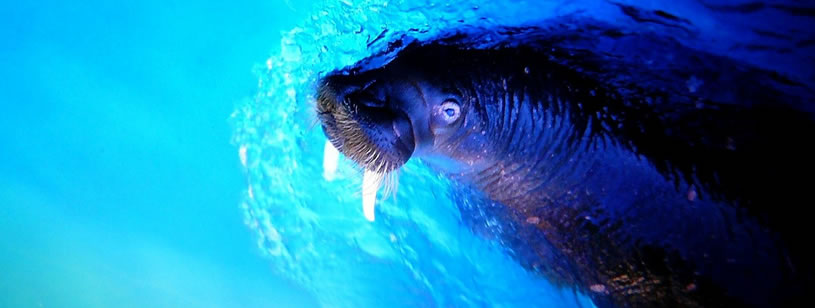
The walrus (Odobenus rosmarus) is a large marine mammal of the Arctic. It has prominent tusks and sensitive whiskers that help it find food on the seabed. Walruses use both coastal waters and resting places on ice or land.
Walruses are good swimmers and can stay underwater for up to about 30 minutes. They use their tusks to haul themselves out onto the ice. They are carnivores and feed mainly on clams and other seabed animals, which they find with their very sensitive whiskers.
Walrus populations are affected by climate change, because melting sea ice reduces the places where they rest and feed. Even so, they remain among the most impressive animals of the Arctic.
Quick facts
| Common name | Walrus |
| Scientific name | Odobenus rosmarus |
| Typical lifespan | 20 - 40 years |
| Maximum speed | About 30 km/h in water for short bursts; usually much slower |
| Size | 2.2 - 3.6 m long |
| Weight | Females: 600 - 1,500 kg; males: 800 - 2,000 kg |
| Diet type | Carnivore (molluscs, crustaceans, worms) |
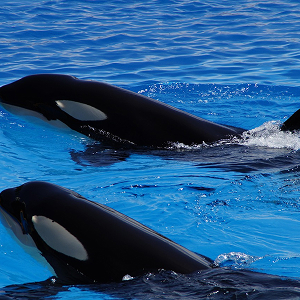
| Main predators | Polar bears, orcas, humans |
| Conservation status | Vulnerable (IUCN) |
| Distribution | Arctic: North Atlantic, Bering and Chukchi Seas, Laptev Sea |
| Habitat | Sea ice, coasts and shallow Arctic seas |
- Primary category:Mammals
- Explore this animal's categories:
Interesting facts
- Their tusks can be up to about 1 metre long - Both males and females have ivory tusks, but males use them most in fights and displays against rivals.
- They cope with freezing water for hours - Thick skin and a layer of blubber up to 15 cm thick protect them from the cold.
- They find food with their whiskers - A walrus has around 400-450 very sensitive whiskers that help it find clams and other molluscs on the seabed.
- They can sleep in the water - Walruses can sleep floating at the surface, sometimes hanging from the ice by their tusks.
- They are noisy animals - Walruses grunt, whistle, roar and bellow to communicate, especially during the breeding season.
Records and remarkable features
- The walrus is the only living member of its family, Odobenidae.
- It is the only pinniped with tusks; the longest can reach about 1 metre.
- Large males can weigh up to about 2,000 kg, making the walrus one of the heaviest pinnipeds.
Characteristics
The walrus is a huge, heavily built marine mammal adapted to the cold waters of the Arctic. Its body is covered by thick skin over a layer of blubber that keeps out the cold. Its most striking feature is its long tusks, which it uses for defence, for hauling itself onto the ice and in contests between males.
Main physical features:
| Feature | Details |
|---|---|
| Size | 2.2 - 3.6 m long |
| Weight | Females: 600 - 1,500 kg; males: 800 - 2,000 kg |
| Skin thickness | 2 - 4 cm, over a blubber layer up to 15 cm thick |
| Tusks (ivory) | Up to about 1 m long; longer and heavier in males |
| Whiskers | About 400 - 450, very sensitive |
| Colour | Greyish-brown; turns pinkish in warm weather |
| Front flippers | Strong, used to move around on ice and land |
| Diving | Can stay underwater for up to about 30 minutes |
Special adaptations:
- Strong tusks - Used for defence, for pulling the body out onto the ice and for asserting dominance during the breeding season.
- Thick skin and blubber - Protect walruses from extreme cold.
- Extremely sensitive whiskers - Detect prey on the seabed, even in murky water.
- Diving adaptations - Walruses can close their nostrils and slow their heart rate to stay underwater longer.
- Efficient swimming - Although they look clumsy on land, walruses are good swimmers, driven mainly by their hind flippers.
Habits and behaviour
Walruses are social animals that gather in large groups on ice floes and beaches. These groups are usually peaceful, but males become territorial and aggressive during the breeding season.
Social behaviour:
- They live in large groups - Herds can number hundreds or even thousands of animals, which offers some protection.
- Ranking by size and tusks - Dominant males win their status in contests and fights, using their tusks.
- Close contact - Walruses lie packed tightly together on ice and beaches, which helps them stay warm.
Feeding and survival methods:
- A diet based on shellfish - Walruses use their sensitive whiskers to find food on the seabed and suck it out with powerful suction.
- Diving - They usually feed in shallow water, typically less than 80-90 m deep, and can stay underwater for up to about 30 minutes.
- Large meals - An adult can eat several percent of its body weight in a day, which can mean up to about 50 kg of food.
Defence and survival strategies:
- Tusks as weapons - Walruses can use their tusks to defend themselves against polar bears and orcas.
- Safety on the ice - They rest on ice floes, away from predators on land.
- Saving heat - In cold water, blood flow to the skin is reduced, so walruses look pale; this helps them lose less heat.
Habitat and geographic distribution
Walruses live in the Arctic and prefer areas of shallow water where food is easy to reach. They depend on floating sea ice for resting, giving birth and staying safe from predators.
Habitats:
| Habitat | Main regions |
|---|---|
| Floating sea ice | Arctic Ocean, Chukchi Sea, Laptev Sea |
| Coastal areas | Alaska, the Russian Far East, Arctic Canada, Greenland |
| Shallow seas | Arctic continental shelves, usually less than 100 m deep |
| Feeding grounds | The seabed, rich in molluscs and crustaceans |
Geographic distribution:
- North Atlantic - Arctic Canada, Greenland, Svalbard (Norway) and the Russian Arctic.
- North Pacific - Bering Sea and Chukchi Sea, between Alaska and Russia.
- Laptev Sea - A smaller population off northern Siberia.
Impact of climate change and human activities:
- Melting sea ice - The loss of Arctic ice forces walruses to gather in large numbers on shore, where they face more disturbance and stress.
- Oil and gas exploration and pollution - Growing industrial activity in the Arctic affects walrus habitat and their food sources.
- Past hunting - For centuries, walruses were hunted heavily for ivory, blubber and meat, which caused sharp declines in their numbers.
Walruses are well adapted to Arctic life but vulnerable to climate change, so protecting their habitat is an international priority.
Diet and feeding
Walruses are specialised carnivores that feed mainly on molluscs and crustaceans. They find prey on the seabed with their sensitive whiskers and use powerful suction to eat it.
Types of food:
| Type of prey | Examples |
|---|---|
| Molluscs | Clams, mussels, sea snails |
| Crustaceans | Crabs, shrimps, amphipods |
| Fish | Occasionally, such as Arctic cod |
| Marine worms | Polychaete worms |
| Other | Sea cucumbers; occasionally seals |
How they feed:
- Powerful suction - Walruses do not eat with their tusks; they create a vacuum in their mouth to suck clams out of their shells.
- Finding prey with whiskers - Their sensitive whiskers detect the shape and movement of prey on the seabed.
- Feeding together - Walruses often feed in groups, diving in shallow water.
- Large appetite - An adult walrus can eat up to about 50 kg of food a day.
By feeding on large numbers of seabed animals, walruses play an important part in Arctic marine ecosystems.
Reproduction and life cycle
Walruses breed slowly: a female usually has one calf every 2-3 years, which makes the species vulnerable to environmental change and population losses.
Life cycle stages:
| Stage | Approximate timing | What happens |
|---|---|---|
| Mating | January - March | Males compete for females with displays and fights. |
| Pregnancy | 15 - 16 months | Includes a few months of delayed implantation; usually one calf. |
| Birth | April - June | Calves weigh about 45 - 75 kg at birth. |
| Maternal care | About 2 years | Calves suckle and learn to swim and find food. |
| Maturity | 6 - 10 years | Males reach breeding age later than females. |
| Lifespan | 20 - 40 years | Some walruses live for about 40 years in the wild. |
Reproductive behaviour:
- Males compete - They use their tusks and loud underwater calls to win access to females.
- Mothers are very protective - They stay with their calves for about two years, teaching them to feed and stay safe.
- Mating takes place in the water - After fertilisation, the embryo implants only months later, so that births happen at the best time of year.
Because they breed so slowly, walrus populations are sensitive to habitat loss and hunting.
Name and history
Arctic peoples have known the walrus for thousands of years, and it was a vital resource for the Inuit and other Arctic communities, as well as a valuable source of ivory for the Vikings.
Origin of the name:
- "Walrus" - The English word comes from Dutch, probably from an old Scandinavian name meaning "horse-whale".
- The scientific name Odobenus rosmarus - Odobenus comes from Greek and means "tooth-walker", because walruses use their tusks to haul themselves out onto the ice; rosmarus comes from an old Scandinavian name for the animal.
- Other names - In Inuktitut the walrus is called aiviq, and in Old Norse it was hrosshvalr, "horse-whale".
Taxonomic classification:
| Taxonomic rank | Name |
|---|---|
| Kingdom | Animalia |
| Phylum | Chordata |
| Class | Mammalia |
| Order | Carnivora |
| Family | Odobenidae |
| Genus | Odobenus |
| Species | Odobenus rosmarus |
The walrus in history and culture:
- Inuit communities - Depended on walruses for meat, blubber (used as lamp oil), skin and tusks (used for tools and carvings).
- Vikings and Arctic explorers - Hunted walruses for ivory and for their tough hide, which was made into ropes.
- Legends and myths - In some Arctic cultures, walruses are linked with the spirits of the sea and the ice.
- Scientific description - Carl Linnaeus gave the walrus its scientific name in 1758.
Walruses have been an essential resource for many Indigenous peoples and remain an important symbol of Arctic wildlife.
Cultural significance and mythology
The walrus has played an important role in the beliefs and daily life of Arctic peoples, where it often stands for strength and survival. Over time, it has been respected, hunted and used in many ways by communities living in cold regions.
The walrus in myths and beliefs:
- Spirits of the sea - In Inuit traditions, sea animals, including walruses, are linked with the sea spirit who controls whether hunters find food.
- Respect for the animal - Many Arctic peoples believed that animals give themselves to hunters who treat them with respect.
- Chukchi traditions (Siberia) - Walrus hunting was surrounded by rituals and festivals to thank the animals and ensure good hunts in the future.
- Sailors' tales - Old stories tell of giant walruses able to overturn boats and kayaks.
What the walrus symbolises:
- Strength and protection - Thanks to its impressive tusks, the walrus is a symbol of power in the Arctic.
- Experience - Because it lives for decades in large groups, it is sometimes seen as a symbol of wisdom.
- Endurance - It is a symbol of survival in extreme conditions.
Conservation status and threats
The walrus is listed as Vulnerable on the IUCN Red List, mainly because of the loss of Arctic sea ice. Human activities add to the pressure, and conservation measures are becoming increasingly important.
Conservation status
| Species / population | Status |
|---|---|
| Walrus (species as a whole) | Vulnerable (IUCN) |
| Pacific walrus | The largest population; threatened by sea-ice loss |
| Atlantic walrus | Recovering in some areas after past overhunting |
| Laptev Sea walrus | A small, poorly known population |
Main threats:
- Climate change - Melting sea ice reduces walrus habitat and forces them to rest on shore, farther from their feeding grounds.
- Oil and gas development - Industrial activity in the Arctic can damage the seabed where walruses feed.
- Pollution and oil spills - Toxic substances can contaminate feeding areas and harm walrus health.
- Past overhunting - In the 19th and 20th centuries, walruses were hunted heavily for ivory, meat and blubber, causing sharp declines.
- Disturbance - When thousands of walruses crowd onto beaches, noise from people, planes or boats can cause stampedes in which young animals are crushed.
Conservation efforts:
- Protected areas - Several Arctic countries protect important walrus haul-out sites and feeding areas.
- Monitoring and research - Scientists use satellite tags, aerial surveys and drones to follow walrus movements and numbers.
- Hunting rules - Commercial hunting is banned; only regulated subsistence hunting by Indigenous communities is allowed.
- Awareness - Organisations such as WWF and the Arctic Council promote education about walruses and the effects of climate change.
The walrus is one of the Arctic species most affected by climate change, and its future depends on international action on climate and careful management of Arctic seas.
In popular culture
The walrus is a familiar figure in literature, music and film, sometimes shown as a funny character and sometimes as an imposing giant of the Arctic.
Walruses in literature:
- "The Walrus and the Carpenter" (Lewis Carroll, 1871) - A poem from Through the Looking-Glass, in which a walrus and a carpenter trick a group of young oysters.
- Inuit stories - Many traditional stories include walruses and the spirits of the sea.
Walruses in film and television:
- Tusk (2014) - A horror film about a man who is turned into a walrus.
- Nature documentaries - BBC and National Geographic documentaries show walruses in films about Arctic life and climate change.
Walruses in music and pop culture:
- "I Am the Walrus" (The Beatles, 1967) - A famous song with puzzling lyrics, partly inspired by Lewis Carroll's poem.
- Mascots - Walruses appear as mascots and symbols in some Arctic communities and sports teams.
The walrus as a cultural symbol:
- Emblems - Some Arctic communities use the walrus as a symbol of strength and endurance.
- Ivory carving - Walrus tusks have long been carved into art, tools and decorative objects.