CheetahInteresting facts and information
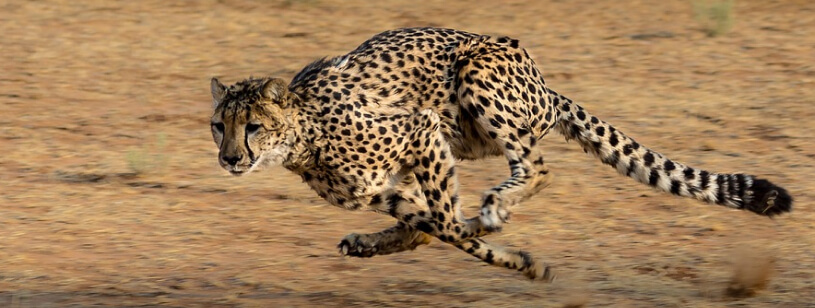
The cheetah (Acinonyx jubatus) is a cat adapted for rapid pursuit over short distances. Its slender body, long legs and long tail help it accelerate and turn while chasing prey.
Lighter and slimmer than other big African predators, the cheetah hunts by speed rather than strength and is the fastest land animal in the world. It is listed as Vulnerable because of habitat loss, conflict with people and the decline of its prey.
For thousands of years, cheetahs were tamed and used for hunting by Egyptian, Persian and Indian rulers. Today, only about 7,000 adults remain in the wild, mostly in southern and eastern Africa, with a tiny population in Iran.
Quick facts
| Common name | Cheetah |
| Scientific name | Acinonyx jubatus |
| Typical lifespan | About 10-12 years in the wild, up to about 20 years in captivity |
| Maximum speed | About 100-110 km/h in short sprints |
| Dimensions | About 110 - 150 cm long (without tail) |
| Weight | About 21 - 72 kg |
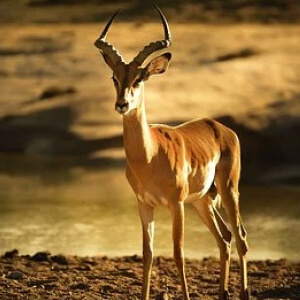
| Diet type | Carnivore (gazelles, impalas, hares, birds) |
| Main predators | Lions, hyenas and leopards (especially for cubs), people |
| Conservation status | Vulnerable (IUCN); Asiatic and Northwest African subspecies Critically Endangered |
| Distribution | Africa and Iran; reintroduced in India |
| Habitat | Savanna, grassland, open woodland, semi-desert |
- Primary category:Mammals
- Explore this animal's categories:
Interesting facts
- Claws that grip like running spikes - The cheetah's claws are only partly retractable, so they grip the ground like the spikes on a sprinter's shoes.
- Faster than a sports car off the mark - A cheetah can accelerate from 0 to about 95 km/h in around three seconds.
- Built to run - Light bones, a very flexible spine and long legs let it cover about 7 metres in a single stride at full speed.
- It cannot roar - Unlike lions and tigers, the cheetah purrs, chirps like a bird, hisses and growls.
- Tear marks - The black "tear lines" running from its eyes to its mouth may reduce glare from the sun.
- A long tail for steering - The tail works like a rudder, helping the cheetah turn sharply at high speed.
- Not a fighter - Cheetahs are not strong enough to defend their kills, so lions, hyenas and leopards often steal their food.
- Brothers stay together - Females live alone, but males often live in small groups called "coalitions", usually of brothers.
Records and remarkable features
- The cheetah (Acinonyx jubatus) is a cat adapted for rapid pursuit over short distances. Its slender body, long legs and long tail help it accelerate and turn while chasing prey.
- The fastest land animal - Cheetahs can reach about 100-110 km/h in short bursts; a zoo cheetah named Sarah ran 100 metres in 5.95 seconds in 2012.
- The king cheetah - A rare gene gives some cheetahs large blotches and stripes instead of spots; they were once thought to be a separate species.
- Lots of spots - A cheetah has about 2,000-3,000 spots.
Characteristics
The cheetah is the land mammal best built for speed. Its body is slim and light, with long legs, strong but flexible muscles and a deep chest.
Main physical characteristics:
| Characteristic | Details |
|---|---|
| Length | About 110 - 150 cm (without tail) |
| Tail length | About 60 - 80 cm |
| Weight | About 21 - 72 kg |
| Height at the shoulder | About 70 - 90 cm |
| Maximum speed | About 100 - 110 km/h |
| Sprint duration | Usually under 30 seconds (about 200-300 m) |
| Stride at full speed | About 7 metres |
| Eyesight | Excellent in daylight, good for spotting prey far away on open plains |
| Muscles | Packed with fast-acting fibres for explosive speed |
Special adaptations:
- Long, slender legs - Allow very long strides.
- Flexible spine - It bends and stretches like a spring, making each stride longer.
- Semi-retractable claws - Give grip on the ground, like running spikes.
- A long tail - Helps it keep its balance during sudden turns.
- Large nostrils, lungs and heart - Allow it to take in lots of oxygen during a sprint.
- "Tear lines" - The black stripes on the face may reduce glare from the sun.
Habits and behaviour
The cheetah lives differently from other big cats. It is mainly active during the day, which helps it avoid lions and hyenas that hunt mostly at night.
Social behaviour:
- Solitary females - Females live alone or with their cubs, which they raise for about 18-24 months.
- Male coalitions - Brothers often stay together for life, hunting together and defending a territory.
- Not a top predator - Cheetahs often lose their kills to lions and hyenas, and lions kill many cheetah cubs.
Hunting techniques:
- Speed, not strength - The cheetah sneaks up on its prey, then explodes into a short sprint.
- Choosing prey - Cheetahs often pick young, old or weak animals that are easier to catch.
- Stalking - It uses low vegetation to hide and gets within about 50-100 m before starting the chase.
- Short chases - Most chases last less than 30 seconds; if the cheetah does not catch its prey quickly, it gives up, worn out.
Self-defence and territorial:
- Avoiding fights - Cheetahs are not built for fighting and usually run away from other predators.
- Marking territory - Males mark their territories with urine and scratch marks, often on special "play trees".
- Hiding cubs - Mothers move their cubs to new hiding places every few days to keep them safe from lions and hyenas.
Habitat and geographic distribution
The cheetah prefers wide, open country where it can use its speed. It once lived across most of Africa and from the Middle East to India, but it has disappeared from most of this range.
Habitat types:
| Habitat | Typical prey |
|---|---|
| African savanna | Gazelles, impalas, hares |
| Open grassland and woodland | Small antelopes, hares, birds |
| Semi-deserts | Springbok, young oryx, hares |
| Iranian plateau | Wild sheep, goats, gazelles, hares |
Geographic distribution:
- Southern and eastern Africa - The largest populations live in Namibia, Botswana, South Africa, Kenya and Tanzania.
- Iran - Only a tiny population of the Asiatic cheetah (Acinonyx jubatus venaticus) survives, perhaps a few dozen animals or fewer.
- India - The cheetah died out in India by the mid-20th century; since 2022, African cheetahs have been released in Kuno National Park.
Impact of climate change and human activities:
- Habitat loss - Farms and settlements reduce the land available to cheetahs.
- Conflict with people - Many cheetahs are killed by farmers who fear for their livestock.
- Fewer prey animals - Hunting of antelopes by people leaves cheetahs with less food.
- Fragmentation - Cheetahs need huge areas, and roads and fences split their habitat into small pieces.
There are only about 7,000 adult cheetahs left in the wild, and without strong protection their numbers could fall even further.
Diet and feeding
The cheetah is a carnivore that relies on speed and agility to catch prey. Unlike other big cats, it does not overpower its prey with strength, but outruns it on open ground.
Main types of prey:
| Type of prey | Examples |
|---|---|
| Small and medium antelopes | Thomson's gazelle, impala, springbok |
| Small mammals | Hares, rodents |
| Birds | Guineafowl, francolins, bustards |
| Young of larger animals | Wildebeest and zebra calves, especially for male coalitions |
Hunting techniques:
- Stalking and sprinting - The cheetah creeps up to within about 50-100 metres of its prey, then accelerates to catch it.
- Turning - When the prey zigzags, the cheetah uses its tail for balance to follow every turn.
- The kill - The cheetah trips its prey with a swipe of its front paw, then holds it by the throat until it suffocates.
Feeding methods:
- Eating fast - Because it cannot defend its food, the cheetah eats quickly before lions or hyenas arrive.
- Food needs - An adult cheetah needs about 3 kg of meat a day, but it can go several days between meals.
- Little water - Cheetahs can go for days without drinking, getting moisture from their prey.
Reproduction and life cycle
Cheetahs breed fairly slowly, and their cubs are very vulnerable to predators.
Life cycle stages:
| Stage | Approximate duration | Characteristics |
|---|---|---|
| Gestation | About 90 - 95 days | The female gives birth in a hidden place, such as tall grass or a thicket. |
| Cubs | 0 - 3 months | They have a long, silvery-grey mane on their backs, which may help them look like fierce honey badgers. |
| Juveniles | 3 - 18 months | They follow their mother and learn to hunt. |
| Young adults | About 18 months - 2 years | They leave their mother; brothers often stay together. |
| Adults | From about 2 years | They can breed and look for a territory. |
Reproductive behavior:
- No fixed breeding season - Cheetahs can breed at any time of year.
- Single mothers - Males take no part in raising the cubs.
- Dangerous early life - In places with many lions and hyenas, such as the Serengeti, most cubs die before they become independent.
- Learning to hunt - Mothers bring live prey to their cubs so that they can practise catching it.
The low survival of cubs, together with habitat loss and conflict with people, is a major reason for the cheetah's decline.
Name and history
People have admired cheetahs since ancient times, and for thousands of years tamed cheetahs were used for hunting.
Origin and etymology of the name:
- The word "cheetah" comes from Hindi cītā, from the Sanskrit citraka, meaning "spotted".
- The scientific name Acinonyx jubatus comes from Greek and Latin: Acinonyx means "unmoving claw", referring to its claws that do not fully retract, and jubatus means "maned", probably referring to the cubs' mane.
Taxonomic classification:
| Taxonomic category | Name |
|---|---|
| Kingdom | Animalia |
| Phylum | Chordata |
| Class | Mammalia |
| Order | Carnivora |
| Family | Felidae |
| Genus and species | Acinonyx jubatus |
Cheetah in history and culture:
- Ancient Egypt - Egyptians kept cheetahs and showed them in their art.
- Persia and Mughal India - Tamed cheetahs were used to hunt antelopes; the Mughal emperor Akbar is said to have kept about 1,000 at a time.
- Medieval and Renaissance Europe - Italian and French nobles kept hunting cheetahs, brought from Africa and Asia.
- India - After the cheetah died out in India, African cheetahs were brought from Namibia and South Africa to Kuno National Park from 2022.
People have admired and used the cheetah for thousands of years; today, strong conservation efforts are needed to save it.
Cultural significance and mythology
The cheetah has been admired throughout history for its speed and elegance and appears in the art and symbolism of many cultures.
Cheetah in mythology and popular beliefs:
- Ancient Egypt - The goddess Mafdet was sometimes shown as a cheetah, and objects decorated with cheetah heads were found in the tomb of Tutankhamun.
- Persia and India - Hunting with cheetahs was a royal sport, and rulers kept large numbers of tamed cheetahs.
- African traditions - In some African cultures, cheetah skins were worn by chiefs, and parts of the cheetah were used by traditional healers as symbols of speed.
- Royalty - In many cultures, the cheetah was a symbol of kings and nobles.
Cheetah symbolism:
- Speed and agility - The cheetah is a popular symbol of sport, fast reflexes and success.
- Precision - It stands for focus and efficiency.
- Independence - It is seen as a graceful, independent hunter rather than a fighter.
Conservation status and threats
The cheetah is listed as Vulnerable by the IUCN, and its numbers are falling because of habitat loss, conflict with farmers and illegal trade.
Conservation status
| Population | Status (IUCN) |
|---|---|
| Cheetah (species as a whole) | Vulnerable |
| Asiatic cheetah (Acinonyx jubatus venaticus) | Critically Endangered |
| Northwest African cheetah (Acinonyx jubatus hecki) | Critically Endangered |
| Southern African cheetah (Acinonyx jubatus jubatus) | The largest population, mainly in Namibia and Botswana |
Main threats:
- Habitat loss - Farms and settlements leave less land for cheetahs.
- Illegal trade - Cheetah cubs are smuggled, especially from the Horn of Africa, to be sold as pets.
- Conflict with farmers - Many cheetahs are killed by livestock farmers.
- Fewer prey animals - Hunting by people reduces the antelopes cheetahs need.
- Low genetic diversity - Cheetahs are all very closely related, which may make them more vulnerable to disease.
Conservation efforts:
- Protected areas - National parks in Namibia, Botswana, South Africa, Kenya and Tanzania provide refuges for cheetahs.
- Guard dogs - In Namibia, the Cheetah Conservation Fund gives farmers livestock-guarding dogs, which keep cheetahs away from herds and reduce killings.
- Reintroduction - Since 2022, India has been releasing African cheetahs into the wild.
- International law - Commercial trade in wild cheetahs is banned under CITES.
In 1900 there may have been about 100,000 cheetahs; today there are only about 7,000 adults left in the wild.
In popular culture
Cheetah in literature:
- The Spotted Sphinx (Joy Adamson, 1969) - The author of Born Free describes raising and releasing a cheetah named Pippa.
- Children's books - The cheetah is a favourite subject of books about the fastest animals.
Cheetah in cartoons and video games:
- Duma (2005) - A film about a South African boy who raises an orphaned cheetah and takes it back to the wild.
- Chester Cheetah - The cool cheetah mascot of Cheetos snacks since 1986.
Cheetah as a cultural symbol:
- Sports teams - Many sports teams use the cheetah as a symbol of speed.
- Brands - The cheetah is used in advertising for cars, sportswear and other products linked with speed.
- Fashion - Cheetah-print patterns are popular in clothing and design.