CaimanCaimaninae — habitat, diet and reproduction
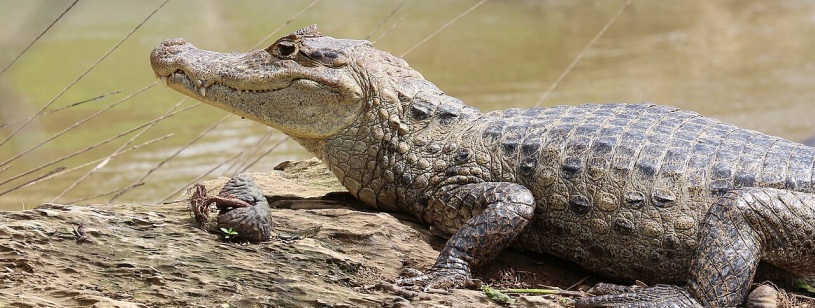
Spectacled caiman (Caiman crocodilus) on a bank. · Bernard Gagnon / CC0 (http://creativecommons.org/publicdomain/zero/1.0/deed.en).
Caimans are aquatic reptiles of the alligator family living in Central and South America. The group has six species, from the dwarf caiman, just over a metre long, to the black caiman, which can exceed five metres. They lie in wait in rivers, lakes and swamps with only their eyes and nostrils above water.
Quick facts
| Common name | Caiman |
| Scientific name | Caimaninae (genera Caiman, Melanosuchus, Paleosuchus) |
| Lifespan | Several decades; spectacled caimans live 30–40 years |
| Length | From about 1.2 m (dwarf caiman) to about 5 m (black caiman) |
| Diet | Carnivore: fish, snails, crabs, birds, mammals |
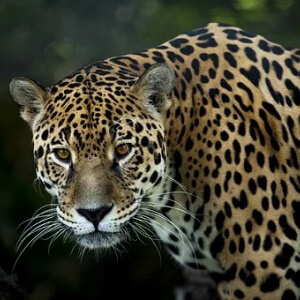
| Predators | Jaguars and anacondas take adults; birds and large fish take young |
| Conservation status | Most species are Least Concern (LC) |
| Distribution | Southern Mexico, Central and South America |
| Habitat | Rivers, lakes, swamps and flooded forests |
| Family | Alligatoridae |
| Reproduction | Lays eggs in a mound nest of plants |
- Primary category:Reptiles
- Explore this animal's categories:
Interesting facts
- The spectacled caiman has a bony ridge between its eyes, like a spectacle frame.
- The black caiman is, alongside the jaguar, the largest predator of the Amazon basin.
- Dwarf caimans are the smallest members of the alligator family.
- The female guards her nest and helps the young hatch.
Characteristics
Caimans have bony plates under the skin, a relatively short snout and a powerful, flattened tail. With the mouth closed, the lower teeth are hidden, as in alligators.
The black caiman is almost black, with pale bands on the flanks when young. The spectacled caiman is olive green. Dwarf caimans have very thick skin and brown eyes.
Behaviour
Caimans hunt mostly at night. By day they bask on banks or float motionless. They communicate with grunts, hisses and head movements in the water.
In the dry season, when water levels fall, many gather in the remaining pools. Some species bury themselves in mud to survive dry periods.
Habitat and distribution
Caimans live from southern Mexico to northern Argentina. The black caiman inhabits the Amazon basin, and the spectacled caiman has the widest range.
They use slow rivers, lakes, swamps, flooded forests and even brackish coastal water.
Diet and feeding
Young caimans eat insects, snails and crustaceans. Adults catch fish, including piranhas, frogs, waterbirds and mammals that come to drink.
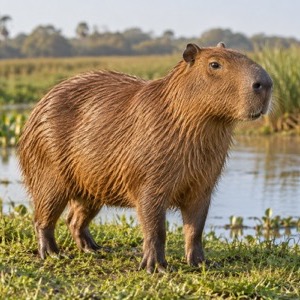
Black caimans can take large prey such as capybaras or deer, while dwarf caimans eat more invertebrates and small fish.
Reproduction and life cycle
The female builds a mound nest of leaves, sticks and mud near water. Rotting plants release heat that helps the eggs develop.
Spectacled caimans usually lay 14–40 eggs. The female guards the nest, and when the young call from inside the eggs she opens the nest and carries them to the water in her mouth.
Name and history
The word “caiman” comes from an indigenous Caribbean language, adopted by the Spanish.
Caimans, alligators and crocodiles form the crocodilians. Caimans and alligators share the family Alligatoridae, while crocodiles form a separate family.
Conservation and threats
In the twentieth century, caimans were heavily hunted for their skins. The black caiman became endangered but recovered after protection and is now considered low risk in most areas.
Most species are assessed as Least Concern. Current threats include wetland destruction, dams and illegal hunting.
Frequently asked questions
What is the difference between a caiman and an alligator?
They belong to the same family. Caimans live in Central and South America and usually have stronger bony plates on the belly.
How big do caimans get?
It depends on the species: the dwarf caiman is just over 1 m, the black caiman can exceed 5 m.
Do caimans attack people?
Rarely. The very large black caiman can be dangerous, but attacks are unusual.
What does a caiman eat?
Fish, snails, crabs, frogs, birds and mammals; young eat mostly insects.