Roe deerInteresting facts and information
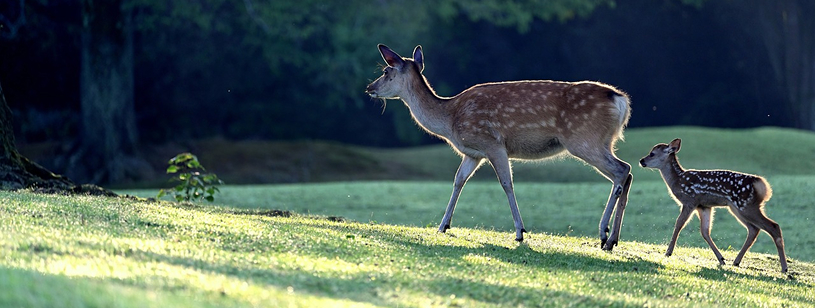
Roe deer are small deer in the genus Capreolus. The European roe deer (Capreolus capreolus) and Siberian roe deer (Capreolus pygargus) are different species. They use habitats with suitable food and cover, including woodland edges and farmland.
Roe deer use woodland, fields and other habitats with suitable cover. They can run and leap to escape danger, but speed and jumping ability vary.
Quick facts
| Common name | Roe deer |
| Scientific name | Capreolus capreolus; Capreolus pygargus |
| Typical lifespan | Usually about 7-10 years in the wild, sometimes more; up to about 15-17 years in captivity |
| Maximum speed | About 60 km/h in short bursts |
| Height at shoulder | About 60-90 cm |
| Length | About 95-140 cm |
| Weight | About 15-35 kg (European roe deer); Siberian roe deer are larger |
| Diet type | Herbivore (leaves, herbs, buds, fruit) |
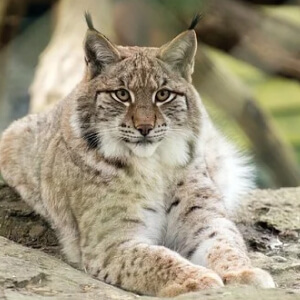
| Main predators | Wolves, lynxes, foxes (for fawns), golden eagles, people |
| Conservation status | Least Concern (IUCN), both species |
| Distribution | Europe, Turkey and the Caucasus; Siberian roe deer across northern and central Asia |
| Living environment | Mixed forests, forest edges, meadows, farmland |
- Primary category:Mammals
- Explore this animal's categories:
Interesting facts
- Seasonal coats - In summer, roe deer have a bright reddish-brown coat; in winter it turns greyish-brown and much thicker.
- Hidden fawns - Mothers leave their spotted fawns lying hidden in tall grass, returning only to feed them; the fawns have very little scent, which helps keep them safe.
- Barking deer - When alarmed, roe deer give a loud bark, a little like a dog.
- Fast and agile - Roe deer can run at about 60 km/h in short bursts and leap about 2 m high.
- Male roe deer, like males of many other deer species, shed and regrow their antlers.
- A waiting pregnancy - Roe deer are the only hoofed animals known to have delayed implantation: they mate in summer, but the embryo only starts growing in winter.
Records and remarkable features
- Male roe deer grow and shed antlers. European and Siberian roe deer are different species.
- Europe's most common deer - The European roe deer is the most widespread and numerous wild deer in Europe, with many millions of animals.
- Winter antlers - Unlike most deer, roe bucks grow their new antlers during the winter, covered in soft "velvet".
Physical characteristics and adaptations
The roe deer is a small, elegant and agile deer, well adapted to life in woodland, forest edges and farmland.
Key physical adaptations
- A light, muscular body - Allows quick escapes and leaps of about 2 m high and several metres long.
- Camouflage - Reddish in summer and greyish-brown in winter; fawns have white spots that help them hide.
- A white rump patch - When alarmed, the deer flares the white hairs on its rump, warning others.
- Small antlers - Males have short antlers, usually with three points each, which they shed in late autumn and regrow over the winter.
- Large, mobile ears - Help them hear predators from far away.
- Eyes on the sides of the head - Give them a wide field of view.
- No gall bladder - Like other deer, roe deer have no gall bladder.
Habits and behaviour
Roe deer are shy, cautious animals that usually live alone or in small groups.
Daily life
- Active at dawn and dusk - They feed mostly in the early morning and evening, resting in cover during the day.
- Small groups - Females often live with their young, while adult males are usually alone.
- Territorial males - In spring and summer, bucks defend territories and mark them with scent and by rubbing their antlers on bushes.
- Scent marking - Roe deer use scent glands on their heads and legs to communicate.
Social interactions
- Mothers and young - Fawns stay with their mother until the next spring.
- Solitary bucks - Outside the breeding season, males live alone.
- Winter groups - In winter, especially on open farmland, roe deer may form larger groups.
Defence techniques
- Running and zigzagging - When chased, the roe deer bounds away and changes direction suddenly.
- Hiding fawns - Fawns lie still in tall grass, almost invisible because of their spotted coats.
- Constant alertness - Their ears and eyes are always watching for danger, and they bark to warn others.
Habitat and geographic distribution
Roe deer are very adaptable and live in woodland, forest edges, meadows, farmland and even the edges of towns.
Regional distribution
| Region | Species Present |
|---|---|
| Europe | European roe deer (Capreolus capreolus) |
| Northern and Central Asia, Siberia, Korea, China | Siberian roe deer (Capreolus pygargus) |
| Turkey, the Caucasus, northern Iran and Iraq | European roe deer at the edge of its range |
Habitat types
- Mixed woodland - Roe deer like deciduous and mixed forests with plenty of undergrowth.
- Forest edges and clearings - Ideal places to feed while staying close to cover.
- Farmland - In many regions, roe deer live in open fields, sometimes far from woods.
Climate and habitat change
- Climate change - Earlier springs may mean that fawns are born after the best food is available.
- Urbanisation - Roads and towns break up their habitat.
- Farming - Mowing machines kill many hidden fawns in spring.
Diet and feeding
The roe deer is a selective herbivore that picks the most nutritious plants and changes its diet with the seasons.
What does the roe deer eat?
| Food group | Examples and context |
|---|---|
| Herbs and flowers | Clover, dandelion and other herbs |
| Leaves and shoots | Oak, beech, maple, willow, bramble |
| Buds and twigs | Young trees and shrubs, especially in winter |
| Fruit and seeds | Acorns, beech nuts, wild apples, berries |
| Crops and fungi | Cereals, rapeseed, and mushrooms in autumn |
Feeding methods
- Feeding at dawn and dusk - They feed mostly in the early morning and evening.
- Chewing the cud - Roe deer are ruminants: they bring up their food and chew it again to digest it better.
- Seasonal diet - In spring and summer they eat leaves and herbs, and in winter buds, brambles and twigs.
Reproduction and life cycle
Roe deer have an unusual breeding cycle with delayed implantation, and mothers take great care of their fawns.
Breeding season
- The breeding season (rut) is from about mid-July to mid-August.
- Bucks chase does and fight rivals with their antlers.
- Pairs often run in circles or figure-of-eight patterns during courtship, leaving "roe rings" in the grass.
Gestation and birth
| Characteristic | Details |
|---|---|
| Gestation | About 9-10 months in total, including about 4-5 months of delayed implantation |
| Number of fawns per birth | Usually 1-2, sometimes 3 |
| Weight at birth | About 1-2 kg |
| Nursing period | About 3-4 months |
Raising young
- Fawns are born in May or June and lie hidden for the first weeks; the mother visits them only to feed them.
- After about a month, they start following their mother.
- Young roe deer usually stay with their mother until the next spring, then leave to find their own home range.
Survival
- Many fawns die in their first year, killed by predators, mowing machines or harsh weather.
- Roe deer usually live about 7-10 years in the wild, sometimes more, and up to about 15-17 years in captivity.
Name and history
Origin of the name
- The English word "roe" comes from Old English rā, an old Germanic name for the animal.
- The scientific name Capreolus comes from Latin and means "little goat".
Taxonomic classification
| Classification | Name |
|---|---|
| Kingdom | Animalia |
| Phylum | Chordata |
| Class | Mammalia |
| Order | Artiodactyla |
| Family | Cervidae |
| Genus | Capreolus |
| Species | Capreolus capreolus, Capreolus pygargus |
Evolution and history
- Roe deer belong to the deer family, whose earliest members lived more than 20 million years ago.
- Roe deer survived the Ice Ages in southern Europe and spread north again as the climate warmed.
- People have hunted roe deer since prehistoric times for their meat and skins.
Cultural significance and mythology
The roe deer is a familiar symbol of gentleness, grace and the European countryside.
Roe deer in stories and legends
- Bambi - In Felix Salten's original book, Bambi is a roe deer; Disney's film turned him into a white-tailed deer for American audiences.
- Gentleness - In many European cultures, the roe deer is a symbol of innocence and grace.
- Hunting traditions - Roe deer hunting has long traditions in Central Europe, and buck antlers are kept as trophies.
Roe deer in heraldry and symbolism
- Coats of arms - Roe deer appear on the coats of arms of several towns and families in Europe.
- Rescue projects - In Germany and other countries, volunteers use drones with heat cameras to find fawns hidden in meadows before mowing.
- Logos - The roe deer is used in logos for nature, tourism and outdoor products.
Conservation status and threats
Roe deer are not threatened; in many parts of Europe their numbers have greatly increased.
Conservation status
| Species | IUCN status | Population information |
|---|---|---|
| European roe deer (Capreolus capreolus) | Least Concern | Many millions; increasing in many areas |
| Siberian roe deer (Capreolus pygargus) | Least Concern | Widespread in Asia |
Main pressures
- Habitat loss - Farming, roads and buildings break up natural habitat in some regions.
- Illegal hunting - In some areas, roe deer are poached.
- Road accidents - Many roe deer are killed in collisions with cars.
- Mowing - Many hidden fawns are killed by mowing machines.
- Climate change - May affect the timing of food and births.
Management measures
- Hunting rules - Roe deer hunting is regulated with seasons and quotas to keep populations healthy.
- Wildlife crossings - Green bridges and tunnels help reduce road accidents.
- Saving fawns - Searching meadows before mowing saves many fawns.
- Balancing numbers - In some places, high numbers of roe deer damage young trees, so their numbers are managed.
In popular culture
The roe deer is one of the best-loved wild animals of Europe and appears in literature, film and art.
Film and animation
- Bambi (Disney, 1942) - Based on Felix Salten's book about a roe deer, although the film shows a white-tailed deer.
- Nature documentaries - Roe deer often appear in films about European forests and countryside.
Books and literature
- Bambi: A Life in the Woods (Felix Salten, 1923) - The original story of a young roe deer growing up in an Austrian forest.
Mascots and symbols
- Logos - Many outdoor, tourism and nature brands use the image of a deer.
- Coats of arms - Roe deer appear on the coats of arms of some towns in Germany, Poland and other countries.
- Art - Roe deer are a common subject of paintings, porcelain and wood carvings.