CulpeoInteresting facts and information
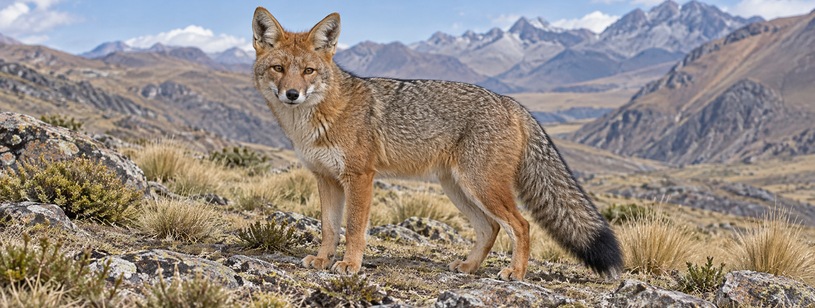
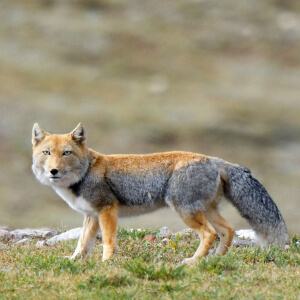
AI illustration of culpeo.
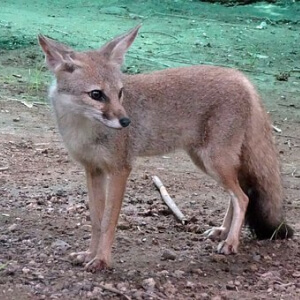
The culpeo is a South American canid found mainly along the Andes and in neighbouring regions. It has a grey back, reddish head and legs, and a long, bushy tail with a dark tip. It feeds mainly on animals but also eats fruit.
Its scientific name is Lycalopex culpaeus. Although called a fox, it does not belong to Vulpes, the genus of the red fox. It is a distinct species in Canidae, rather than a red fox subspecies.
Quick facts
| Species | Lycalopex culpaeus |
| Class / order / family | Mammalia / Carnivora / Canidae |
| Distribution | The Andes and other South American regions, from Colombia to Tierra del Fuego |
| Habitat | Grasslands, mountains, scrub, forests and arid areas |
| Size | Approximately 7–12 kg; males larger than females |
| Diet | Omnivorous, mainly rodents, hares, birds and other animals, plus fruit |
| Reproduction | Gestation of approximately 55–60 days; litters of about 3–8 pups |
| Young | Born helpless and raised in a den by both parents |
| Conservation | Least Concern (LC), global status |
Interesting facts
- It can live high in the Andes. Records reach elevations of around 4,800 m.
- It is not restricted to mountains. It also uses deserts, scrub, grasslands and some temperate forests.
- Some food comes from animals introduced by people. European hares have become prey in certain South American regions.
- It is more robust than many small desert foxes. Males are larger than females on average.
- The tail helps identification but is only one clue. Size, leg colour and the location of a sighting also matter.
Records and remarkable features
The culpeo is the largest Chilean fox, according to Chile’s Ministry of the Environment. In South America, only the maned wolf is a larger wild canid.
Data presented by the Canid Specialist Group give approximately 7–12 kg for adults in the samples described, with differences between sexes and regions. The body can exceed 80 cm without the tail, making it look substantial beside a small fox such as Blanford’s fox.
Elevation is another remarkable feature. A record at 4,800 m shows that the species can use high mountain environments; it does not mean that all individuals live permanently at that altitude.
Characteristics
The head has a long, fairly narrow muzzle and triangular ears. The coat combines grey, reddish and cream shades. The chin is pale, while the upper surface of the tail can look darker.
| Feature | What to look for |
| Grey back | Mixed-colour hairs give a grizzled appearance |
| Reddish head and legs | Contrast with the greyer trunk |
| Bushy tail | Dark tip visible in many positions |
| Robust body | Larger than many small African or Asian foxes |
The teeth are adapted to catching and processing animal food. The canines hold prey, and teeth behind them help cut it.
Coat colour and size vary between populations. A combination of appearance and distribution helps identification, especially where other South American canids also occur.
Habits and behaviour
Culpeos often search for food alone. They may be active at night or twilight, but are also seen by day in some places. Their schedules change with food availability and disturbance from people.
Scents, urine and droppings convey information to other individuals. These signals can remain along routes after an animal has left. Such signs also help researchers understand how culpeos use their surroundings.
Shelters may be among rocks, in burrows or under protective vegetation. A safe site and food within reach are important when raising young.
In the ecosystem, the culpeo is a predator and may also compete with, or fall prey to, other carnivores. Its relationship with the puma can influence habitat use.
Habitat and geographic distribution
Its range extends through western South America to Tierra del Fuego. Although associated with the Andes, it also occurs in lowland regions, including Patagonia and some arid coastal landscapes.
- In mountains, it uses slopes, valleys and ground above the treeline.
- In arid areas, it finds food in scrub and open ground.
- In the south, it can also occupy temperate forests.
- Near farms, it sometimes encounters domestic animals.
So the culpeo is not only a mountain fox: it also lives in deserts, steppes and forests.
Habitat continuity and pressure from people influence local populations. A wide-ranging species can be scarce in one valley or disappear from a place where persecution is intense.
Diet and feeding
Food includes rodents, hares, birds, reptiles and other available animals. Culpeos also eat fruit and carrion. The importance of each food varies between regions and seasons.
They hunt using hearing, smell and a careful approach. Small prey may be caught after a short stalk or pounce. Hares and other larger mammals require different tactics from collecting fruit or searching for insects.
In some places, culpeos eat introduced animals such as European hares. This can alter the relationship between a native predator and an ecosystem changed by people.
Attacks on poultry or small farm animals can cause conflict. Protecting shelters and managing domestic animals carefully can reduce losses while retaining predators in the landscape.
Reproduction and life cycle
Zoological literature describes gestation as approximately 55–60 days. Helpless young are born in a shelter and initially feed on milk. Litters usually have about 3–8 pups.
| Stage | What changes |
| Newborns | Need warmth, milk and protection |
| Growing in the shelter | Begin exploring and eating solid food |
| Outings near the den | Play develops coordination and responses |
| Independence | Young animals must find food and available space |
The timing of births depends on the season and region. Spring in the Southern Hemisphere falls at a different time of year from spring in the Northern Hemisphere.
Both parents help raise the pups. Young culpeos must find enough food and avoid dogs and other predators.
Name and history
Sources use names including culpeo, Andean fox, zorro colorado and local names. The Canid Specialist Group lists Culpem in Mapudungun and Atoq in Quechua, among others.
The current scientific name is Lycalopex culpaeus. Older studies also use Pseudalopex culpaeus. Both names refer to the same animal.
“Fox” is a common name applied to several canids with a similar appearance. Zoologically, the culpeo is distinct from the Vulpes species described on the other pages.
The Fuegian dog, kept by the Selk'nam and Yaghan peoples of Tierra del Fuego, is thought to have been a tamed culpeo; it disappeared in the early 20th century.
Conservation status and threats
The global status is Least Concern (LC), according to the Canid Specialist Group. This assessment concerns the species as a whole and does not guarantee that every local population is secure.
Fur hunting, trapping, poisoning in farming conflicts and dog attacks can affect culpeos. Pressures differ between regions, and populations do not recover at the same rate everywhere.
Conservation can include monitoring, reducing conflict and controlling free-roaming dogs. Secure livestock housing and community information matter where people and culpeos share a landscape.
In parks such as Torres del Paine in Chile, culpeos sometimes come close to people. Visitors should watch them from a distance and never feed them.
Discover other foxes
Read about Red fox or explore: Pale fox · Blanford's fox · Cape fox · Corsac fox · Tibetan sand fox · Swift fox · Kit fox · Bengal fox · Fennec fox · Arctic fox.
Frequently asked questions
- Where does the culpeo live? In South America, from Colombia to Tierra del Fuego. It uses the Andes as well as grasslands, forests and arid areas, rather than being restricted to one habitat.
- What is its scientific name? Lycalopex culpaeus. It belongs to Canidae but to a different genus from the red fox, Vulpes vulpes. It is a distinct species, rather than a red fox subspecies.
- What does it eat? Small mammals, other animals and carrion, sometimes supplemented with fruit. It is omnivorous, with a substantial animal-food component; the menu changes between regions and seasons.
- Is it Chile’s largest fox? Yes, it is the largest native Chilean fox. That does not make it South America’s largest canid: the maned wolf is larger.
- How much does it weigh? Measurement samples reported by specialists include approximately 7–12 kg. Males tend to be larger than females.
- Does it live only in mountains? No. It is associated with the Andes but uses other environments too. Food, shelter and local pressures influence habitat use alongside elevation.
- How does it reproduce? Pups are raised in a shelter and initially depend on adult care. Gestation is approximately 55–60 days, and local resources influence breeding success.
- Is it threatened with extinction? Its global status is Least Concern. Local problems can include persecution, poisoning, dogs and habitat change.