Malayan tigerInteresting facts and information
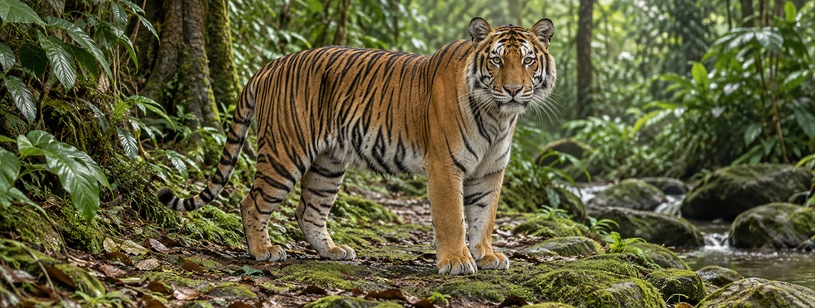
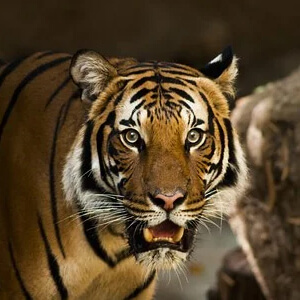
AI illustration of malayan tiger.
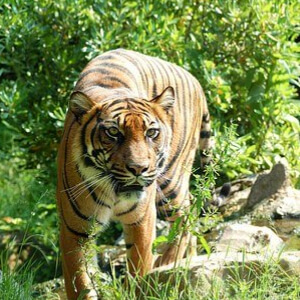
The Malayan tiger inhabits forests of the Malay Peninsula. This carnivorous predator has orange fur and black stripes and is traditionally named Panthera tigris jacksoni. It is not native to Borneo.
It is one of the most threatened tigers. Malaysia's first national tiger survey, carried out in 2016–2020, led to an estimate of fewer than 150 wild tigers, reported in 2022.
Quick facts
| Species | Panthera tigris |
| Traditional subspecies name | Panthera tigris jacksoni |
| Two-subspecies classification | Panthera tigris tigris; subspecies boundaries are under review |
| Class / order / family | Mammalia / Carnivora / Felidae |
| Distribution | The Malay Peninsula, particularly Peninsular Malaysia |
| Habitat | Tropical forests with prey, water and vegetation cover |
| Diet | Carnivorous (mainly deer and wild pigs) |
| Size | Among the smaller tigers; males usually up to about 130 kg |
| Social organisation | Mainly solitary; the female raises the cubs |
| Gestation | Approximately 100–106 days |
| Independence of young | Usually around two years old, with variation |
| Conservation | Critically Endangered (CR), IUCN |
Interesting facts
- Research published in 2004 supported its genetic separation from Indochinese tigers. Visual similarities do not reveal every difference between populations.
- The name jacksoni honours Peter Jackson, a specialist involved in tiger conservation.
- It is a national symbol. Two tigers support Malaysia’s coat of arms.
- It can swim and use water to cool down. A large cat need not have the same relationship with water as a domestic cat.
- A tiger photographed ten times remains one tiger. Identification by stripes is essential for sound estimates.
Records and remarkable features
The Malayan tiger is among the smaller tigers, compared with large Bengal and Amur tigers. It remains a powerful predator capable of catching substantial mammals.
Males usually weigh up to about 130 kg, and females are considerably smaller.
Its most pressing distinction is conservation: a small population must survive where forests, roads and human activities meet. Every breeding female and every safe forest connection matters.
Characteristics
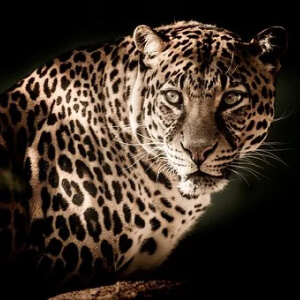
The orange coat has dark stripes and white areas on the face and underside. Individual patterns act as signatures in camera-trap studies. Two animals in the same population do not have identical stripes.
Powerful paws help grasp prey. Claws retract and teeth are adapted to eating meat. A flexible body and slow approach allow close-range attacks.
| Feature | Use |
| Coat stripes | Camouflage among vegetation shadows |
| Retractile claws | Gripping and marking |
| Good hearing and vision | Locating prey |
| Whiskers | Detecting contact near the muzzle |
The Malayan tiger is the national animal of Malaysia.
Habits and behaviour
Adults are mainly solitary. Females with cubs are an important exception, and males and females meet during mating.
Tigers leave scent signals, scratches and other signs. These communicate presence without direct encounters. Roars travel over distance, while close communication includes growls and chuffs.
Activity is not strictly limited to night. Hunting and travel depend on prey, temperature and disturbance. A tiger near people or traffic may use different hours from one in an undisturbed area.
Territories have no fixed size. Scarce food requires searching a larger area. Resources near shelter are particularly important for a female with cubs.
Habitat and geographic distribution
Its range is associated with the Malay Peninsula, particularly Peninsular Malaysia’s forests. Zoological sources also include the far south of Thailand within this group’s range. That does not mean every peninsular forest retains a stable population.
It uses tropical forests with vegetation cover. Water and mammalian prey are necessary, while continuous forest supports travel between ranges.
- Large forests can support several territories and breeding sites.
- Corridors allow animals from different groups to meet.
- Forest edges can bring conflict with human activities.
- Roads and fragmentation can make movement riskier.
Malaysia also includes part of Borneo, but there are no wild tigers on Borneo.
Diet and feeding
The Malayan tiger is carnivorous. Deer and wild pigs are important resources, alongside other locally available mammals. Vegetation or very small animals alone cannot sustain a healthy tiger population.
It hunts through a quiet approach and short attack, using vegetation to close the distance. Strength does not remove risk: large prey can injure a predator, and many attempts fail.
It can return to a kill for further meals over several days.
Snares targeting tiger prey reduce food and can injure tigers directly. Conservation concerns both the cat and the mammal community supporting it.
Reproduction and life cycle
Gestation lasts approximately 100–106 days. Cubs are born in a concealed place with closed eyes. They initially drink milk, then gradually begin eating meat.
The mother provides food and protection. Cubs practise through play, follow siblings’ movements and later accompany the female. Becoming an effective hunter takes time.
| Stage | What it needs to do |
| Small cub | Remain sheltered and grow |
| Larger cub | Explore and learn beside its mother |
| Independent young tiger | Find food and a territory |
| Breeding adult | Have resources and access to mates |
Independence usually comes around two years old, with individual variation. Survival to breeding is not guaranteed, especially in a small population with separated habitats.
Zoo pedigree records help select pairs. Births in coordinated programmes complement conservation but do not replace protection of the wild population.
Name and history
“Malayan” indicates the link with the Malay Peninsula. The traditional name is Panthera tigris jacksoni. Genetic research in 2004 supported recognising it separately from northern Indochinese tigers.
The two-subspecies classification groups mainland tigers within Panthera tigris tigris. The IUCN Cat Specialist Group notes that taxonomy remains under review. These are not six different species: all belong to Panthera tigris.
Cultural significance and mythology
Tigers have a visible place in Malaysia’s identity. The two supporters on the national coat of arms provide a concrete example, and WWF-Malaysia presents the tiger as a national symbol.
Malaysia's national football team is nicknamed Harimau Malaya, the "Malayan Tigers", and the tiger also appears in the logo of Maybank, the country's largest bank.
Conservation status and threats
The Malayan tiger is listed as Critically Endangered (CR) by the IUCN. The first national survey, conducted during 2016–2020, led to the 2022 estimate of fewer than 150 wild tigers, down from about 3,000 in the 1950s.
Main threats include poaching, snares, habitat loss and prey depletion. Losing a few breeding adults can severely affect a small population.
Protection requires patrols, snare removal, investigation of trafficking networks and forest connections. Cooperation with people living near habitat supports safety and reporting of illegal activities.
In popular culture
Malayan tigers appear in conservation campaigns and zoo education. San Diego Zoo presents this population to visitors and explains pressures on its natural habitat.
Every year on 29 July, Global Tiger Day, Malaysian conservation groups run campaigns to raise awareness of the Malayan tiger.
Discover other tigers
Read about Tiger or explore: Sumatran tiger · Bengal tiger · Siberian tiger · Indochinese tiger · South China tiger.
Frequently asked questions
- Where does the Malayan tiger live? On the Malay Peninsula, particularly Peninsular Malaysia’s forests. Some zoological sources include the far south of Thailand within the group’s range.
- Are Malayan tigers native to Borneo? No. This group’s natural range is peninsular, rather than on Borneo.
- What does it eat? It is carnivorous, eating mammals such as deer and wild pigs according to local resources.
- How many remain in the wild? WWF-Malaysia reported fewer than 150 in 2022, based on the 2016–2020 national survey.
- Is it the same as the Indochinese tiger? Not in the traditional classification, which separates them using genetic evidence. Both populations belong to Panthera tigris.
- Where does jacksoni come from? It honours Peter Jackson, a specialist involved in tiger conservation.
- How do they reproduce? Gestation lasts approximately 100–106 days. The mother raises cubs, which usually become independent around two years old.
- Why is it so threatened? Its small population is affected by poaching, snares, habitat loss and depletion of prey animals.