ChamoisInteresting facts and information
The northern chamois (Rupicapra rupicapra) is a mountain-dwelling hoofed mammal with hooked horns and specialised hooves. It occurs in several European and western Asian mountain regions, including the Carpathians. The Pyrenean chamois (Rupicapra pyrenaica) is a different species.
Chamois are adapted to mountain terrain and change their coat with the season. Hunting, disturbance, disease and habitat change can affect populations; local management and protection differ between regions.
Quick facts
| Common name | Chamois |
| Scientific name | Rupicapra rupicapra |
| Typical lifespan | About 15-20 years in the wild |
| Maximum speed | About 50 km/h, even on rough ground |
| Height at shoulder | About 70-85 cm |
| Length | About 100-130 cm |
| Weight | About 25-50 kg (males), 20-40 kg (females) |
| Diet type | Herbivore (grasses, herbs, leaves, needles, lichens) |
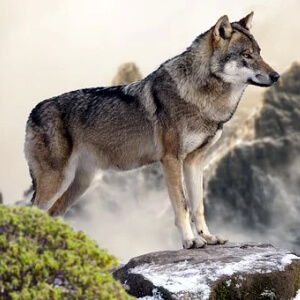
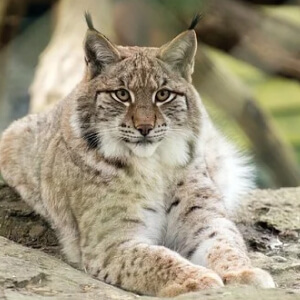
| Main predators | Wolves, lynxes, golden eagles (for kids), people |
| Conservation status | Least Concern (IUCN), with some rare local populations |
| Distribution | Several European and western Asian mountain ranges, including the Alps, Carpathians, Balkans and Caucasus. The Pyrenean and Apennine forms belong to Rupicapra pyrenaica. |
| Living environment | Rocky mountains, alpine meadows, mountain forests |
Interesting facts
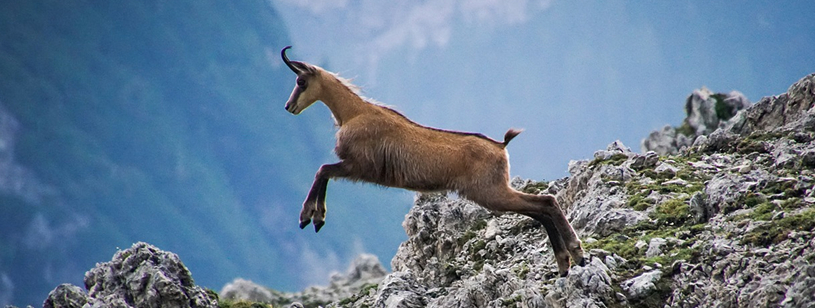
- Great jumpers - A chamois can leap about 2 m high and about 6 m forward, which is essential on rocky slopes.
- Special hooves - Each hoof has a hard outer edge and a soft, rubbery sole that grips rock, even on very steep slopes.
- Changing coats - In summer its coat is short and reddish-brown; in winter it becomes long, thick and dark brown to almost black.
- Chamois can move rapidly on steep terrain, helped by their hooves and balance.
- Always alert - Chamois have excellent eyesight, hearing and smell, and spot danger from far away.
- Alarm whistles - When a chamois senses danger, it gives a sharp whistle and stamps its feet, warning the herd.
- Fierce rivals - In the breeding season, males chase each other furiously across the slopes, and their hooked horns can cause serious injuries.
Records and remarkable features
- Chamois occur across several mountain regions. Population estimates must specify the area, date and assessment.
- High living - Chamois have been seen at more than 4,000 m in the Alps.
- Chamois are agile mountain mammals; the unverified fastest-individual record is not retained.
- A royal gift - Chamois were introduced to New Zealand in 1907 as a gift from the Austrian emperor Franz Joseph.
Physical characteristics and adaptations
The chamois (Rupicapra rupicapra) is perfectly adapted to life in high mountains, with features that help it survive cold, snow and steep, rocky ground.
Key physical adaptations
- A compact, muscular body - Allows excellent agility on rough ground.
- Specialised hooves - A hard outer rim gives solid support, while a soft, elastic sole grips wet and slippery rock.
- Seasonal coat - Short and reddish-brown in summer, long, thick and dark in winter, with a pale face and a dark stripe through each eye.
- Hooked horns - Both males and females have short, black horns that curve backwards at the tip, usually about 15-25 cm long.
- Sharp senses - Good eyesight helps chamois spot predators across open slopes.
- A strong heart and lungs - Help it run and climb in the thin mountain air.
Habits and behaviour
The chamois is a cautious animal that lives in herds for most of the year.
Daily life
- Herds - Females, kids and young chamois live in herds, often led by an experienced female.
- Males - Adult males usually live alone or in small groups and join the herds in the breeding season.
- Active times - They feed mostly in the early morning and evening and rest on safe ledges during the day.
- Seasonal moves - In summer they live high up on alpine meadows, and in winter they often move down into mountain forests.
Social interactions
- Group protection - When a predator approaches, the herd gives alarm whistles and flees to steep ground.
- Communication - Chamois communicate with whistles, foot stamping and body postures.
- Scent glands - In the breeding season, males rub scent from glands behind their horns onto bushes and grass.
- Rivalry between males - Males threaten and chase each other; fights are rare but can be dangerous because of their hooked horns.
Defence techniques
- Escaping to steep ground - When attacked, chamois flee to cliffs where most predators cannot follow.
- Long leaps - They can jump about 6 m to escape danger.
- Camouflage - Their dark winter coat and reddish summer coat help them blend in with rocks and vegetation.
Habitat and geographic distribution
The chamois lives in mountains, usually between about 800 m and 2,500 m, and sometimes much higher, preferring steep, rocky ground near forests and meadows.
Regional distribution
| Region | Population information |
|---|---|
| Alps (France, Switzerland, Italy, Austria, Germany, Slovenia) | The largest population, several hundred thousand animals |
| Carpathians (Romania, Slovakia, Poland, Ukraine) | Several thousand, mostly in Romania; the Tatra chamois is rare |
| Balkans (Bulgaria, Serbia, Montenegro, Albania, Greece, North Macedonia) | Scattered populations |
| Caucasus and Turkey | Present in the mountains |
| New Zealand | Introduced in 1907; widespread in the Southern Alps |
Habitat types
- Alpine meadows - Provide plenty of food in summer.
- Rocky slopes and cliffs - Used as a refuge from predators.
- Mountain forests - Give shelter and food in winter.
- Scree and rocky ridges - Places that few other large mammals can reach.
Climate and habitat change
- Warming - Rising temperatures may push chamois to higher altitudes and change the timing of plant growth.
- Disturbance - Ski resorts, hiking and off-piste skiing can disturb chamois, especially in winter.
- Food - Climate change may affect the quality of alpine plants in summer.
Diet and feeding
The chamois is a herbivore that changes its diet with the seasons and the food available in the mountains.
What does the chamois eat?
| Food group | Examples and context |
|---|---|
| Grasses and herbs | Alpine grasses, clover and flowering plants |
| Leaves and shoots | Maple, beech, rowan, willow |
| Conifer needles and bark | Spruce, fir and pine, especially in winter |
| Lichens and mosses | Eaten when other food is scarce |
| Shrubs | Dwarf shrubs, such as bilberry and heather |
Feeding methods
- Grazing on steep ground - Chamois feed on ledges and slopes that other grazers cannot reach.
- Digging through snow - In winter, they scrape away snow with their hooves to reach plants.
- Little drinking - They get much of the water they need from plants, dew and snow.
Reproduction and life cycle
Chamois breed once a year, and the kids are born in late spring, when food is plentiful.
Breeding season
- The breeding season (rut) is from about November to December.
- Males chase rivals away and follow the females.
- A dominant male may mate with several females.
Gestation and birth
| Characteristic | Details |
|---|---|
| Gestation | About 170 days |
| Number of young per birth | Usually 1 (twins are rare) |
| Weight at birth | About 2-3 kg |
| Nursing period | About 4-6 months |
Raising young
- Kids are born in May or June and can follow their mother within hours.
- They stay close to their mother for about a year and learn the safe paths of the mountain.
- They quickly learn to climb and jump on rocky ground.
Survival
- Many kids die in their first winter because of cold, deep snow, avalanches and predators.
- Adults can live about 15-20 years in the wild, sometimes longer.
Name and history
Origin of the name
- The word "chamois" comes from French, from the Late Latin camox, probably an old word from the Alps. Soft "chamois leather" was originally made from its skin.
- The scientific name Rupicapra comes from Latin and means "rock goat" (rupes = rock, capra = goat).
Taxonomic classification
| Classification | Name |
|---|---|
| Kingdom | Animalia |
| Phylum | Chordata |
| Class | Mammalia |
| Order | Artiodactyla |
| Family | Bovidae |
| Genus | Rupicapra |
| Species | Rupicapra rupicapra |
Evolution and history
- The chamois belongs to the goat-antelope group and is related to goats, ibexes and the mountain goat of North America.
- During the Ice Ages, chamois lived at lower altitudes across Europe and moved up into the mountains as the climate warmed.
- Prehistoric people hunted chamois, and their bones are found in many Stone Age sites in Europe.
Cultural significance and mythology
The chamois has long been a symbol of the mountains, agility and freedom, especially in the Alps and the Carpathians.
The chamois in heraldry and symbolism
- The Gamsbart - In Austria and Bavaria, a tuft of long hair from the chamois's back, called a Gamsbart, is worn on traditional hats.
- Mountain symbol - The chamois is a symbol of climbers, mountain guides and Alpine troops.
- Folk names - In Romanian, the chamois is called capra neagră, "the black goat", because of its dark winter coat.
Conservation status and threats
The northern chamois is not globally threatened, but some small populations and subspecies are rare and need protection.
Conservation status
| Population | Status | Population information |
|---|---|---|
| Northern chamois (Rupicapra rupicapra) | Least Concern (IUCN) | Widespread, especially in the Alps |
| Carpathian chamois (Rupicapra rupicapra carpatica) | Protected; numbers vary between areas | Several thousand |
| Tatra chamois (Rupicapra rupicapra tatrica) | Rare and strictly protected | About 1,000-1,500 |
Main pressures
- Hunting - Chamois are hunted in many countries; poorly regulated hunting can reduce populations.
- Disturbance - Off-piste skiing, hiking and drones can disturb chamois and make them use up precious energy in winter.
- Climate change - Warmer weather may push chamois higher and affect their food.
- Habitat loss - Building ski resorts and roads in the mountains reduces their habitat.
- Disease and poaching - Diseases such as mange can cause local declines, and some chamois are poached.
Protection measures
- National parks - Chamois are protected in parks such as Retezat (Romania), Tatra (Slovakia and Poland), Gran Paradiso (Italy) and Hohe Tauern (Austria).
- Hunting rules - In many countries, hunting is strictly controlled, and in some areas it is banned.
- Monitoring - Researchers count chamois and follow their movements with GPS collars.
- Quiet zones - Some areas restrict winter sports to protect chamois from disturbance.
In popular culture
The chamois appears in folklore, traditional dress and as a symbol of mountain life.
Books and traditions
- Alpine tales - Chamois appear in many Alpine and Carpathian stories about hunters and mountain spirits.
- Chamois leather - The word "shammy" for a soft cleaning cloth comes from chamois leather, originally made from its skin.
Mascots and symbols
- Clubs - In many Alpine countries, the chamois is a symbol of hiking and climbing clubs.
- Brands - Some outdoor and mountain sports companies use the chamois in their logos.
- Traditional dress - The Gamsbart on Alpine hats is a symbol of pride for hunters.