Siberian tigerInteresting facts and information
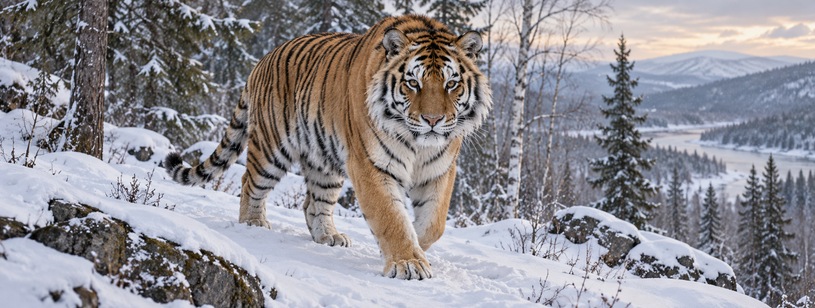
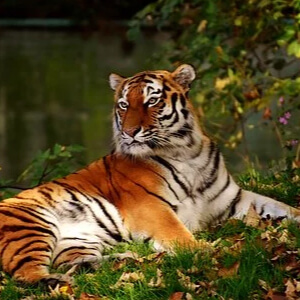
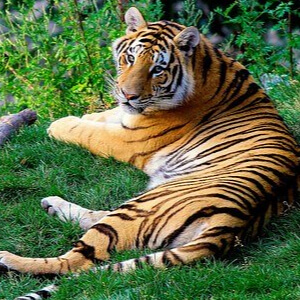
AI illustration of siberian tiger.
The Siberian tiger, also called the Amur tiger, lives in forests of the Russian Far East and north-eastern China. It is a large cat with dense winter fur, adapted to a cold climate. It hunts mainly wild pigs and deer.
Despite its name, it does not occur throughout Siberia and is not an Arctic tundra animal. It needs extensive forests, prey and safe connections between tiger ranges.
Quick facts
| Species | Panthera tigris |
| Traditional subspecies name | Panthera tigris altaica |
| Two-subspecies classification | Panthera tigris tigris; subspecies boundaries are under review |
| Class / order / family | Mammalia / Carnivora / Felidae |
| Distribution | The Russian Far East and north-eastern China |
| Habitat | Temperate forests, valleys and wooded slopes; cold winters |
| Diet | Carnivorous (mainly wild pigs and deer) |
| Size | Among the largest tigers; wild males usually about 180–220 kg, the heaviest over 250 kg |
| Social organisation | Mainly solitary; the female raises the cubs |
| Gestation | Approximately 100–106 days |
| Independence of young | Usually around two years old, with variation |
| Conservation | Panthera tigris species: Endangered (EN) |
Interesting facts
- Its coat changes with the seasons. Winter fur becomes longer and denser without turning white.
- Amur tigers and Amur leopards are different animals. One has stripes and the other rosettes, although they can share the same wider forest landscape.
- National borders are not biological boundaries. Tiger movements can connect forests in Russia and China.
- Snow preserves clues to its life. Tracks help researchers, while camera traps and genetic analyses add more precise information.
- A large male can still move quickly. Strength combines with quiet movements and a close-range attack.
Records and remarkable features
The Amur tiger is among the largest tigers and living cats. Wild males usually weigh about 180–220 kg and can be about three metres long including the tail; the heaviest can exceed 250 kg. Females are smaller, usually about 100–170 kg.
It has the longest, thickest fur of any tiger, and a layer of fat on its belly and flanks helps protect it from winter temperatures that can fall below −30 °C.
Another notable feature is the space used. Where prey is scarce, territories can be very large. Extensive forest does not necessarily mean high tiger density: resources limit numbers.
Characteristics
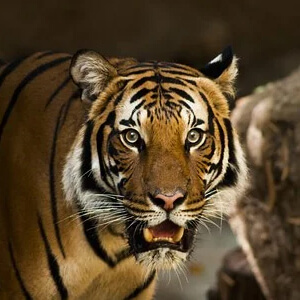
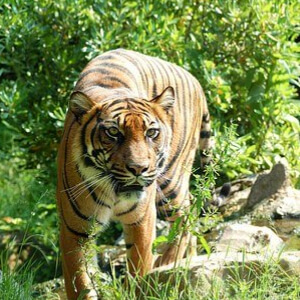
The coat is usually relatively pale orange, with visible white areas on the cheeks, throat and underside. Individual stripe patterns allow researchers to recognise photographed animals.
Thick winter hair limits heat loss. A muscular body and powerful paws support movement across difficult ground.
| Feature | What it enables |
| Dense winter coat | Insulation during the cold season |
| Powerful paws and shoulders | Movement and grasping prey |
| Stripes and pale areas | Camouflage in broken forest light |
| Retractile claws | Gripping, scratching trees and protecting claws while walking |
It does not hibernate. It remains active in the cold season and must find food. In summer, its coat is shorter and looks brighter.
Habits and behaviour
Adults live mainly alone, using ranges marked with scent and scratches. A female needs enough resources for herself and her cubs, while a male may range more widely.
Tigers can travel far in search of food. They use forest routes and sometimes logging roads, but busy infrastructure fragments habitat. Even a seemingly small road can alter human access and poaching risk.
They communicate through sounds and signals left in the environment. Solitary living does not prevent information exchange. Scent signals can help avoid some direct encounters and advertise breeding readiness.
Activity adapts to food, season and disturbance. There is no fixed hunting hour for every individual.
Habitat and geographic distribution
The core range lies in the Russian Far East, with populations also in north-eastern China. It includes temperate forests, valleys and wooded slopes, rather than treeless Arctic expanses.
In China, WCS monitors tigers and prey in landscapes such as Hunchun. Broadleaf forests and deer availability influence habitat use. A useful corridor must allow safe movement, rather than merely appear as a green strip on a map.
- Continuous forest allows movement between ranges.
- Wild prey supports survival and breeding.
- Low-disturbance areas matter for females with cubs.
- Cross-border cooperation helps protect a population that crosses national boundaries.
Woodland can look suitable yet be little used by tigers if prey has been hunted excessively.
Diet and feeding
Wild pigs and deer form the food base in many regions. Studies in the Russian Far East and China identify sika deer, roe deer and red deer among the prey. Their relative importance differs between places.
A tiger approaches quietly and makes a short attack. Powerful paws and jaws allow it to bring down a large mammal, but success is not guaranteed. A serious injury can reduce its ability to feed.
It may return to a large carcass. After a big kill, a tiger can eat a large amount of meat in one night and then rest nearby for several days.
Protecting tigers also requires protecting prey. Traps targeting other mammals and diseases affecting wild pigs can have indirect effects on these cats.
Reproduction and life cycle
The female gives birth after approximately 100–106 days. She chooses secluded shelter, and cubs are initially helpless. Their eyes open after the first days of life, rather than at birth.
The mother nurses, defends and feeds them. Later the cubs accompany her and practise through play. Learning to hunt takes much longer than simply developing teeth.
| Stage | Main need |
| Newborn | Warmth, milk and protection |
| Growing cub | Food and learning beside the mother |
| Independent young tiger | A safe route and available territory |
| Breeding adult | Resources and access to mates |
Independence usually comes around two years of age, with variation. Young animals can travel far before settling. Habitat fragmentation affects them especially at this stage.
Name and history
“Siberian” is the familiar name, while “Amur” is frequent in conservation to identify the north-east Asian region. The traditional subspecies name is Panthera tigris altaica.
The two-subspecies classification places it within Panthera tigris tigris, the mainland group. The IUCN Cat Specialist Group notes that subspecies boundaries remain under review. Classification changes do not erase population differences or the need to protect them in their own habitats.
Conservation status and threats
The tiger is Endangered (EN), and the Amur population needs continuing protection. Prey depletion, poaching, forest fragmentation and some diseases remain threats.
WCS also describes signs of recovery in north-eastern China. For example, the tiger and leopard national park reported 70 tigers in 2024, including animals whose ranges extend across the Russian border. In Russia, a 2022 census counted about 750 Amur tigers, a remarkable recovery from only a few dozen in the 1940s.
Conservation includes snare removal, monitoring cats and prey, maintaining corridors and reducing conflict around homes. Genetic data help explain connections between isolated groups.
In popular culture
The image of an orange tiger in snow is a familiar way of presenting Far Eastern wildlife. Zoo educational materials use this contrast to explain cold adaptation.
The Amur tiger appears on the coat of arms of Primorsky Krai, and the city of Vladivostok celebrates Tiger Day every September. Tigers of this population once lived in Korea too, and Hodori, the mascot of the 1988 Seoul Olympic Games, was a friendly tiger.
Discover other tigers
Read about Tiger or explore: Sumatran tiger · Bengal tiger · Indochinese tiger · Malayan tiger · South China tiger.
Frequently asked questions
- Are Siberian and Amur tigers the same animal? Yes. Both names refer to the tiger population of the Russian Far East and north-eastern China.
- Does it live throughout Siberia? No. The current range is concentrated in the Russian Far East and north-eastern China.
- Is it a polar animal? No. It is associated with temperate forests with cold winters, rather than treeless Arctic tundra.
- How much does it weigh? Wild males usually weigh about 180–220 kg, and the heaviest can exceed 250 kg. Females are smaller.
- What does it eat? Mainly wild pigs and deer, including sika, roe and red deer, in proportions varying between regions.
- Does it hibernate in winter? No. It remains active and hunts; longer, denser fur helps retain warmth.
- Does it turn white in winter? No. The coat thickens but retains stripes on an orange background with white areas.
- Why does it need large forests? Prey may be scarce, so one tiger uses a large area. Corridors allow movement and breeding between forests.