HorseInteresting facts and information
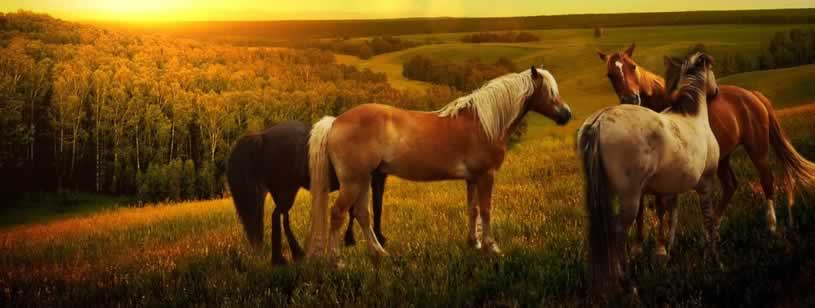
The domestic horse (Equus ferus caballus, also called Equus caballus) has been bred for transport, farming, sport and companionship. Breeds differ greatly in size, build and behaviour. Feral horses are descended from domestic animals and are distinct from truly wild horse populations.
Horses have had major roles in transport, farming and human history. Today their uses include work, recreation and sport, alongside the responsibilities of animal care and welfare.
Quick facts
| Common name | Horse |
| Scientific name | Equus ferus caballus |
| Typical lifespan | 25-30 years for domestic horses |
| Maximum speed | Speed depends on breed, distance and conditions; no verified world record is given here |
| Height | Varies widely by breed; height is measured at the withers |
| Length | 220 - 290 cm |
| Weight | About 380 - 1,000 kg, depending on breed |
| Diet type | Herbivore |
| Main predators | Wolves, bears and big cats (for free-living horses) |
| Conservation status | Domestic animal; assessments of wild relatives and rare domestic breeds are separate |
| Number of breeds | Hundreds of breeds; the number depends on the registry and definition used |
| Pregnancy | About 11 months (320-370 days) |
- Primary category:Mammals
- Explore this animal's categories:
Interesting facts
- Horses can doze standing up - A system of ligaments and tendons called the "stay apparatus" locks their legs, so they can rest without falling over.
- They have an excellent memory - Horses remember people and places for years. Studies have shown that they recognise familiar human voices and respond well to a gentle tone.
- Their eyes are among the largest of any land mammal - Horses can see almost all the way around them, about 350 degrees, but they have blind spots directly in front of and behind them, which is why they can be startled easily.
- Horse speed varies by breed, distance, training and conditions. Thoroughbreds are bred for racing.
- Horses form strong bonds with people and with other horses. Some become clearly distressed when separated from a close companion.
- Domestic and feral horses live on every continent except Antarctica. Przewalski's horse, once extinct in the wild, has been reintroduced to Mongolia and China.
- Horses communicate with sounds and body language - For example, a soft nicker is a friendly greeting, while ears pinned back show irritation or aggression.
- Heavy horse breeds such as the Shire can be very tall and heavy; individual measurements vary.
- Horses can survive in extreme conditions - Feral mustangs live in dry parts of the American West, while Yakutian horses in Siberia cope with temperatures of about -60°C.
Records and remarkable features
- Thoroughbreds are bred for racing, but no unverified world speed record is claimed here.
- One of the tallest horses on record: Big Jake, a Belgian draught horse, measured about 2.10 m at the withers and weighed about 1,100 kg.
- The smallest horse on record: Thumbelina, a miniature horse, was only about 43 cm tall and weighed about 26 kg.
- The oldest horse on record: Old Billy, an English barge horse, lived to the age of 62 (1760-1822).
- One of the most expensive horses: Fusaichi Pegasus, a racehorse sold for about $70 million in 2000.
Characteristics
Horses (Equus ferus caballus) are herbivorous mammals of the family Equidae, with an athletic body, long legs and strong muscles. They are built for speed and endurance, with an efficient metabolism and a powerful respiratory system.
Main physical features:
- Very different sizes - From miniature horses such as the Falabella (less than 80 cm tall at the withers) to massive draught breeds such as the Shire (often about 1.75-1.9 m at the withers).
- Legs built for running - The legs are long and slender and end in a single toe protected by a tough hoof.
- A wide field of view - Large eyes on the sides of the head let horses see almost all around them, which helps them spot predators.
- Speed and endurance - Horses can sprint fast over short distances, and endurance horses can cover 160 km in a single day, with rest stops and veterinary checks.
Special adaptations for survival:
- The stay apparatus - A special arrangement of ligaments and tendons that lets horses rest standing up without tiring their muscles.
- A digestive system for grazing - Their small stomach needs a steady supply of food, and their long gut extracts nutrients from fibrous plants through fermentation.
- Body language - The position of the ears and tail and facial expressions show emotions and intentions to other horses and to people.
- Many coat colours - Coats can be black, brown, bay, chestnut, grey, white or spotted, and some patterns are typical of particular breeds.
Habits and behaviour
Horses are very social animals that live in herds with a clear social order, in which communication and cooperation are essential for survival.
Social behaviour:
- They live in groups - In wild and feral herds, an experienced mare often leads the group's movements, while a stallion defends it against rivals and predators.
- Strong friendships - Horses form close bonds with particular companions and can recognise them even after long separations.
- Scent marking - Stallions in particular leave piles of dung and urine to signal their presence.
Typical behaviours:
- Sleeping standing up and lying down - Horses doze standing up thanks to the stay apparatus, but they lie down for deep sleep only when they feel safe.
- Fast reflexes - Horses are prey animals with a strong instinct to flee from anything they see as a threat.
- Play - Young horses run, nip and push each other, which builds their strength and reflexes.
Communication:
Horses use a complex system of communication:
- Nickering and neighing - To greet a familiar horse or person, or to call to others.
- Mutual grooming - Horses nibble each other's neck and withers as a sign of friendship.
- Ear position - Ears pointing forward show attention or curiosity, while ears pinned back show anger or aggression.
- Tail movements - A raised or swishing tail can show excitement, irritation or readiness to move fast.
Habitat and geographic distribution
Domestic horses live on every continent except Antarctica and have adapted to many environments, from steppes and deserts to mountains and forests.
Habitat types:
- Steppes and prairies - The natural habitat of wild horses, with plenty of grass and space to roam.
- Deserts - Breeds such as the Arabian are adapted to heat and can manage with limited water.
- Cold regions - Yakutian horses in Siberia cope with temperatures of about -60°C, thanks to their thick coats and special metabolism.
- Hills and woodland - Small, sure-footed breeds such as many ponies are good at crossing rough ground.
Domestic, feral and wild horses:
There are tens of millions of domestic horses in the world. In several regions, feral horses descended from domestic animals live freely in the wild.
| Population | Where |
|---|---|
| Mustangs (feral) | Western United States |
| Brumbies (feral) | Australia, where there are hundreds of thousands |
| Semi-feral ponies | Many parts of Europe, such as the New Forest and Exmoor in England |
| Danube Delta horses (feral) | Romania |
| Przewalski's horse | Reintroduced to Mongolia, China and other parts of Central Asia |
Przewalski's horse, from the steppes of Mongolia, is often called the last truly wild horse, although genetic studies suggest it may descend from horses herded by people more than 5,000 years ago. It was saved from extinction by breeding in zoos and has been returned to the wild.
Mustangs in North America and brumbies in Australia descend from domestic horses. They are feral populations; their management and environmental effects differ between regions.
Impact of climate change:
Climate change affects where feral horses can live and how much food is available. Drought and the loss of natural habitats limit access to water and vegetation, forcing herds to adapt or move to less favourable areas.
Diet and feeding
Horses are herbivores with a digestive system specialised for processing fibre from grass and other plants. They graze for many hours a day, because their stomach is relatively small and cannot hold a large amount of food at once.
What do horses eat?
- Grass - The main food of feral horses and of domestic horses that graze freely.
- Hay and alfalfa - The main food where fresh grass is not available all year round.
- Grain - Oats, maize and barley give extra energy to working or competition horses.
- Fruit and vegetables - Carrots, apples and beet are given occasionally as treats, in small amounts.
- Salt and minerals - Needed to keep the body's electrolytes in balance, especially for horses that sweat a lot.
Feeding methods:
Horses have teeth specialised for grinding fibrous food and spend much of the day grazing. Unlike ruminants, they do not bring food back up to chew it again.
On average, a horse eats about 1.5-2.5% of its body weight in food a day and drinks about 20-50 litres of water, depending on the weather and how hard it works. Horses need constant access to clean water, because dehydration can quickly lead to serious digestive problems.
Diet by season:
| Season | Main food |
|---|---|
| Spring | Fresh, nutrient-rich grass |
| Summer | Pasture grass and plenty of water |
| Autumn | Pasture and hay, with extra grain if needed |
| Winter | Hay, mineral supplements and salt |
Reproduction and life cycle
Like other large herbivores, horses have a long pregnancy and only a small number of foals during their lives.
Mating and pregnancy:
- In wild and feral herds, a dominant stallion usually mates with several mares.
- The breeding season starts in spring and lasts into late summer.
- Pregnancy lasts about 11 months (about 320-370 days).
- Most foals are born at night, and the birth itself usually takes only about 15-30 minutes.
- Mares usually have a single foal; twins are rare and risky for both mother and foals.
Raising foals
- Foals can stand and run within hours of birth.
- They suckle for about 4-6 months on farms (longer in the wild) and start nibbling grass in their first weeks.
- By about one year old, they become more independent and fit into the herd's social structure.
- Horses can breed from about 18 months to 2 years old, but they are fully grown only at about 4-5 years.
Lifespan and ageing:
- Domestic horses usually live 25-30 years, and some live to 40 or more.
- Feral horses usually live shorter lives, often 15-20 years, because of predators and harsh conditions.
- Signs of ageing include worn teeth, loss of muscle and reduced mobility.
Name and history
Origin of the name:
The English word "horse" comes from Old English hors, from an old Germanic word. The Latin word caballus, originally meaning a workhorse, gave rise to words such as the Romanian cal, the French cheval and the English "cavalry".
Evolution and domestication:
Modern horses are the result of more than 50 million years of evolution, mostly in North America. Important stages include:
- Eohippus (about 55-50 million years ago) - An early ancestor the size of a fox, with several toes on each foot.
- Mesohippus (about 30 million years ago) - Larger and better adapted to running.
- Merychippus (about 15 million years ago) - Walked mainly on one central toe and grazed on grasslands.
- Equus (about 4-5 million years ago) - The genus to which today's horses belong.
Horses were domesticated on the steppes of Eurasia. Early horse herding is known from the Botai culture in Kazakhstan about 5,500 years ago, and the ancestors of today's domestic horses spread from the area north of the Black Sea and the Caspian Sea about 4,000-4,200 years ago.
Taxonomic classification:
| Taxonomic rank | Name |
|---|---|
| Kingdom | Animalia |
| Phylum | Chordata |
| Class | Mammalia |
| Order | Perissodactyla |
| Family | Equidae |
| Genus | Equus |
| Species | Equus ferus caballus |
The spread of the horse through history:
- Ancient times - Horses were used in war, transport and farming in ancient China, Egypt, Persia and the Roman Empire.
- The Middle Ages - Breeding produced strong war horses for knights and heavy horses for farm work.
- Modern times - Horses were gradually replaced by motor vehicles but remain important in sport, leisure and therapy.
Horses have had a huge impact on human civilisation, helping empires expand, farming develop and transport advance. Throughout history, they have been honoured in mythology, art and cultural traditions around the world.
Cultural significance and mythology
Horses have played an important role in the mythology, religion and culture of many peoples. As animals of strength, speed and loyalty, they have been linked with gods, heroes and great historical events.
Horses in mythology around the world:
- Greek mythology - Pegasus, the winged horse, stood for inspiration and speed, and the sun god Helios drove a chariot pulled by fiery horses across the sky.
- Norse mythology - Sleipnir, Odin's eight-legged horse, was the fastest of all horses and could travel between worlds.
- Celtic mythology - Epona was the goddess who protected horses, ponies and their riders.
- Mongolian culture - The horse is central to Mongolian life; the armies of Genghis Khan rode across much of Asia and into Europe on horseback.
Horses in folk traditions:
- In many cultures, white horses are seen as lucky or as messengers of the gods.
- Black horses are often linked with supernatural forces and appear in legends about ghostly riders or death.
- In European folklore, magical or cursed horses appear in tales about witches, spirits and other supernatural beings.
What the horse symbolises:
- Power and freedom - The untamed spirit and independence.
- War and conquest - Horses carried warriors and knights throughout history.
- Wealth and status - In many cultures, owning fine horses was a sign of wealth and high social rank.
Conservation status and threats
Domestic horses are not threatened, but Przewalski's horse remains endangered, and some traditional breeds are rare.
Conservation status
- Przewalski's horse was once listed as Extinct in the Wild, but thanks to successful reintroductions in Mongolia and China it is now classed as Endangered.
- Mustangs in North America are protected by law in the United States, but their numbers are managed because they compete with livestock and wildlife for food and water.
- Brumbies in Australia are considered an invasive species, and their numbers are controlled to reduce damage to ecosystems.
Main threats:
- Habitat loss - Farming and development reduce the space available to free-living horses.
- Hunting and capture - In some regions, free-living horses are hunted for meat or captured.
- Shortage of water and food - Climate change and drought reduce natural sources of food and water.
- Competition with livestock - Where free-living horses share land with cattle or sheep, they compete for grazing.
- Loss of rare breeds - Many traditional horse breeds have very small populations.
Conservation efforts:
- Reintroduction programmes have increased the number of Przewalski's horses living wild in Mongolia.
- Conservation organisations work with governments to create protected areas and manage the capture of free-living horses.
- Feral horse populations in North America and Australia are monitored and managed to prevent damage to ecosystems.
- Breed societies work to preserve rare traditional breeds.
In popular culture
Horses are everywhere in popular culture, from films and books to equestrian sports and national symbols.
Horses in film and television:
- Black Beauty (1971, 1994, 2020) - Film versions of the famous novel about a horse's life and its relationships with people.
- Seabiscuit (2003) - A film based on the true story of a racehorse that became a legend during the Great Depression.
- War Horse (2011) - A drama about the bond between a young man and his horse during the First World War.
- Spirit: Stallion of the Cimarron (2002) - An animated film about a wild mustang fighting for his freedom.
Horses in literature:
- Black Beauty (Anna Sewell, 1877) - One of the most famous horse books, told from the horse's point of view.
- The Horse Whisperer (Nicholas Evans, 1995) - A novel about a horse trainer who helps a traumatised girl and her horse.
- King of the Wind (Marguerite Henry, 1948) - A novel about the Godolphin Arabian, one of the founding ancestors of the Thoroughbred.
Horses in sport:
- Horse racing - Famous races such as the Kentucky Derby and the Prix de l'Arc de Triomphe attract huge audiences.
- Olympic equestrian sport - Dressage, show jumping and eventing are prestigious Olympic disciplines.
- Rodeo and Western riding - Traditional events in the USA and Latin America in which horses play a central role.
Horses as symbols:
- The Saxon Steed - A white horse that is the symbol of Lower Saxony in Germany and was the emblem of the House of Hanover.
- Mongolia - The galloping horse is central to Mongolian culture and appears in its myths and art.
- Hill figures in England - Ancient horse figures cut into chalk hillsides, such as the Uffington White Horse, which is about 3,000 years old.