ChimpanzeeInteresting facts and information
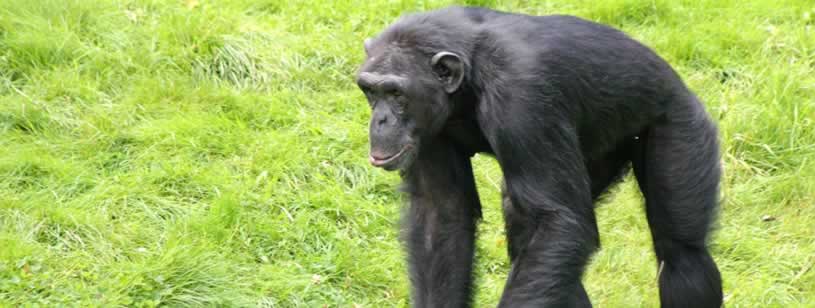
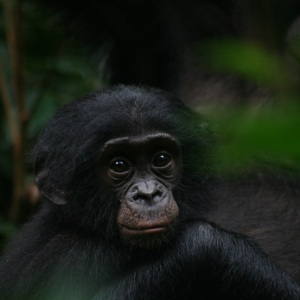
The chimpanzee (Pan troglodytes) is an African great ape that lives in social communities. Chimpanzees use tools and communicate through calls, gestures and other behaviour. Together with bonobos, they are the closest living relatives of humans; they are not the same species as bonobos.
Chimpanzees eat mainly plant food, especially fruit, but also take insects and other animal food. Habitat loss, hunting and disease affect wild populations.
Jane Goodall's long-term research at Gombe, in Tanzania, revealed many aspects of chimpanzee life, including tool-making, hunting and the close bonds between mothers and their young.
Quick facts
| Common name | Chimpanzee |
| Scientific name | Pan troglodytes |
| Typical lifespan | Often 40-50 years in the wild; over 60 years in captivity |
| Maximum speed | Up to about 40 km/h in short bursts |
| Height | About 1-1.7 m when standing upright |
| Weight | About 30-70 kg (males are larger than females) |
| Diet type | Omnivore (fruit, leaves, insects, sometimes meat) |
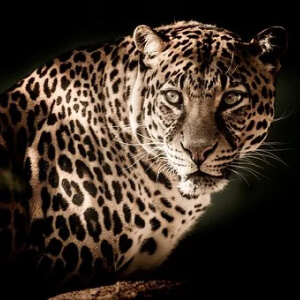
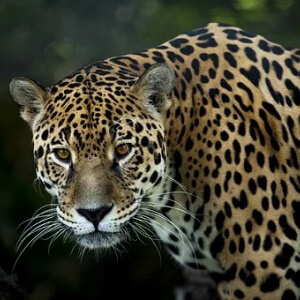
| Main predators | Leopards; occasionally lions; humans |
| Conservation status | Endangered; assessments for subspecies must be distinguished from the species as a whole |
| Main species | Chimpanzee (Pan troglodytes); bonobo (Pan paniscus) is a separate species |
| Distribution | West, Central and East Africa |
| Habitat | Tropical forests, wooded savannas, mountain forests |
- Primary category:Mammals
- Explore this animal's categories:
Interesting facts
- Chimpanzees make and use tools - They shape sticks to fish termites out of their mounds, crack nuts with stones and use chewed leaves as sponges to soak up water.
- They have their own cultures - Different chimpanzee communities have their own traditions, such as particular tool-use methods, which young chimps learn from adults.
- Gestures and calls - Chimpanzees communicate with many facial expressions, calls and gestures, including drumming on tree roots, alarm calls and even laughter during play.
- They can learn sign language - In captivity, some chimpanzees, such as Washoe, have learned to use hundreds of signs to communicate.
- They comfort each other - When a member of the group is hurt or frightened, others may hug or kiss it to calm it down.
- Group hunting - Although they eat mainly fruit and plants, chimpanzees sometimes hunt small monkeys and other animals in coordinated groups.
- They recognise themselves in a mirror - Few animals can do this, and it is seen as a sign of self-awareness.
- Chimpanzee "wars" - Communities defend their territories, and conflicts between neighbouring groups can lead to deadly attacks.
- Natural medicine - Chimpanzees eat certain bitter plants and swallow rough leaves that help them get rid of intestinal parasites.
- They build beds every night - Each evening, chimpanzees make a new nest of bent branches and leaves high in a tree to sleep safely.
Records and remarkable features
- Chimpanzees use tools in several contexts, including extracting food. Traditions can differ between communities.
- Chimpanzees and bonobos are humans' closest living relatives; we share about 98-99% of our DNA with them.
- In 1961, a chimpanzee called Ham became the first great ape to fly into space.
Characteristics
Chimpanzees are great apes in the family Hominidae, together with bonobos, gorillas, orangutans and humans. They are very intelligent and adaptable, with a body suited to life both in trees and on the ground.
Main physical characteristics
- Long, strong arms - Their arms are longer than their legs, which helps them climb trees and swing from branches.
- Grasping hands and feet - Their hands have long fingers and opposable thumbs, and their feet can grip like hands.
- An expressive face - Chimpanzees show many emotions with their faces, from happiness to fear and anger.
- Black or dark brown hair - They are covered in coarse hair almost all over, except for the face, fingers, palms and soles.
- A large brain - A chimpanzee's brain is about 350-400 cm³, much smaller than a human brain, but large for its body size.
- No tail - Like all apes, chimpanzees have no tail.
Special adaptations for survival
- Knuckle-walking - On the ground, chimpanzees usually walk on all fours, leaning on the knuckles of their hands, but they can walk upright for short distances.
- Great strength - Chimpanzees are stronger than humans of the same weight, probably about one and a half times as strong, thanks to the make-up of their muscles.
- Rich communication - Besides calls and gestures, they use facial expressions and eye contact to communicate.
- Excellent memory - They remember where fruit trees are and when they will be ripe, and plan their routes.
Habits and behaviour
Chimpanzees are very social and live in large communities with complex hierarchies. Their behaviour varies with their environment and the relationships within the group.
Social behaviour
- Fission-fusion communities - A community may have about 20-150 members, but they split into smaller groups that come together and separate as they search for food.
- Hierarchies - Dominant males keep their position through strength, alliances and impressive displays.
- Grooming - Picking through each other's hair is an important way of building friendships and reducing stress.
- Helping each other - Chimpanzees comfort injured companions and share food, especially meat, with allies.
Breeding
- No fixed breeding season - Chimpanzees can mate at any time of year.
- Signs of fertility - When a female is fertile, the skin around her bottom swells and turns pink.
- Chimpanzees do not normally live as exclusive mating pairs. Mating behaviour depends on the social setting and individuals.
Defence and survival methods
- Defending territory - Groups of males patrol and defend the edges of their territory.
- Using tools - Chimpanzees use sticks, leaves and stones to get food, and sometimes throw sticks and stones in displays.
- Taking refuge in trees - When in danger, chimpanzees quickly climb trees.
Habitat and geographic distribution
Chimpanzees live in the rainforests and wooded savannas of West, Central and East Africa. They were once more widespread, but habitat destruction has greatly reduced their range.
Habitat types
- Dense rainforests - Provide plenty of food and safe resting places.
- Wooded savannas - Some chimpanzees live in more open, drier areas with scattered trees.
- Mountain forests - Chimpanzees can live at high altitudes in the forests of African mountains.
Geographic distribution
| Region | Countries (examples) | Subspecies |
|---|---|---|
| West Africa | Guinea, Sierra Leone, Liberia, Ivory Coast | Western chimpanzee (Critically Endangered) |
| Nigeria and Cameroon | Nigeria, Cameroon | Nigeria-Cameroon chimpanzee (the rarest subspecies) |
| Central Africa | Cameroon, Gabon, Republic of the Congo | Central chimpanzee |
| East Africa | DR Congo, Uganda, Tanzania, Rwanda | Eastern chimpanzee |
Impact of climate change and deforestation
- Deforestation - Logging, mining and farming destroy the forests where chimpanzees live.
- Poaching - In some regions, chimpanzees are hunted for bushmeat, and babies are captured for the illegal pet trade.
- Human diseases - Chimpanzees can catch human diseases, such as flu and other respiratory infections, and Ebola has also killed many wild apes.
Chimpanzees are important for African forests, for example by spreading the seeds of the fruit they eat, so protecting them helps protect biodiversity.
Diet and feeding
Chimpanzees are omnivores with a very varied diet that includes plant food and some animal food. This flexibility helps them survive in different habitats and through seasonal changes.
Main food
- Fruit - About half or more of their diet is ripe fruit, especially figs.
- Leaves and shoots - Eaten especially when fruit is scarce.
- Nuts and seeds - Important sources of fat and protein; some communities crack hard nuts with stone tools.
- Flowers, bark and pith - Extra food, especially in lean times.
- Insects - Ants, termites and honey from bees' nests provide protein, fat and sugar.
- Meat - Occasionally, chimpanzees hunt and eat small mammals, such as colobus monkeys, young antelopes and bush pigs.
Diet by season
| Season | Main food |
|---|---|
| Times of plenty | Ripe fruit, especially figs |
| Times when fruit is scarce | Leaves, pith, bark, seeds |
| All year | Insects such as termites and ants |
| Occasionally | Meat from hunting |
Feeding techniques
- Tools - Chimpanzees use sticks to fish for insects, stones to crack nuts and leaf sponges to collect water.
- Group hunting - In some communities, males cooperate to catch monkeys.
- Sharing - After a successful hunt, meat is often shared with allies and family members.
Reproduction and life cycle
Chimpanzees have a promiscuous mating system: females usually mate with several males, which may reduce the risk of males harming their young.
Mating
- No fixed breeding season - Mating can take place at any time of year.
- Signs of fertility - A swelling of the female's bottom shows when she can conceive and attracts males.
- Social rank - High-ranking males usually father more young, but lower-ranking males also mate.
Pregnancy and birth
- Pregnancy - About 230 days (almost 8 months).
- Number of young - Usually one baby; twins are rare.
- Birth - Females often move away from the group to give birth but soon return.
Development of the young
- Young chimpanzees depend heavily on their mothers and nurse for a prolonged period. They also begin exploring solid food while still nursing.
- Babies start exploring at around six months old, but stay close to their mother.
- They nurse until about 4-5 years old and stay with their mother long after, learning how to find food and use tools.
- They become independent at about 8-10 years old, but remain in the community; females often move to a new community when they grow up.
Longevity
- In the wild - Often up to about 40-50 years.
- In captivity - Some have lived over 60 years, thanks to medical care and the absence of predators.
Name and history
Chimpanzees were studied in Europe by the late 17th century: Edward Tyson published a detailed anatomical study in 1699.
Origin of the name
- The word "chimpanzee" comes from a Bantu language of the Congo region, such as Kivili chimpenze, possibly meaning "mock man".
- The scientific name Pan troglodytes comes from a name given by Johann Friedrich Blumenbach in 1775; "troglodytes" means "cave-dweller", based on the mistaken idea that chimpanzees lived in caves.
Taxonomic classification
| Taxonomic category | Name |
|---|---|
| Kingdom | Animalia |
| Phylum | Chordata |
| Class | Mammalia |
| Order | Primates |
| Family | Hominidae |
| Genus | Pan |
| Species | Pan troglodytes (chimpanzee), Pan paniscus (bonobo) |
Discovery and documentation
- The 17th century - The first European reports of chimpanzees came from travellers in Africa.
- The 19th century - Charles Darwin recognised the close relationship between humans and the African apes.
- 1960 - Jane Goodall began studying chimpanzees in Gombe, Tanzania, and observed them making and using tools and hunting.
Chimpanzees in culture and science
- African traditions - In many African cultures, chimpanzees are seen as close relatives of people, and in some places there are taboos against hunting them.
- Studying behaviour - Chimpanzees are an important model for understanding the evolution of human behaviour.
Chimpanzees remain a fascinating subject for science, essential for understanding the evolution of intelligence in primates.
Cultural significance and mythology
People have long looked at chimpanzees with fascination and respect, seeing them as close relatives with human-like traits. In modern culture, they have become symbols of animal intelligence and of our connection with nature.
Chimpanzees in mythology and folk belief
- African traditions - In many African cultures, chimpanzees are seen as beings between humans and animals, and some peoples avoid hunting or eating them.
- A mirror for humans - Because they look and behave so much like us, chimpanzees have long been used in stories to make people think about human nature.
- Symbols of cleverness - In many cultures, chimpanzees are seen as smart, resourceful animals.
Chimpanzee symbolism
- Evolution - Chimpanzees are often used to represent human evolution and our link with the animal world.
- Curiosity and playfulness - Because of their playful behaviour, they are seen as curious, inventive animals.
- Art and literature - They often appear in cartoons, films and books as clever and funny characters.
Conservation status and threats
Chimpanzees (Pan troglodytes) are living, threatened great apes. They are not extinct; habitat loss, hunting and disease are serious conservation pressures.
Conservation status
- Estimated population - Roughly 170,000-300,000 chimpanzees live in the wild.
- Decline - Chimpanzee numbers have fallen sharply in recent decades because of habitat loss and hunting; western chimpanzees declined by about 80% between 1990 and 2014.
- Conservation status must be distinguished between the species and its subspecies. Western chimpanzees (Pan troglodytes verus) are Critically Endangered. Bonobos (Pan paniscus) are a separate species.
Main threats
- Habitat loss - Deforestation for farming, logging, mining and roads destroys the forests where chimpanzees live.
- Hunting and illegal trade - Chimpanzees are hunted for bushmeat in parts of Central and West Africa, and babies are captured for the illegal pet trade.
- Human diseases - Chimpanzees can catch human diseases, and outbreaks of respiratory infections and Ebola have killed many wild apes.
- Conflict with people - As forests shrink, chimpanzees raid crops near villages and are sometimes killed by farmers.
Conservation efforts
- National parks and reserves - Protecting habitats is essential for the survival of chimpanzees.
- Sanctuaries - Orphaned chimpanzees are cared for in sanctuaries, and some have been returned to the wild.
- International law - Chimpanzees are listed in Appendix I of CITES, which bans international commercial trade in them.
- Education - Organisations such as the Jane Goodall Institute work with local communities to reduce conflict and protect forests.
In popular culture
Chimpanzees are among the best-known animals in the world and often appear in films, books, comics and television, usually as clever, curious or funny characters.
Chimpanzees in film and animation
- Planet of the Apes (1968 - present) - A series of science-fiction films in which intelligent apes, including chimpanzees such as Cornelius and Zira, rule the planet.
- Rise of the Planet of the Apes (2011) - A film in which the chimpanzee Caesar becomes the leader of an ape revolt against humans.
- Cheeta - The famous chimpanzee companion of Tarzan in films of the 1930s and 1940s.
Chimpanzees in literature
- Next of Kin (Roger Fouts, 1997) - A book about Washoe and other chimpanzees who learned to communicate using sign language.
- In the Shadow of Man (Jane Goodall, 1971) - Goodall's famous account of her first years studying wild chimpanzees at Gombe.
Chimpanzees in history
- Ham the Chimp - In 1961, he flew into space on an American Mercury rocket and returned safely, paving the way for human spaceflight.
Chimpanzees in entertainment
- Advertising and television - Chimpanzees were once often used in adverts, films and TV shows.
- Changing attitudes - Using trained chimpanzees in circuses and entertainment is now widely criticised for ethical reasons, and many countries have banned it.