AntelopeInteresting facts and information
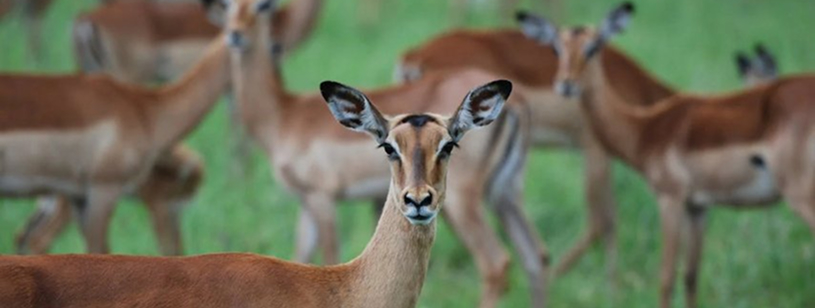
Antelopes are a diverse collection of hoofed, plant-eating mammals within the family Bovidae. They are related to cattle, sheep and goats, but do not form a single genus. Different antelopes live in grasslands, forests, deserts or mountain habitats.
Most antelopes live in Africa and Asia. Some species, such as blackbuck (Antilope cervicapra) and nilgai (Boselaphus tragocamelus), have been introduced to Texas. The American pronghorn (Antilocapra americana) resembles them but belongs to another family, Antilocapridae, rather than Bovidae.
Quick facts
| Common name | Antelope |
| Scientific name | Varies by species: Gazella, Antilope, Tragelaphus and other genera |
| Typical lifespan | About 10 - 25 years (depending on species) |
| Maximum speed | Varies between species; some reach about 80 km/h |
| Size | About 25 - 180 cm at the shoulder, depending on species |
| Weight | About 2 - 1,000 kg (by species) |
| Diet type | Herbivore (grass, leaves, shoots, fruits) |
| Main predators | Lions, leopards, cheetahs, hyenas, wild dogs, crocodiles and humans |
| Conservation status | From Least Concern to Critically Endangered (depending on species) |
| Habitat | Savannas, forests, deserts and mountain areas |
| Distribution (continents) | Africa and Asia; some species introduced to North America, including Texas |
- Primary category:Mammals
- Explore this animal's categories:
Interesting facts
- A misleading resemblance — The American pronghorn is sometimes called an “antelope” in English, but belongs to Antilocapridae. It is not an antelope in the family Bovidae.
- Spiral horns - Kudu and eland have long, twisted horns, which males use in fights over territory and females.
- Little need to drink - Many gazelles and other desert antelopes can go without drinking for long periods, getting most of their water from their food.
- Record horns - The greater kudu has some of the longest horns of any antelope; following the spiral, they can be more than 1.5 metres long.
- Pronking - Springbok often leap high into the air with stiff legs, up to about 2 metres; this behaviour, called "pronking", may show predators that the animal is fit and hard to catch.
Records and remarkable features
- The largest antelopes - The common eland (Taurotragus oryx) and the giant eland (Taurotragus derbianus), whose males can weigh about 900 kg or more.
- The smallest antelope - The royal antelope (Neotragus pygmaeus) of West Africa, which weighs only about 2-3 kg.
- Different families — Speed records for Antilocapra americana should not be attributed to antelopes in the family Bovidae.
- Great migrations - Hundreds of thousands of Thomson's gazelles migrate with wildebeest and zebras across the Serengeti and Maasai Mara.
- Fast runners - Blackbuck and springbok are among the fastest true antelopes and can reach speeds of about 80 km/h.
Physical characteristics and adaptations
Antelopes have bodies adapted for speed, agility and survival in habitats such as savannas, deserts and forests.
Distinctive appearance
- A slim body - Most antelopes have light, muscular bodies that let them run fast and change direction suddenly.
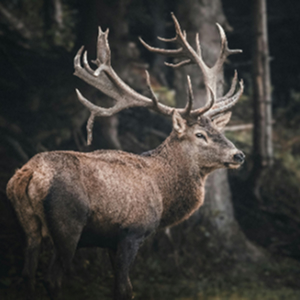
- Horns and antlers – Most antelopes have permanent horns, while deer have antlers that are usually shed and regrown. Horn presence differs between sexes and species.
- Long legs - Long, strong legs help antelopes run and jump away from predators.
- Hooves - Hoof shape depends on habitat; for example, the sitatunga has long, spread-out hooves for walking in swamps.
- Large ears - Most antelopes have good hearing, which helps them notice danger early.
Survival adaptations
- Running and agility — Many antelopes use running and quick changes of direction to escape predators; performance differs between species.
- Camouflage - Brown, grey or sandy coats help many antelopes blend in with their surroundings.
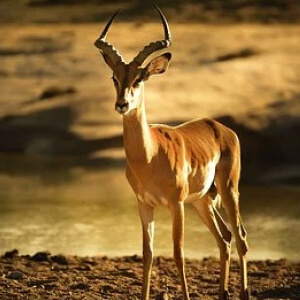
- Jumping - Impala can leap about 3 metres high and up to about 10 metres in length.
- Saving water - Desert antelopes such as the addax and oryx can survive for long periods without drinking.
- Horns for fighting - Males use their horns mainly to fight each other, and sometimes to defend themselves from predators.
Habits and behaviour
Antelope behaviour varies greatly: some species live in large herds, others alone or in pairs.
Social structure
- Large herds in the savanna - Species such as gazelles and impala live in groups of tens or hundreds of animals, which helps protect them from predators.
- Small groups or pairs - Forest antelopes such as duikers and dik-diks often live alone or in pairs, while kudu live in small groups.
- Territorial males - In many species, males defend territories and fight each other for the right to mate.
Communication and interaction
- Warning signals - Antelopes give alarm calls, snorts or whistles, and some flash a white rump or tail to warn others.
- Scent marking - Many antelopes have scent glands, for example in front of the eyes, which they use to mark their territory.
- Fighting - Males use their horns to fight during the mating season.
Defending strategies against predators
- Running - Speed is the main defence for many antelopes; some species can reach about 80 km/h.
- Jumping - Some species, such as the springbok and impala, use high leaps to confuse or discourage predators.
- Herds - Living in a group means more eyes and ears watching for danger.
- Hiding - Forest antelopes such as duikers rely on hiding in thick vegetation.
Habitat and geographic distribution
Antelopes in the family Bovidae are characteristic of Africa and Asia. North America also has introduced populations, including blackbuck and nilgai in Texas. The American pronghorn is a native North American animal in a different family.
Geographic distribution
| Region | Examples of occurrence |
|---|---|
| Africa | Many species in savannas, forests and arid regions |
| Asia | Native species including blackbuck and nilgai |
| North America | Species introduced to Texas; this refers to true antelopes rather than the American pronghorn |
Habitat types
- African savannas - Many species, such as gazelles and impala, live in open plains, where speed is essential for survival.
- Forests and mountains - Species such as the bongo, bushbuck and duikers prefer forests and thick bush, where they can hide.
- Deserts and dry steppes - Species such as the addax, oryx and saiga are adapted to very dry places in Africa, Arabia and Central Asia.
Habitat pressures
- Deforestation and farming - Habitat loss is one of the biggest threats to forest antelopes.
- Poaching and overhunting - Many antelopes are hunted for meat, horns, trophies or skins.
- Climate change - Longer droughts reduce food and water for antelopes.
- Conflicts with farmers - In some areas, antelopes are killed because they eat crops or compete with livestock for grazing.
Diet and feeding
Antelopes are herbivores that eat grasses, leaves, shoots and fruits, depending on the species, habitat and season.
What do antelope eat?
| Food type | Examples |
|---|---|
| Grasses | Savanna grasses, grassland plants |
| Leaves and shoots | Acacia leaves, shrubs |
| Twigs | Branches of shrubs and small trees |
| Fruits and seeds | Fallen fruit, seeds and pods |
| Succulent plants | Juicy plants and roots in dry regions |
Feeding Methods
- Grazing - Species such as wildebeest and many gazelles mainly eat grass.
- Browsing - Kudu, eland and gerenuk eat leaves, shoots and twigs; the gerenuk even stands on its hind legs to reach higher branches.
- Mixed feeding - Impala graze in the wet season and browse more in the dry season.
Eating Behavior
- Chewing the cud - Like cattle, antelopes are ruminants and chew their food again after swallowing it.
- Seasonal changes - In the dry season, many species eat tougher plants, while in the rainy season they eat fresh grass and leaves.
- Sharing the savanna - Different antelopes eat different plants or plant parts, so many species can live in the same area.
Reproduction and life cycle
Most antelopes give birth to a single calf, often in the rainy season when there is plenty of food.
Breeding and birth of calves
| Characteristic | Details |
|---|---|
| Sexual maturity | About 1 - 3 years (by species) |
| Breeding season | Often linked to the rainy season; varies by species |
| Gestation | About 5 - 9 months |
| Number of calves | Usually 1 (rarely 2) |
| Nursing | About 3 - 6 months |
| Birth interval | Varies by species; many can breed at around one year old |
Reproductive behaviour
- Territories - Dominant males mark their territories with scent, dung and scrapes on the ground.
- Competition - During the mating season, males fight with their horns for the right to mate.
- Timing of births - Calves are often born in the rainy season, when food is plentiful.
- Hiding calves - In many species, newborn calves lie hidden in vegetation while their mother feeds nearby.
Longevity and Survival
- Antelopes live about 10-25 years, depending on species and habitat.
- Many young antelopes are killed by predators in their first months.
- In captivity, they can live longer, safe from predators and with regular food.
Name and history
Origin of the name "Antelope"
- The word "antelope" comes through Old French and Medieval Latin from the late Greek word antholops, the name of a mythical horned beast.
- In zoology, "antelope" is not a scientific group: it is a general name for many bovids that are not cattle, sheep or goats.
Taxonomic classification
| Kingdom | Animalia |
|---|---|
| Phylum | Chordata |
| Class | Mammalia |
| Order | Artiodactyla |
| Family | Bovidae |
| Main subfamilies | Antilopinae, Hippotraginae, Alcelaphinae, Cephalophinae, Reduncinae, and the tribe Tragelaphini |
Historical and cultural accounts
- Heraldry - In medieval European heraldry, the "heraldic antelope" was an imaginary beast with serrated horns, quite unlike real antelopes.
- Ancient Egypt - Oryx, gazelles and other antelopes were hunted, kept and shown in Egyptian art.
- Exploration - In the 18th and 19th centuries, European naturalists described many antelope species from Africa and Asia.
Cultural significance and mythology
Antelopes have been symbols of grace, speed and fertility in many cultures, and appear in African, Asian and Egyptian art.
Antelope in cultural symbolism
| Culture | Meaning |
|---|---|
| Bamana people (Mali) | The Chiwara antelope headdresses honour a mythical being who taught people to farm |
| India | The blackbuck is protected by the Bishnoi community and linked with the moon god Chandra and the wind god Vayu |
| Medieval Europe | The heraldic antelope appears on coats of arms as a symbol of strength |
Conservation status and threats
Many antelope species are declining because of poaching, habitat loss and climate change; some are endangered, and one, the scimitar oryx, survived only thanks to captive breeding.
Main threats to antelope
- Poaching - The saiga was pushed close to extinction by hunting for its horns, which are used in traditional medicine.
- Habitat destruction - Farming and deforestation reduce the areas where antelopes can live and feed.
- Climate change - Longer droughts affect food, water and migration routes.
- Diseases - In 2015, a bacterial disease killed more than 200,000 saiga in Kazakhstan in a few weeks.
Conservation status (IUCN)
| Species | Global IUCN status |
|---|---|
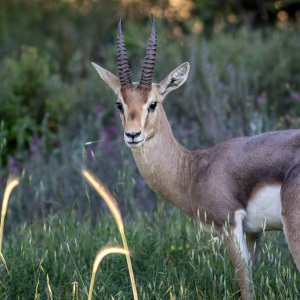
| Dorcas gazelle (Gazella dorcas) | Vulnerable (VU) |
| Saiga (Saiga tatarica) | Near Threatened (NT) |
| Blackbuck (Antilope cervicapra) | Least Concern (LC) |
| Common eland (Tragelaphus oryx, also known as Taurotragus oryx) | Least Concern (LC) |
Conservation efforts
- Reserves and national parks - In Africa and Asia, many species are protected in national parks and reserves.
- Hunting laws - In many countries, antelope hunting is strictly regulated or banned.
- Reintroductions - The Arabian oryx and the scimitar oryx have been bred in captivity and returned to the wild.
In popular culture
Antelopes often appear in films, documentaries and as symbols, especially of African wildlife.
Antelope in movies and television
- "The Lion King" (1994) - Antelopes and gazelles appear among the animals gathering at Pride Rock in the opening scene.
- Nature documentaries - Impala, gazelles and wildebeest are often shown in BBC and National Geographic films about African wildlife.
Antelope in literature and mythology
- Poetry - In the Song of Songs in the Bible and in classical Arabic and Persian poetry, the gazelle is a symbol of beauty and grace.
Antelope in video games and digital culture
- Common names in games — A North American animal informally called an “antelope” may be a pronghorn. Identification should follow the species, not just the name used.
- Olympic mascot - Yingying, one of the mascots of the 2008 Beijing Olympics, was a Tibetan antelope.
Did you know? About antelope
- Antelopes are not a single scientific group but many different members of the cattle family, Bovidae.
- The American pronghorn is not a true antelope; it belongs to its own family.
- The royal antelope of West Africa weighs only about 2-3 kg.
- The common and giant elands are the largest antelopes, weighing up to about a tonne.
- The greater kudu has some of the longest horns of any antelope.
- Springbok leap high into the air in a display called pronking.
- Unlike deer antlers, antelope horns are never shed.
- In 2015, more than 200,000 saiga died of disease in Kazakhstan within a few weeks.
- The Arabian oryx was saved from extinction by captive breeding and reintroduction.