BuffaloInteresting facts and information
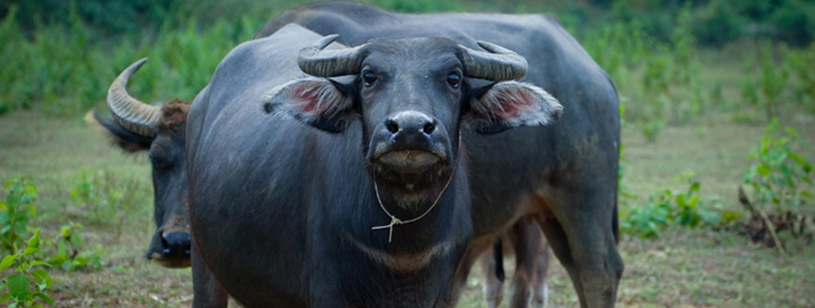
Buffalo are large hoofed mammals in the cattle family, Bovidae. This overview distinguishes domestic water buffalo (Bubalus bubalis), wild water buffalo (Bubalus arnee) and African buffalo (Syncerus caffer). They are different animals with different ranges and conservation needs.
- Domestic water buffalo (Bubalus bubalis) are raised for milk, meat and work in several regions.
- Wild buffalo include the wild water buffalo (Bubalus arnee), which is endangered, and the African buffalo (Syncerus caffer), a different genus.
Buffalo graze or browse according to their habitat and species. Wild and domestic forms differ in their roles, management and conservation needs.
Quick facts
| Common name | Buffalo |
| Scientific name | Bubalus (Asian buffalo) and Syncerus (African buffalo) |
| Typical lifespan | About 15 - 25 years in the wild; longer in captivity |
| Maximum speed | African buffalo can run at about 55 km/h |
| Length | About 1.7 - 3.4 m (head and body, by species) |
| Weight | About 300 - 1,200 kg (by species) |
| Diet type | Herbivore (grass, aquatic plants, leaves) |
| Main predators | Lions, tigers, crocodiles, humans |
| Conservation status | Wild water buffalo: Endangered; African buffalo: Near Threatened; tamaraw: Critically Endangered (IUCN) |
| Habitat | Swamps, floodplains, savannas, forests |
| Distribution (continents) | Africa, Asia; domestic in Europe and South America; feral in Australia |
Interesting facts
- A dangerous animal - The African buffalo is one of the most dangerous animals in Africa to people and is sometimes called "the black death"; it is one of the famous "Big Five".
- Strong senses - Buffalo have good hearing and a good sense of smell, while their eyesight is less sharp.
- Water buffalo milk is used to make dairy products, including buffalo mozzarella.
- Water lovers - Water buffalo spend many hours wallowing in water and mud, which keeps them cool and protects them from insects.
- A shield on the head - In adult male African buffalo, the bases of the horns join to form a thick, hard shield called a "boss".
Records and remarkable features
- Wild water buffalo (Bubalus arnee) are large bovids; body size varies with sex and age.
- African buffalo (Syncerus caffer) can move quickly when threatened.
- Domestic water buffalo are important livestock in parts of Asia, including India.
- Fighting back - African buffalo herds have been seen chasing and even killing lions that attacked their calves.
- Huge horns - Wild water buffalo have some of the longest horns of any living bovid, spanning up to about 2 metres.
Physical characteristics and adaptations
Buffalo are large, powerful mammals adapted to habitats from tropical swamps to dry savannas.
Distinguishing physical appearance
- A heavy, muscular body - Buffalo are strongly built, with a deep chest and powerful shoulders.
- Thick skin - Their thick skin and sparse hair help protect them from insects and wounds.
- Big horns - African buffalo have curved horns that meet on the forehead in males; water buffalo have long, backward-sweeping, crescent-shaped horns.
Adaptations for survival
- Strong legs and wide hooves - Water buffalo have broad hooves that help them walk in mud and swamps.
- Wallowing - Water buffalo have few sweat glands and cool themselves by lying in water and mud.
- Digesting tough plants - Buffalo are ruminants, with a four-chambered stomach that digests grass and other tough plants.
- Group defence - When threatened, African buffalo stand together and may charge predators.
Habits and behaviour
Buffalo are social animals that live in herds; their behaviour depends on the species and habitat.
Social structure
- Large herds - African buffalo can live in herds of hundreds, sometimes more than a thousand animals, made up mainly of females and their young.
- Bachelor groups - Many adult and old males live in small all-male groups, often called "dagga boys" in southern Africa.
- Domestic buffalo - Domestic water buffalo live in small groups managed by people for work, milk and meat.
Defensive behaviour and relationship with predators
- Fierce defenders - African buffalo often turn to face predators and may attack them together.
- Killing predators - There are many records of buffalo killing lions, and water buffalo can kill tigers.
- Helping each other - Herd members respond to the distress calls of calves and other buffalo.
Environmental interaction
- Wallowing - Water buffalo spend a lot of time in water and mud to cool down and protect their skin from insects.
- Grazing - By grazing tall grasses, buffalo help create shorter grass that other animals prefer.
- Bird partners - Oxpeckers and cattle egrets often accompany buffalo, eating ticks or insects disturbed by them.
Habitat and geographic distribution
Wild buffalo live in Africa and southern Asia, and domestic water buffalo are kept in many parts of the world.
Geographical distribution
| Region | Examples and habitats |
|---|---|
| Africa | African buffalo - savannas, woodland, swamps and rainforests south of the Sahara |
| Asia | Wild water buffalo in India, Nepal, Bhutan, Thailand and Cambodia; domestic buffalo across South and Southeast Asia |
| Europe (domestic) | Italy, Romania, Bulgaria and other countries - farms and wetlands |
| Australia and South America (feral or farmed) | Feral water buffalo in northern Australia; large farmed herds in Brazil, for example on Marajó Island |
Habitats
- Savannas and forests - African buffalo live in grassland, woodland and forests, usually close to water.
- Swamps and floodplains - Wild water buffalo prefer wet grasslands, marshes and river floodplains.
- Farmland - Domestic buffalo are used for ploughing, transport and milk.
Habitat threats
- Habitat loss - Farming and building reduce the natural habitats of wild buffalo.
- Hunting and poaching - African buffalo are hunted for meat and trophies, and wild water buffalo have been hunted almost to extinction.
- Interbreeding - Wild water buffalo breed with domestic and feral buffalo, which threatens their genetic identity.
- Diseases - Diseases spread from livestock, such as bovine tuberculosis and rinderpest in the past, have killed many wild buffalo.
Diet and feeding
Buffalo are herbivores that eat mainly grasses, as well as aquatic plants, leaves and shoots, depending on their habitat.
What do buffalo eat?
| Food type | Examples |
|---|---|
| Grasses | Savanna grasses, wetland grasses, pasture |
| Aquatic plants (water buffalo) | Water plants, reeds and sedges |
| Leaves and twigs | Shrubs and young trees, especially in dry seasons |
| Crops (domestic and feral buffalo) | Rice straw, sugar cane, fodder |
| Herbs | Herbs and fresh shoots |
Method of feeding
- Grazing - Buffalo spend many hours a day feeding to support their large bodies.
- Chewing the cud - Like other ruminants, they bring food back up and chew it again.
- Drinking - Buffalo need to drink every day and rarely move far from water.
Food behaviour
- Bulk feeders - African buffalo can eat tall, coarse grasses that many other grazers avoid.
- Seasonal movements - In the dry season, herds move to places with water and green grass.
- Feeding at night - Many buffalo feed at night and rest in the heat of the day.
Reproduction and life cycle
Buffalo usually give birth to a single calf after a pregnancy of about a year, and calves are protected by the whole herd.
Breeding and birth of calves
| Characteristic | Details |
|---|---|
| Sexual maturity | About 2 - 5 years |
| Breeding season | African buffalo often breed in the rainy season |
| Gestation | About 10 - 11.5 months |
| Number of calves | 1 (rarely 2) |
| Birth interval | About 1 - 2 years |
| Nursing | About 6 - 12 months |
Reproductive behaviour
- Competition between males - Male buffalo compete for females with displays and head-on clashes.
- Dominant males - The strongest males mate with most females.
- Calves - Calves can stand soon after birth and stay close to their mothers in the herd.
Longevity and Development
- Wild buffalo live about 15-25 years; domestic buffalo can live longer.
- Calves are vulnerable to lions, tigers, hyenas and crocodiles, so the herd protects them.
- Young males - As they grow up, young males often leave the breeding herd and join bachelor groups.
Name and history
Origin of the name "buffalo"
- The word "buffalo" comes through Portuguese and Latin (bubalus) from the Greek boubalos, a name first used for an African antelope.
- In North America, "buffalo" is also used for the American bison, although bison belong to a different genus.
Taxonomic Classification
| Kingdom | Animalia |
|---|---|
| Phylum | Chordata |
| Class | Mammalia |
| Order | Artiodactyla |
| Family | Bovidae |
| Main genera | Bubalus (Asian buffalo), Syncerus (African buffalo) |
History and domestication
- Domestication - Water buffalo were domesticated about 5,000 years ago in South Asia and China.
- Never tamed - The African buffalo has never been domesticated.
- Europe - Water buffalo reached Europe more than a thousand years ago and are still kept in Italy, the Balkans and Romania.
- Mozzarella - In southern Italy, water buffalo milk is used to make mozzarella di bufala Campana.
- Feral buffalo - Water buffalo released in northern Australia have become feral and damage wetlands.
Cultural significance and mythology
Buffalo are important in the cultures of Asia and Africa, linked with strength, farming, wealth and death.
The buffalo in cultural symbolism
- Hinduism - Yama, the god of death, rides a water buffalo, and the goddess Durga is celebrated for defeating the buffalo demon Mahishasura.
- Vietnam - In the Vietnamese zodiac, the Year of the Ox is the Year of the Buffalo.
- Toraja (Indonesia) - Water buffalo are symbols of wealth and are sacrificed at important funerals.
- China - The philosopher Laozi is often shown riding a water buffalo.
- India - In Karnataka, traditional buffalo races called Kambala are held in muddy rice fields.
Conservation status and threats
The status of buffalo depends on the species: domestic buffalo are very numerous, while several wild species are endangered.
Main threats to buffalo
- Habitat loss - Farming and deforestation reduce the habitats of wild buffalo.
- Poaching - African buffalo are hunted illegally for meat, and wild Asian buffalo have been hunted heavily.
- Interbreeding - Wild water buffalo breed with domestic buffalo, which threatens their genetic purity.
- Diseases - Livestock can pass diseases such as bovine tuberculosis to wild buffalo.
- Conflicts with farmers - Wild buffalo sometimes damage crops, which leads to conflicts with people.
Conservation status (IUCN)
| Species | Status |
|---|---|
| Bubalus arnee (wild water buffalo) | Endangered |
| Syncerus caffer (African buffalo) | Near Threatened |
| Bubalus bubalis (domestic water buffalo) | Domestic animal; not assessed |
| Bubalus mindorensis (tamaraw, Philippines) | Critically Endangered |
Conservation efforts
- Protected areas - Parks in India, Nepal and Thailand protect the last wild water buffalo, for example Kaziranga in India.
- Anti-poaching laws - African buffalo are protected in many national parks, and hunting is regulated.
- Breeding and monitoring - The tamaraw of Mindoro Island is counted every year and protected in national parks.
In popular culture
Buffalo often appear in films, books and online videos as powerful and sometimes dangerous animals.
Buffalo in films and television
- "Battle at Kruger" (2007) - A famous amateur video in which a herd of African buffalo rescues a calf from lions and a crocodile became a viral internet hit.
- Nature documentaries often show battles between buffalo and lions in the African savanna.
Buffalo in literature
- "The Jungle Book" (Rudyard Kipling) - In the story "Tiger! Tiger!", Mowgli uses a herd of buffalo to defeat the tiger Shere Khan.
- Hunting stories - The African buffalo is a famous and feared animal in classic African adventure books.