Asian tiger mosquitoAedes albopictus — habitat, diet and reproduction
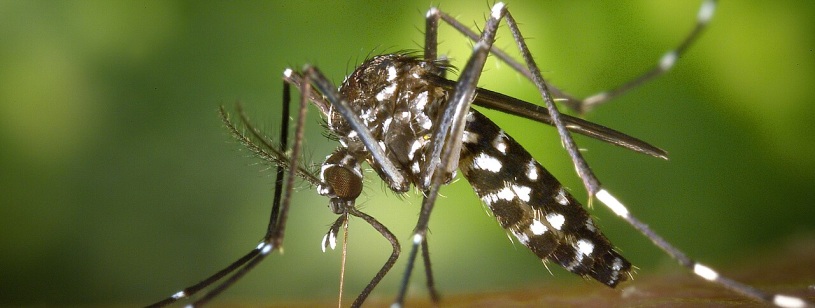
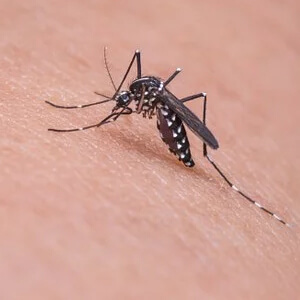
Female Asian tiger mosquito (Aedes albopictus) feeding on skin. · James Gathany, CDC / Public domain ().
The Asian tiger mosquito is a small black mosquito with white stripes on its legs and a white line down its back. Unlike many mosquitoes, it bites mainly by day. Native to South-East Asia, it has spread worldwide through the trade in used tyres and plants and has reached Romania.
Quick facts
| Common name | Asian tiger mosquito |
| Scientific name | Aedes albopictus |
| Lifespan | Adults a few weeks |
| Length | Under 1 cm, usually 2–10 mm |
| Diet | Females blood; males nectar and plant juices |
| Predators | Birds, bats, dragonflies; fish and insects eat larvae |
| Conservation status | Not evaluated; invasive species |
| Distribution | Native to South-East Asia; now on all inhabited continents |
| Habitat | Towns and gardens; larvae in water in pots, tyres, containers |
| Family | Culicidae |
| Activity | Mainly by day, morning and late afternoon |
- Primary category:Insects
- Explore this animal's categories:Animals beginning with AAnimals of AfricaAnimals of AsiaAnimals of AustraliaAnimals of EuropeAnimals of North AmericaAnimals of RomaniaAnimals of Romania’s gardens and parksAnimals of South AmericaArthropodsBlack-and-white animalsDangerous animalsEgg-laying animalsFlying animalsInsectsInvertebratesStriped animalsWild animals
Interesting facts
- The Asian tiger mosquito is listed among the world’s 100 worst invasive species.
- Its eggs can survive months out of water and hatch when flooded.
- Only females bite, because they need blood to develop eggs.
- It spread around the world mainly in used tyres shipped between countries.
Characteristics
The tiger mosquito is small and black, with white rings on its legs and a thin white stripe down the middle of its back. This black-and-white pattern gave it the name “tiger”.
As in all mosquitoes, the female has a long proboscis for piercing skin. Males have bushier antennae and do not bite.
Behaviour
Females bite mainly by day, in the morning and late afternoon, in shade and gardens. They fly low and often bite ankles and legs.
They rarely travel far from where the larvae developed, usually a few hundred metres. In cold regions, the species survives winter as eggs.
Habitat and distribution
The species is native to the forests of South-East Asia. Since the 1970s–1980s it has spread to Europe, the Americas, Africa and Oceania, carried mainly in used tyres and ornamental plants.
In Europe it first appeared in Albania, then Italy, and spread east, reaching Romania. It lives mostly in towns and villages, close to people.
Diet and feeding
Females feed on blood from people and other mammals and birds, which provides the protein needed for eggs.
Males, and females between meals, drink nectar and sweet plant juices. Larvae live in water and eat bacteria, algae and organic debris.
Reproduction and life cycle
The female lays eggs on the walls of water containers just above the waterline: buckets, tyres, flowerpots, blocked gutters. Eggs can survive months dry.
When rain floods them, larvae hatch and become adults in about a week in warm weather, so emptying standing water is the best prevention.
Name and history
The scientific name Aedes albopictus roughly means “unpleasant one, painted with white”. The common name comes from its tiger-like stripes.
It is related to the common house mosquito but is easily recognised by its black-and-white pattern and daytime biting.
Conservation and threats
The Asian tiger mosquito is an invasive species monitored by health authorities. It can transmit viruses such as dengue, chikungunya and Zika, so its spread in Europe is closely watched.
To protect yourself, empty any container of water in your yard every week, use window screens and mosquito repellents.
Frequently asked questions
Is the tiger mosquito in Romania?
Yes. It spread through Europe from Italy and has been recorded in Romania, mainly in towns and villages.
How do you recognise it?
It is black, with white rings on its legs and a white stripe on its back, and it bites by day.
What diseases can it spread?
It can transmit viruses such as dengue, chikungunya and Zika if it is itself infected.
How do you get rid of it in the garden?
Empty water from pots, containers, tyres and gutters every week, where larvae develop.