Common kingfisherAlcedo atthis — habitat, diet and reproduction
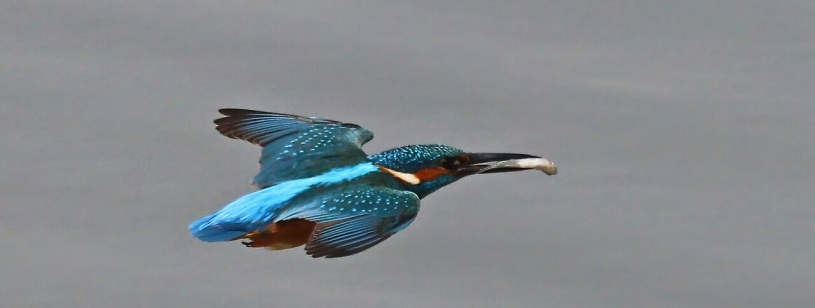
Common kingfisher in flight with blue wings spread and a long pointed bill. · Charles J. Sharp / Sharp Photography / Wikimedia Commons / CC BY-SA 4.0 (https://creativecommons.org/licenses/by-sa/4.0/). Cropped and resized. Source: https://commons.wikimedia.org/wiki/File:Common_kingfisher_(Alcedo_atthis_ispida)_in_flight.jpg
The common kingfisher (Alcedo atthis) is a small waterside bird with a blue back and orange underparts. It makes short dives for fish, often launching from a branch. Its nest lies inside a bank. Rivers, canals and lakes provide feeding opportunities.
Quick facts
| Common name | Common kingfisher |
| Scientific name | Alcedo atthis |
| Lifespan | BTO estimates around 2 years for birds reaching breeding age; some exceed 4 |
| Length | 17–19 cm |
| Weight | 34–46 g |
| Diet | Small fish and aquatic invertebrates |
| Predators | Cats and mink, depending on location |
| Conservation status | Least Concern globally |
| Distribution | Europe, Asia and North Africa |
| Habitat | Clear rivers, canals and lakes with suitable banks |
| Family | Alcedinidae |
| Reproduction | Commonly 5–7 eggs in a burrow chamber |
- Primary category:Birds
- Explore this animal's categories:Animals of AfricaAnimals of AsiaAnimals of EuropeAnimals of RomaniaAnimals of the Danube DeltaBirdsBirds of RomaniaBurrowing animalsCCarnivoresEgg-laying animalsFeathered animalsFish-eating animalsFlying animalsFreshwater animalsMigratory birdsSolitary animalsVertebratesWaterbirdsWetland animalsWild animals
Interesting facts
- Microscopic feather structures scatter light to produce the blue appearance.
- Adult females have orange-red on the lower bill; males have dark bills.
- Eggs are laid in a chamber at the end of a bank tunnel.
- Captured fish may be struck against a perch before being swallowed.
Records and extremes
Romanian accounts describe nest tunnels around 50–90 cm long. Other European observations include burrows exceeding a metre, depending on the site.
A British ringing record reached 4 years, 6 months and 29 days. This is a documented individual, rather than a species-wide maximum.
Characteristics
The compact body has a large head, long straight bill and short tail. Blue upperparts contrast with orange underparts and white throat markings. Adult feet are reddish.
Juveniles are duller, with an olive wash above. Adult bill colour provides a useful clue to sex.
Behaviour
Kingfishers watch from waterside branches, then dash low over the surface. A sharp piping call can reveal their presence.
They defend feeding grounds and may fight rivals. Freezing weather can force movements towards open water where fish remain accessible.
Habitat and distribution
The range spans much of Europe and Asia and includes North Africa. Romanian breeding sites extend from the Danube Delta and floodplain into hill country.
Still or slow water with small fish and observation perches is favoured. Natural banks provide nesting opportunities. Quiet waiting is more effective than following the bird along a river.
Diet and feeding
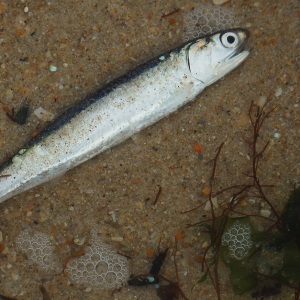
Small fish form the main diet. Birds plunge from a perch or occasionally hover before diving. Captures are brought back to a support.
Aquatic invertebrates, including insect larvae, are also taken. Clear water and accessible prey make a feeding site useful.
Reproduction and life cycle
The pair digs a tunnel ending in a chamber. The bank must allow excavation while remaining stable.
A clutch commonly contains 5–7 eggs. Both adults incubate for around 19–21 days and bring food to the growing chicks.
Young leave after roughly 23–27 days. Another brood may follow in favourable conditions, while juveniles disperse to find feeding areas.
Name and history
Linnaeus described the species in 1758. It belongs to Alcedinidae, the kingfisher family.
Woodland Trust records nineteenth-century persecution by British fishery owners who regarded the birds as competitors for fish.
Conservation and threats
The species is globally Least Concern, but severe winters can cause local declines. Pollution can affect prey and habitat quality.
Hard engineering of banks removes potential nest sites. Retaining natural banks and riverside vegetation supports breeding.
Watch quietly and keep away from occupied burrow entrances.
Frequently asked questions
How can I recognise an adult female?
Look for orange-red on the lower bill; the male bill is dark.
Why are the feathers blue?
Microscopic structures scatter light to create the colour.
Where is the nest?
Inside a chamber at the end of a tunnel dug into a bank.
Does it eat only fish?
Small fish dominate, but aquatic invertebrates are also taken.
Does it remain in Romania in winter?
Some stay, while freezing water may force movements to new feeding places.
How should I watch one?
Wait quietly near water, watch overhanging perches and keep away from nests.