Eurasian cootFulica atra — habitat, diet and reproduction
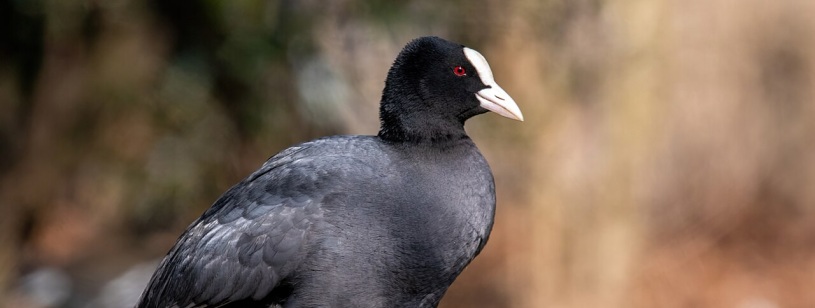
Adult Eurasian coot (Fulica atra) with a white bill and frontal shield. · Alexis Lours / CC BY 4.0 (https://creativecommons.org/licenses/by/4.0). Cropped and resized.
The Eurasian coot is a dark waterbird with a white bill and forehead shield. It swims on lakes and ponds, dives for food and may graze on nearby banks. Lobed toes help it move through water. During breeding it vigorously defends its territory.
Quick facts
| Common name | Eurasian coot |
| Scientific name | Fulica atra |
| Length | 36–39 cm |
| Wingspan | 70–80 cm |
| Weight | 610–1,200 g |
| Diet | Omnivore, with much aquatic plant material |
| Conservation status | Least Concern (LC), globally |
| Distribution | Europe, northern Africa, much of Asia and Australasia |
| Habitat | Lakes, ponds and slow waters with vegetation |
| Family | Rallidae |
| Reproduction | Usually 5–7 eggs, with variation |
| Adaptation | Toes with lateral lobes that assist swimming |
- Primary category:Birds
- Explore this animal's categories:Animals of AfricaAnimals of AsiaAnimals of AustraliaAnimals of EuropeAnimals of RomaniaAnimals of the Danube DeltaAnimals that live in groupsAquatic animalsBirdsBirds of RomaniaBirds that winter in RomaniaEEgg-laying animalsFeathered animalsFlying animalsFreshwater animalsMigratory animalsOmnivoresSemi-aquatic animalsVertebratesWaterbirdsWetland animalsWild animals
Interesting facts
- The white bill visually continues into the white forehead shield.
- Lobed toes differ from the continuous webbing of ducks.
- It may bring submerged plants to the surface to eat.
- Winter flocks contrast with territorial breeding pairs.
Characteristics
The compact body is dark grey, with an almost black head. Red eyes and the white bill area contrast strongly with the plumage. The sexes look similar.
Strong feet have long toes with lateral lobes, increasing the surface pushing against water without joining the toes into a single web. Juveniles are greyer, with paler cheeks and throats, and lack the adults’ strong contrast.
Behaviour
Coots swim in open water, dive for food and walk ashore to forage. Their movements are not restricted to reedbeds.
Breeding pairs defend territories through chases and confrontations. Outside breeding, many birds can gather on the same lake. These behaviours meet different seasonal needs. Ice-free winter waters may concentrate residents and visitors from farther north.
Habitat and distribution
The species ranges from Europe and northern Africa through Asia to Australasia. It mainly uses still or slow waters containing aquatic vegetation.
In Romania it breeds in many aquatic habitats and occurs year-round, including in the Danube Delta, lakes and ponds. Local numbers change with ice, water level and food. A suitable summer lake may become temporarily unavailable when completely frozen.
Diet and feeding
Aquatic plants and their seeds form an important part of the diet. Coots crop vegetation at the surface, retrieve it from below or graze along the bank.
They also eat invertebrates and occasionally other small animals, making them omnivores despite frequent plant feeding. Shallow vegetated water gives ready access to food. Removing plants affects the wider waterbird community.
Reproduction and life cycle
Both partners build a nest of stems, leaves and other vegetation. It may rest on plants, stand in shallow water or occupy an isolated support.
Clutches often contain five to seven eggs, with variation. Both parents incubate for roughly three weeks and a few days. Young leave the nest early but continue to receive food and care. Parents may divide the brood between them. Falling water can expose a nest on dry ground.
Name and history
Fulica atra combines a Latin coot name with a reference to dark colour. The species belongs to Rallidae, alongside moorhens and other wetland birds.
It is not a duck, despite sharing swimming places. The forehead shield, body shape and lobed toes aid recognition.
Conservation and threats
The global category is Least Concern. Regional assessments and local trends can still indicate problems.
Drainage, vegetation burning and poor water quality reduce habitat. Fishing nets can cause drowning, and bank vegetation loss affects nests. Lakes with refuge areas support both breeding and wintering birds.
Frequently asked questions
Is a coot a duck?
No. It belongs to Rallidae and has lobed toes rather than duck-like webbed feet.
How does it differ from a moorhen?
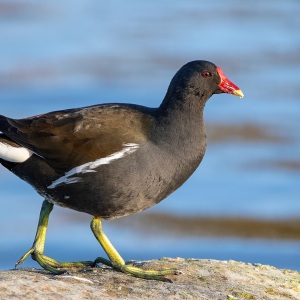
Adult coots have a white bill and forehead. Moorhens have a red forehead and a red bill with a yellow tip.
What does it eat?
Mainly aquatic plants and seeds, along with invertebrates and other small animals.
Why do many gather on a lake in winter?
Ice-free water and food can attract both local birds and visitors from northern regions.