WoodpeckerInteresting facts and information
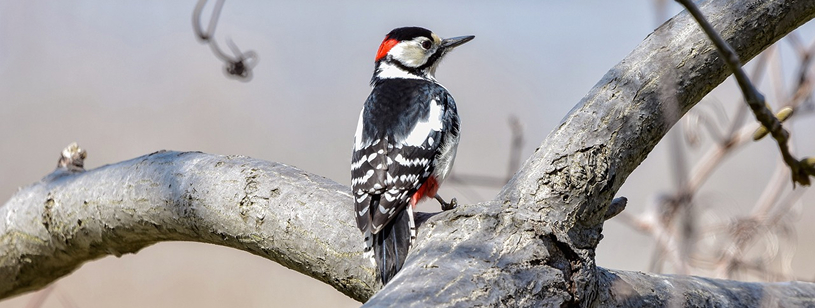
Woodpeckers belong to the family Picidae. Many use strong bills to search for food or excavate nest holes, and drumming can be a communication signal. Feeding, nesting and physical adaptations differ between species.
Woodpeckers affect trees and the habitats around them. Some other animals later use their abandoned nest holes; feeding and migration differ between species.
Quick facts
| Common name | Woodpecker |
| Scientific name | Picidae (family) |
| Typical lifespan | About 4-12 years in the wild, depending on species |
| Length | About 8-55 cm, depending on species |
| Wingspan | About 15-75 cm |
| Weight | About 7-550 g |
| Diet type | Mainly insects; some species also eat fruit, seeds, nuts or sap |
| Main predators | Hawks, falcons, owls, snakes, martens, cats |
| Conservation status | Assess separately by species and population; different taxa and regions have different needs |
| Distribution | Most of the world except Australia, New Zealand, Madagascar and Antarctica |
| Living environment | Deciduous and coniferous forests, woodland, savannas, parks and gardens |
- Primary category:Birds
- Explore this animal's categories:Animals of AfricaAnimals of AsiaAnimals of EuropeAnimals of North AmericaAnimals of RomaniaAnimals of Romania’s forestsAnimals of Romania’s gardens and parksAnimals of South AmericaBirdsBirds of RomaniaBirds that winter in RomaniaBirds with unusual beaksEgg-laying animalsFeathered animalsFlying animalsForest animalsInsect-eating animalsOmnivoresVertebratesW
Interesting facts
- Thousands of pecks a day - A woodpecker can hit wood thousands of times a day without harming its brain.
- A very long tongue - In some species, the tongue can stick out far beyond the tip of the bill; it is sticky or barbed and helps pull insects out of holes.
- Food stores - Acorn woodpeckers drill thousands of small holes in a single tree and push an acorn into each one, creating a "granary" for winter.
- From tiny to large - The smallest woodpeckers, the piculets, weigh only about 7-10 grams, while the largest living species, the great slaty woodpecker of Asia, is about 50 cm long.
- Drumming signals - Each species has its own drumming rhythm, which woodpeckers use to mark territory and attract mates.
Records and remarkable features
- Woodpeckers use pecking to obtain food and excavate nests; drumming can also communicate with other birds.
Physical characteristics and adaptations
Woodpeckers are birds well adapted to living on trees and finding food in wood and bark. Their bodies are built to withstand repeated pecking and to move easily on vertical trunks.
Key physical adaptations
- A strong, chisel-like bill - Used to dig holes in wood and reach insects.
- Research on three woodpecker species found that the head acts as a stiff hammer during pecking, rather than a simple shock absorber around the brain.
- A long tongue - The tongue is supported by long bones that curve around the back of the skull, so it can stick out far from the bill.
- Strong feet - Most woodpeckers have two toes pointing forward and two backward (zygodactyl feet), which gives a good grip on trunks.
- A stiff tail - Stiff tail feathers act as a prop against the trunk and help the bird balance.
- Varied colours - Many woodpeckers are black and white, green or brown, and males often have red on the head.
Dimensions and variations between species
| Characteristic | Small species (e.g. piculets) | Large species (e.g. great slaty woodpecker) |
|---|---|---|
| Body length | About 8-10 cm | About 45-55 cm |
| Weight | About 7-10 g | About 350-550 g |
| Wingspan | About 15-20 cm | About 70 cm or more |
| Bill length | About 1 cm | About 6 cm |
Habits and behaviour
Woodpeckers are active, often territorial birds with special behaviours for feeding, communication and nesting.
Daily life
- Active by day - Woodpeckers spend the day looking for food, drumming and digging holes.
- Territorial - Many woodpeckers defend their territory with drumming and calls.
- Mostly resident - Most woodpeckers stay in the same area all year, but some species, such as some sapsuckers and flickers, migrate.
Social organisation
- Alone or in pairs - Most woodpeckers live alone or in pairs.
- Family groups - Some species, such as the acorn woodpecker and the red-cockaded woodpecker, live in groups that help raise the young.
- Chasing rivals - Woodpeckers chase away birds that enter their territory.
Communication
- Drumming - Fast drumming on dead branches or other loud surfaces marks territory and attracts mates.
- Calls - Woodpeckers make sharp calls, rattles and laughing sounds.
- Displays - Some species show off coloured patches or spread their wings and tails during courtship or disputes.
Defence techniques
- Hiding behind the trunk - A woodpecker often moves around to the other side of the trunk when it sees danger.
- Undulating flight - Many woodpeckers fly in a bouncing, up-and-down pattern.
- Safe holes - Woodpeckers sleep and nest in holes in trees, where they are safer from predators.
Habitat and geographic distribution
Woodpeckers live in most parts of the world, but they are absent from Australia, New Zealand, Madagascar, Antarctica and many remote islands.
Distribution context
| Region | Species present |
|---|---|
| North America | Downy woodpecker, pileated woodpecker, northern flicker |
| Europe | European green woodpecker, great spotted woodpecker, black woodpecker |
| Asia | Himalayan woodpecker, Japanese green woodpecker, great slaty woodpecker |
| Africa | Cardinal woodpecker, ground woodpecker |
| South America | Golden-olive woodpecker, Andean flicker |
Habitat types
- Forests - Most species live in deciduous and coniferous forests, especially where there are old and dead trees.
- Forest edges and open woodland - Some species feed on the ground, near the edges of forests.
- Open land - The ground woodpecker of southern Africa and the Andean flicker live in open, rocky or grassy country.
- Orchards, parks and gardens - Species such as the great spotted woodpecker are common in parks and gardens.
Environmental change
- Loss of old trees - Forestry that removes old and dead trees reduces nesting sites.
- Climate change - Changes in climate may affect insects and forests.
- Intensive agriculture - Pesticides reduce the number of insects that woodpeckers eat.
Diet and feeding
Woodpeckers feed mainly on insects and their larvae, often hidden in wood. Some species also eat seeds, fruit, nuts or tree sap.
What do woodpeckers eat?
| Food group | Examples and context |
|---|---|
| Insects | Ants, termites, beetles, caterpillars |
| Insect larvae | Wood-boring beetle larvae |
| Tree sap | Sapsuckers drill rows of small holes and feed on the sap |
| Fruits and seeds | Berries, acorns, nuts, pine seeds |
| Eggs and chicks of other birds | Occasionally, for example in great spotted woodpeckers |
Feeding methods
- Pecking into wood - Woodpeckers dig into wood with their strong bills to reach hidden larvae.
- Using the tongue - The long, sticky or barbed tongue pulls insects out of tunnels.
- Food storage - Acorn woodpeckers store acorns in tree trunks, and some other species hide food in cracks.
- Feeding on the ground - Green woodpeckers and flickers often search the ground for ants.
Woodpeckers are important for forests: they eat many wood-boring insects, and their old nest holes are used by other birds and mammals.
Reproduction and life cycle
Woodpeckers are usually monogamous, and both partners help dig the nest hole and raise the young.
Breeding season
- In temperate regions, breeding usually starts in spring, but timing varies by species and climate.
- Males and females drum and call to attract partners and claim territory.
- Most woodpeckers dig their nest holes in trees; some use cacti or earth banks.
Nesting and eggs
| Characteristic | Details |
|---|---|
| Nest place | Holes in trees; some species in cacti or earth banks |
| Eggs | 2-8 white eggs, depending on species |
| Incubation | About 10-18 days |
| Time in the nest | About 3-5 weeks |
| Maturity | Usually about 1 year |
Raising young
- Both parents incubate the eggs and feed the chicks; in many species the male sits on the eggs at night.
- The chicks stay in the nest hole for about 3-5 weeks.
- After leaving the nest, young woodpeckers are often fed by their parents for a few more weeks.
Name and history
Origin of the name
- The English name "woodpecker" simply describes the bird's habit of pecking wood.
- The family name Picidae comes from the Latin word picus, meaning woodpecker.
- In Roman mythology, Picus was a king who was turned into a woodpecker by the sorceress Circe.
Taxonomic classification
| Classification | Name |
|---|---|
| Kingdom | Animalia |
| Phylum | Chordata |
| Class | Aves |
| Order | Piciformes |
| Family | Picidae |
| Main genera | Dryobates, Dendrocopos, Picus, Melanerpes |
Evolution and fossils
- Fossil woodpeckers date back more than 20 million years.
- Their closest relatives include honeyguides, barbets and toucans, which belong to the same order.
- Adaptations for pecking and the long tongue evolved gradually, allowing woodpeckers to reach food that other birds cannot.
Cultural significance and mythology
Woodpeckers have appeared in the myths and traditions of many cultures, often linked with gods, rain and hard work.
The woodpecker in myths and symbolism
- Roman mythology - The woodpecker was sacred to Mars, the god of war, and in legend a woodpecker helped feed the twins Romulus and Remus, together with the she-wolf.
- Picus - The Romans told of Picus, a king turned into a woodpecker, who was also linked with prophecy.
- North America - Some Native American peoples of northwestern California used the red scalps of woodpeckers in ceremonial regalia.
- European folklore - In Britain, the green woodpecker was called the "rain bird", because its loud call was thought to announce rain.
The woodpecker in modern symbolism
- Hard work and persistence - Because of its constant pecking, the woodpecker is often a symbol of hard work.
- Healthy forests - Woodpeckers are a sign of forests with old and dead trees, which are rich in wildlife.
- Ecosystem engineers - Their old holes become homes for many other animals.
Conservation status and threats
Many woodpecker species are not threatened, but some are endangered or may already be extinct because of the loss of old forests.
Conservation status
| Species | Assessment scope | Trends |
|---|---|---|
| Great spotted woodpecker (Dendrocopos major) | Least Concern | Increasing in many areas |
| European green woodpecker (Picus viridis) | Least Concern | Stable |
| Red-cockaded woodpecker (Dryobates borealis) | Near Threatened | Recovering with conservation help |
| Ivory-billed woodpecker (Campephilus principalis) | Critically Endangered (possibly extinct) | No confirmed sightings for decades |
| Imperial woodpecker (Campephilus imperialis) | Critically Endangered (possibly extinct) | Not seen with certainty since the 1950s |
Main pressures
- Loss of old forests - Cutting old trees removes nesting sites and food sources.
- Removal of dead wood - Many woodpeckers depend on dead trees and branches.
- Pesticides - Fewer insects means less food for woodpeckers.
- Habitat fragmentation - Roads, farms and towns split forests into small pieces.
- Climate change - Changes in climate may affect forests and insects.
Protection measures
- Protecting old forests - Keeping old and dead trees is important for many species.
- Protected areas - Reserves protect important forests for rare woodpeckers.
- Artificial nest holes - For the red-cockaded woodpecker, conservationists fit artificial nest cavities into pine trees.
- Monitoring - Researchers count and ring woodpeckers to follow their populations.
In popular culture
Woodpeckers are well-known birds and appear in cartoons, stories and on stamps.
The woodpecker in movies and cartoons
- "Woody Woodpecker" - A famous cartoon character created by Walter Lantz, who first appeared in 1940, known for his laugh.
- Nature documentaries often show woodpeckers drumming and digging their nest holes.
The woodpecker in literature
- Ovid's "Metamorphoses" - Tells the story of King Picus, who was turned into a woodpecker.
- Folk tales - The woodpecker appears in folk stories in Europe, Asia and North America.
Woodpeckers as symbols
- Conservation - The ivory-billed woodpecker, nicknamed the "Lord God bird", has become a symbol of species lost through forest destruction.
- Stamps - Many countries have issued stamps showing their native woodpeckers.