Common toadBufo bufo — habitat, diet and reproduction
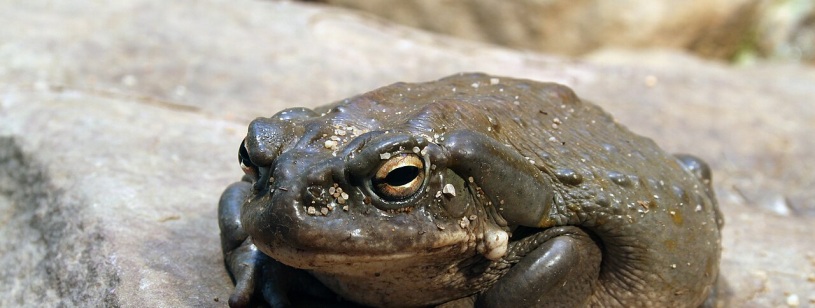
Common toad (Bufo bufo) on a rock. · Holger Krisp / CC BY 3.0 (https://creativecommons.org/licenses/by/3.0). Cropped and resized.
The common toad is a sturdy amphibian with dry, warty skin and copper-coloured eyes. It lives mostly on land, in gardens, woods and grassland, and heads to ponds only in spring to breed. Glands behind the head release an irritant that protects it from predators.
Quick facts
| Common name | Common toad |
| Scientific name | Bufo bufo |
| Lifespan | About 10 years in the wild; up to about 40 in captivity |
| Length | About 8–15 cm; females are larger |
| Diet | Carnivore: insects, slugs, earthworms, spiders |
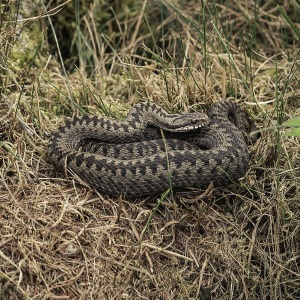
| Predators | Grass snakes, hedgehogs, herons and birds of prey |
| Conservation status | Least Concern (LC) |
| Distribution | Europe, western Asia and north-west Africa |
| Habitat | Woods, gardens, grassland; ponds and lakes for breeding |
| Family | Bufonidae |
| Reproduction | Eggs laid in water in long strings |
- Primary category:Amphibians
- Explore this animal's categories:AmphibiansAnimals of AfricaAnimals of AsiaAnimals of EuropeAnimals of RomaniaAnimals of Romania’s gardens and parksAquatic animalsCCarnivoresEgg-laying animalsForest animalsFreshwater animalsHibernating animalsInsect-eating animalsNocturnal animalsReptiles and amphibians of RomaniaVenomous animalsVertebratesWetland animalsWild animals
Interesting facts
- The common toad returns to breed in the pond where it was born.
- Eggs are laid in double strings several metres long, wound around plants.
- Toads do not give people warts; that belief is false.
- When threatened, it puffs up and rises on its legs to look bigger.
Characteristics
The common toad has a broad body, short legs and thick, warty skin. It is brown, olive or grey, sometimes with dark blotches. The iris is copper-coloured and pupils are horizontal.
Behind the eyes are two large parotoid glands that produce a bitter secretion toxic to many animals. Females are much larger than males.
Behaviour
It is active mainly at night and in damp weather, hiding by day under stones, logs or in burrows. It walks more than it hops.
In early spring, thousands of toads may set off for breeding ponds on the same night. Males cling to females’ backs and are carried to the water. In winter, toads hibernate on land, buried in soil or leaf litter.
Habitat and distribution
The species lives across almost all of Europe, in western Asia and north-west Africa. It is absent from Ireland and some Mediterranean islands.
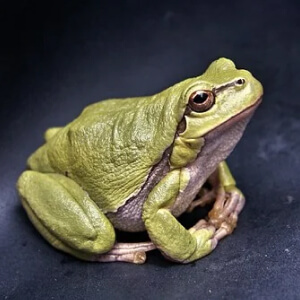
In Romania it is common from lowlands to mountains, in woods, orchards, gardens and parks, even far from water. The south and east of the country also have the European green toad, a different species with green blotches.
Diet and feeding
Its food is insects, beetles, ants, slugs, earthworms and spiders, caught with a sticky tongue that shoots from the mouth.
Gardeners benefit because it eats many slugs. Tadpoles feed on algae and plant debris.
Reproduction and life cycle
The female lays several thousand eggs in two jelly strings several metres long, wrapped around water plants, and the male fertilises them at once.
Small black tadpoles hatch and live in groups. After two to three months they become tiny toadlets about a centimetre long, which leave the water, often on the same days. Only a small fraction reach adulthood.
Name and history
The scientific name Bufo bufo comes from old Latin, where “bufo” meant toad.
The Romanian name “râioasă” refers to skin that looks as if it had mange. The toad features in many tales and superstitions, often linked to witches, although it is a useful animal.
Conservation and threats
The species is assessed as Least Concern, but numbers are falling in many countries.
Main threats include roads crossing migration routes, loss of ponds, pesticides and fish stocked in ponds. In some places volunteers help toads cross roads in spring. Like all wild amphibians in Romania, the common toad is protected.
Frequently asked questions
Is the common toad dangerous?
Not to people unless put in the mouth. Its secretion irritates eyes and mouth, so wash your hands after touching one. It can be dangerous for dogs that bite it.
Do toads cause warts?
No. Human warts are caused by a virus, not by toads.
Why is there a toad in my garden?
It is looking for food such as slugs and insects and for damp shelter. It is a useful garden visitor.
Where do common toads breed?
In ponds and lakes, usually the same pond where they were born.