European green lizardLacerta viridis — habitat, diet and reproduction
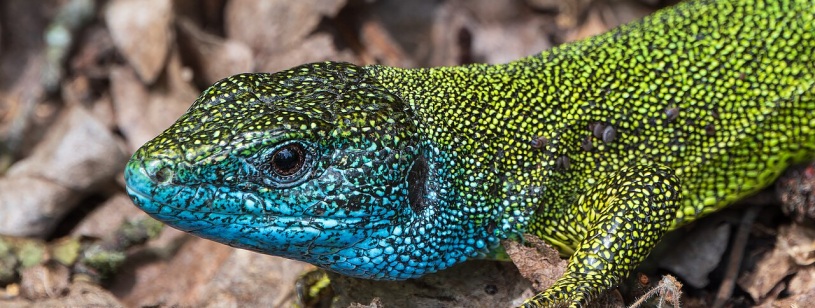
Male European green lizard (Lacerta viridis) with a blue head and throat. · Skot / CC BY-SA 4.0 (https://creativecommons.org/licenses/by-sa/4.0). Cropped and resized.
The European green lizard is the largest lizard in Romania. Its body is bright green with tiny black or yellow dots, and males have blue throats in spring. It loves sunny places with bushes, basking on stones and dashing into cover when threatened.
Quick facts
| Common name | European green lizard |
| Scientific name | Lacerta viridis |
| Lifespan | About 10 years; longer in captivity |
| Length | Up to about 40 cm, about two-thirds of it tail |
| Diet | Carnivore: insects, spiders, snails; sometimes fruit |
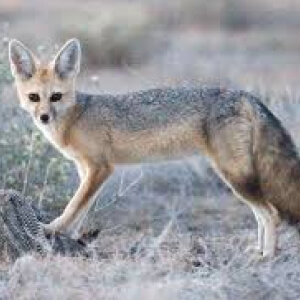
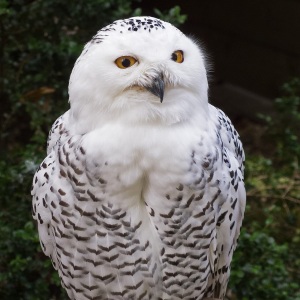
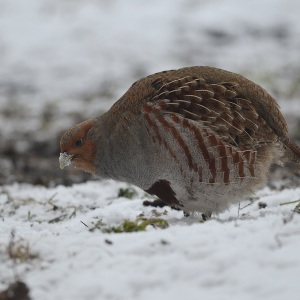
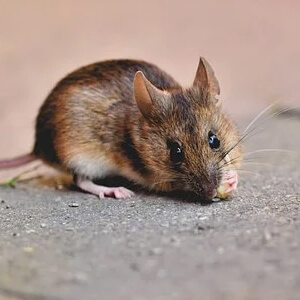
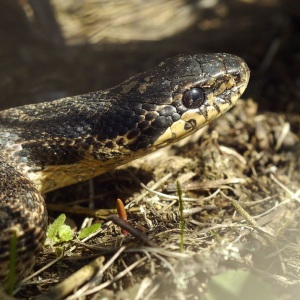
| Predators | Birds of prey, snakes, foxes, martens and cats |
| Conservation status | Least Concern (LC); protected in Romania and the EU |
| Distribution | Central and south-eastern Europe to Turkey |
| Habitat | Woodland edges, scrub, grassland and sunny slopes |
| Family | Lacertidae |
| Reproduction | Lays eggs in the soil |
- Primary category:Reptiles
- Explore this animal's categories:
Interesting facts
- The green lizard has no venom and is not dangerous to people.
- If grabbed by the tail, it can shed it; the tail regrows, but shorter.
- Hatchlings are grey-brown and turn green only after a few years.
- The male’s blue throat signals to females that he is ready to mate.
Characteristics
The green lizard has a robust body, a large head and a very long tail, almost twice the body length. Adult males are bright green with tiny black dots, and in spring their throat and sometimes head turn blue.
Females are usually duller, sometimes with pale stripes on the back. Hatchlings are brown and about 8–9 cm long.
Behaviour
It is active by day from spring to autumn. In the morning it basks to warm up, then searches for food among grass and shrubs. It climbs easily on bushes and low walls.
Males defend territories and may fight by biting each other’s heads. In winter it hibernates in burrows, under stones or roots. When handled it bites hard, but the bite is harmless.
Habitat and distribution
The green lizard lives in central and south-eastern Europe, from southern Germany to the Balkans, Ukraine and Turkey.
In Romania it is widespread mainly in lowlands and hills, on sunny slopes, woodland edges, orchards and railway embankments. It is absent from dense forest and high altitudes.
Diet and feeding
Its main food is large insects: grasshoppers, crickets, beetles and caterpillars. It also takes spiders, snails, earthworms and sometimes smaller lizards or baby mice.
In summer it may eat soft fruit such as cherries or blackberries. It hunts by sight, darting quickly towards prey.
Reproduction and life cycle
Mating takes place in spring after hibernation. In June, the female digs a hole in soft, sunny soil and usually lays 6–20 eggs.
The eggs develop with the warmth of the soil, and young hatch in late summer, independent from the start. Green lizards mature after two or three years.
Name and history
The scientific name Lacerta viridis means “green lizard” in Latin.
Western Europe has a very similar species, Lacerta bilineata, long considered the same. In Romania, the green lizard is the large green one, distinct from the smaller brown lizards.
Conservation and threats
The species is assessed globally as Least Concern. In the European Union it is strictly protected under Annex IV of the Habitats Directive, and in Romania it may not be captured or killed.
Main threats include the loss of grassland and scrub, pesticides, road traffic and cats. Keeping shrubby field margins and stone walls helps the species.
Frequently asked questions
Is the green lizard dangerous?
No. It has no venom. It may bite if handled, but the bite is harmless.
Why does the green lizard have a blue throat?
Males develop blue throats in spring, during mating season, as a signal to females and rival males.
Can it shed its tail?
Yes. The tail breaks off to escape predators and then regrows, shorter and differently patterned.
Can I keep one at home?
No. It is a protected wild species, and capturing it is illegal.