VulturesScavenging birds, adaptations and their role in nature
Vultures are birds that feed mainly on dead animals. This feeding habit is called scavenging. By consuming carcasses, vultures help return nutrients to natural food webs. The group includes birds with different appearances and behaviours, from griffon vultures to condors.
Vultures should be distinguished from eagles, which have different feeding adaptations. Vultures themselves do not all share one diet, nesting pattern or social life: the bearded vulture, for example, specialises in eating bones.
Quick facts
| Common name | Vultures, including condors |
| Classification | Birds in class Aves; several genera and species |
| Families | Accipitridae in the Old World; Cathartidae in the New World |
| Diet | Mainly dead animals; specialisation varies between species |
| Distribution | Africa, Europe and Asia; North, Central and South America |
| Habitats | Open landscapes, cliffs, mountains and other habitats, depending on species |
| Wingspan — example | Griffon vulture: 2.4–2.8 m; not a range for every vulture |
| Reproduction | Egg-laying birds with parental care |
| Social life | Some species feed or nest in groups |
| Conservation | Assess separately for each species and population |
- Primary category:Birds
- Explore this animal's categories:
Characteristics and adaptations
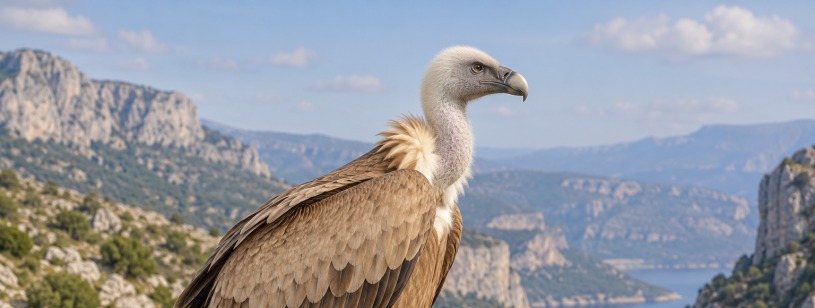
Many vultures have long, broad wings suited to soaring. A curved bill helps them pull food from carcasses. The griffon vulture uses its long neck to reach soft tissues inside a dead animal.
The head and neck have few feathers in many species, but there are exceptions. Bearded vultures have feathered heads and a different outline from griffon vultures. The appearance of one species cannot serve as a description of all the others.
Habitat and distribution
Old World vultures live in Africa, Europe and Asia. New World vultures live in the Americas and include condors. These geographical names distinguish two groups of vultures; they do not divide vultures from eagles.
Griffon vultures use cliffs and open landscapes where they can search for carcasses. Bearded vultures are associated mainly with mountain regions. Suitable nesting places and access to safe food matter even when a bird searches far from its nest.
Diet and feeding
Scavenging means feeding on dead animals. Vultures are adapted to this food, but they are not immune to every harmful substance. Lead or poisons in a carcass can make them ill or kill them.
| Example | Food and feeding |
|---|---|
| Griffon vulture — Gyps fulvus | Feeds mainly on soft tissues from the carcasses of herbivores. |
| Bearded vulture — Gypaetus barbatus | Bones form an important part of its diet. |
| Egyptian vulture — Neophron percnopterus | Has a varied diet, including animal remains and other food; it can break eggs using stones. |
| California condor — Gymnogyps californianus | Feeds on carcasses and may swallow lead fragments left in them. |
Vultures therefore do not all seek exactly the same food. Some also take small or vulnerable live animals occasionally. This does not make every species a specialised hunter like many eagles.
Behaviour, flight and social life
Soaring allows a bird to travel with outstretched wings rather than flapping continuously. Rising air can lift it and help it search for food with fewer wingbeats. Weather conditions influence this way of travelling.
Griffon vultures gather at food and in nesting colonies. Competition and differences in access to food also occur at carcasses. This behaviour does not describe every vulture species and should not be extended to all birds of prey.
Reproduction and chick care
Vultures reproduce by laying eggs. The species determines the nesting site, clutch size and length of chick development. One breeding calendar or nest size cannot be assigned to the whole group.
Griffon vultures nest on cliffs, often in colonies. New World vultures may lay eggs in cavities or sheltered places without building a stick nest. Parents incubate eggs and feed their chicks, including by regurgitation: bringing food back from the digestive tract to offer it to the chick.
Examples and remarkable adaptations
The griffon vulture has a wingspan of approximately 2.4–2.8 metres, according to the Vulture Conservation Foundation. This is an example for Gyps fulvus, not a universal vulture range.
Bone-eating in bearded vultures illustrates a different specialisation. Egyptian vultures sometimes use objects as tools, while turkey vultures can locate carcasses with the help of smell. Bills, senses and behaviour suit the way each species finds and consumes its food.
Names and classification
“Vultures” is a common name for several species, not the name of a single species. Old World vultures belong to Accipitridae, a family that also includes eagles. New World vultures belong to Cathartidae.
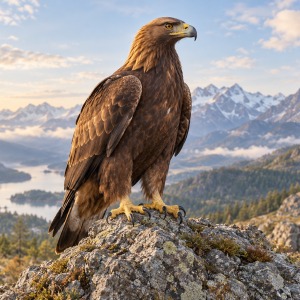
Sharing a family does not make a golden eagle and a griffon vulture the same bird. Nor is the genus name Vultur, used for the Andean condor, the scientific name of every vulture. Identification requires a species name, such as Gyps fulvus.
Cultural significance
In ancient Egypt, vulture imagery appeared in representations connected with protection and motherhood. In other contexts, feeding on dead animals has associated vultures with death.
These are cultural interpretations, not descriptions of the birds’ intentions. Biologically, vultures seek food and raise their chicks; their role in ecosystems cannot be reduced to a symbol.
Threats and conservation
Poisoned carcasses, lead from ammunition fragments, loss of nesting places and dangerous infrastructure can affect vultures. Risks differ between species and regions; there is no single conservation status for the whole group.
For the California condor, the US Fish and Wildlife Service identifies lead poisoning as a major obstacle to recovery in the wild. Captive breeding and reintroduction must be accompanied by reducing hazards in natural habitats. Protecting nests and keeping toxic substances out of food are other important approaches.
Frequently asked questions
- Are vultures and eagles the same? No. They are different groups, although some vultures and eagles belong to the same family. See also Eagles.
- Do all vultures eat only dead animals? Scavenging predominates, but diets differ and some species also consume other food.
- Are condors vultures? Yes. Condors belong to Cathartidae, the New World vulture family.
- Do all vultures have bare heads? No. The bearded vulture is an example with a feathered head.
- Why do vultures circle in the sky? They can use rising air to gain height while searching for food.
- How are the chicks fed? Parents provide food, often through regurgitation.
- What is their scientific name? There is no single name: the general term covers several genera and species.
- Are they immune to poison? No. Food contaminated with poisons or lead can kill them.
Did you know? About vultures
- Bearded vultures can drop large bones onto rocks to break them into pieces they can swallow.
- Egyptian vultures can use stones to break large eggs.
- Turkey vultures use smell to help locate food; this ability should not be assumed for every vulture.
- Griffon vultures can nest in colonies on cliffs.
- Condors are vultures in the family Cathartidae, not eagles.
- Bearded vultures have feathered heads, so a bare head does not describe every vulture.