Common swiftApus apus — habitat, diet and reproduction
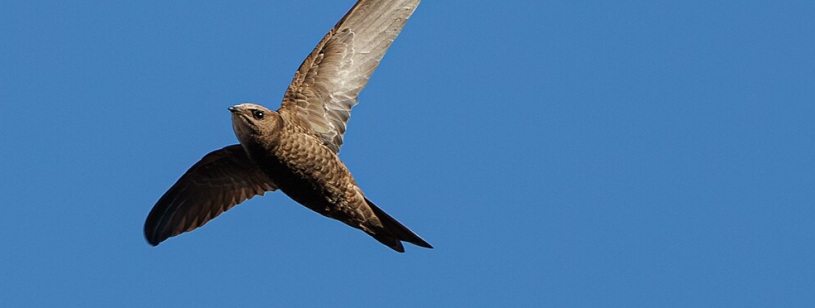
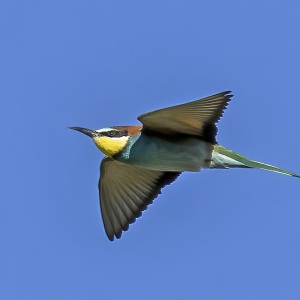
Common swift (Apus apus) in flight. · Hobbyfotowiki / CC0 (http://creativecommons.org/publicdomain/zero/1.0/deed.en).
The common swift is a dark bird with long, narrow, sickle-shaped wings. It spends almost its whole life in the air, where it feeds, drinks raindrops and even sleeps. In summer, groups scream overhead in fast flights above towns.
Quick facts
| Common name | Common swift |
| Scientific name | Apus apus |
| Lifespan | About 9 years; some individuals exceed 20 years |
| Length | About 16–17 cm |
| Weight | About 35–50 g |
| Diet | Insectivore: airborne insects and spiders |
| Predators | Hobbies and other fast birds of prey |
| Conservation status | Least Concern (LC), globally |
| Distribution | Breeds in Europe and Asia; winters in Africa |
| Habitat | Airspace above towns, villages and water |
| Family | Apodidae |
| Wingspan | About 38–40 cm |
- Primary category:Birds
- Explore this animal's categories:
Interesting facts
- Some swifts stay airborne for almost 10 months without touching the ground.
- Its legs are so short that it struggles to take off from flat ground.
- Swifts are not swallows; they are closer to hummingbirds.
- Chicks can survive a few days without food in cold weather by lowering their body temperature.
Characteristics
The common swift looks entirely blackish brown, with a pale throat patch. The wings are very long and narrow; the tail is short and forked.
The feet are tiny, with all four toes facing forward and sharp claws. They let it cling to walls and cavity sides, but it cannot walk or perch on branches.
Behaviour
Swifts eat, drink and mate in flight. At night they climb to a few thousand metres and sleep in short bouts while gliding in wide circles.
On summer evenings, screaming parties fly low between buildings. In cold, insect-poor weather, swifts can detour around rain belts for hundreds of kilometres.
Habitat and distribution
The species breeds across almost all of Europe and central Asia to China and winters in Africa south of the Sahara.
In Romania it arrives in late April and leaves in August, staying just over three months. It is common in towns, nesting in tall buildings.
Diet and feeding
Swifts catch small insects in flight: flies, aphids, small beetles, flying ants and tiny wind-borne spiders.
When feeding chicks, they collect hundreds of insects into a saliva-bound ball held in the throat. One ball can contain more than a thousand insects and spiders.
Reproduction and life cycle
Swifts nest in cavities in buildings: under roof tiles, in wall holes and under eaves, more rarely in cliffs or tree holes.
The nest is a small cup of airborne feathers and plant fluff glued with saliva. The female lays 2–3 eggs, incubated by both parents for about 19–20 days. Chicks stay 5–8 weeks in the nest, then fly off alone and never return.
Name and history
The scientific name Apus apus comes from the Greek “a-pous”, meaning “without feet”. Ancient observers believed the bird had no legs because they never saw it on the ground.
In Romanian, the swift is often confused with house martins and swallows. Swifts have longer wings, darker plumage and never perch on wires.
Conservation and threats
The species is assessed globally as Least Concern, but numbers are falling in many European countries.
The main causes are building renovation, which seals nest cavities, and declining insects. Swift nest boxes on apartment blocks help urban populations. A grounded swift needs help from a wildlife rescue centre.
Frequently asked questions
Does the swift sleep in flight?
Yes. At night it climbs high and sleeps in short bouts while gliding.
How do swifts differ from swallows?
Swifts are almost black, with sickle wings, and never perch on wires. Swallows have pale bellies, long tail streamers and perch often.
What should I do if I find a swift on the ground?
Do not throw it into the air. Place it in a ventilated box and call a wildlife rescue centre.
When do swifts leave Romania?
Usually in August, heading for Africa after the chicks fledge.