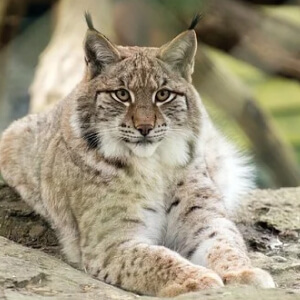
FossaInteresting facts and information
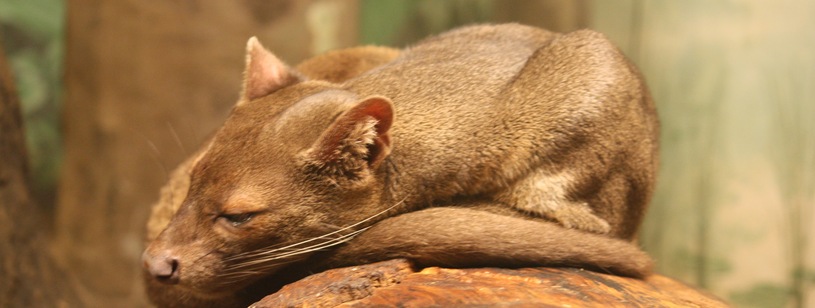
Real fossa photographs taken in zoos. · Cover: Ltshears, CC BY-SA 3.0; thumbnail: Ran Kirlian, CC BY-SA 4.0. Cropped and resized; full credits below.
The fossa (Cryptoprocta ferox) is Madagascar's largest native carnivorous mammal. It looks like a cat but belongs to the family Eupleridae. It has a slender body and a very long tail, and hunts both on the ground and in trees.
Its natural range is restricted to Madagascar. It eats lemurs and other animals, and forest loss threatens its survival. Its climbing skills help it pursue prey through branches and descend tree trunks headfirst.
These are real photographs of Cryptoprocta ferox taken in zoos. Photographer credits and licences appear at the end of the article.
Quick facts
| Common name | Fossa |
| Scientific name | Cryptoprocta ferox |
| Class / order / family | Mammalia / Carnivora / Eupleridae |
| Natural distribution | Madagascar, Africa |
| Habitat | Tropical rainforest, dry forest and other habitats with trees |
| Head-and-body length | Approximately 70–80 cm |
| Tail length | Approximately 65–70 cm |
| Male weight | Typically 6.2–8.6 kg in the reference data |
| Female weight | Typically 5.5–6.8 kg in the reference data |
| Diet | Carnivorous: lemurs, tenrecs, rodents, birds and other animals |
| Activity | Can be active by day and night; often more active at night |
| Social life | Females are generally solitary; males may live alone or in small groups |
| Young per litter | Usually 2–4; sometimes up to 6 |
| Sexual maturity | Approximately 3–4 years |
| Lifespan | Poorly known in the wild; up to 20 years in zoos |
| Conservation status | Vulnerable (VU), according to the IUCN classification cited by zoological institutions |
- Primary category:Mammals
- Explore this animal's categories:
Interesting facts
- It is not a cat. Its resemblance to a small puma can be misleading. The fossa belongs to a family of carnivorans native to Madagascar.
- Its tail is almost as long as the rest of its body. It helps the animal balance while moving along branches or jumping between them.
- It can climb down a tree trunk headfirst. Flexible hindlimb joints and claws help it do this.
- Its activity is not limited to the night. A fossa may also search for food during the day, depending on local conditions.
- Cooperative hunting has been observed. Some males coordinate their actions; this does not mean that all fossas live in packs.
Records and remarkable abilities
The fossa is the largest native carnivorous mammal living in Madagascar today. The word “mammal” matters: this claim does not compare it with all reptiles or every other predator on the island.
An adult may measure approximately 70–80 cm from its head to the base of its tail, with the tail adding around 65–70 cm. These are approximate measurements rather than fixed limits for every individual.
In a study published in the Journal of Ethology, researchers described a pursuit lasting approximately 45 minutes, during which three males hunted an arboreal lemur together. They switched roles and shared the prey. This is a documented observation, not a universal speed or endurance record.
Characteristics
Physical appearance
The fossa has an elongated trunk, powerful limbs, rounded ears and a relatively short, broad muzzle. Its coat is short, usually brown or reddish-brown, without a leopard's distinctive spots.
| Feature | Role or characteristic |
| Long tail | Helps with balance during movement and jumping. |
| Semi-retractable claws | Can be partly withdrawn; help with climbing and catching prey. |
| Flexible hindlimbs | Allow the feet to change position against tree trunks. |
| Long whiskers | Sensitive touch hairs around the muzzle. |
| Slender, muscular body | Allows movement both on the ground and among branches. |
A tail for balance
The tail is not prehensile: a fossa cannot use it like a hand to grasp branches. Instead, it helps the animal maintain its balance. The limbs provide support and grip.
Habits and behaviour
When is it active?
Observations show activity in both daylight and darkness. In some places, movement is more frequent at night and around dusk, and decreases around midday. Its schedule is not identical in every habitat.
Solitary lives and male associations
Females are usually solitary except when caring for young. Males may live alone or form small associations. Research in Kirindy Forest has shown that some males travel and hunt together.
Fossas also use scent marks, leaving odours on different surfaces. Vocalisations are heard more often during the breeding season, and young may make purring sounds when close to their mother.
Habitat and geographical distribution
An animal endemic to Madagascar
The fossa is endemic to Madagascar: its entire natural range lies there. The island is in the Indian Ocean, off Africa's eastern coast. Individuals kept in zoos on other continents do not extend the species' wild range.
Which habitats does it use?
- Tropical rainforests: these offer trees, shelter and many potential prey animals.
- Dry forests: fossas also occur where vegetation and resources change between seasons.
- Montane forests: their distribution includes high-elevation areas as well as coastal lowlands.
- Other areas with trees: they may use spiny forest and wooded savanna.
Trees remain important even though the animal also spends much time on the ground. Forest fragmentation means breaking a forest into separate patches, which may restrict movement and access to food.
Diet and feeding
What does a fossa eat?
Fossas are carnivorous, and lemurs form an important part of their diet. They may also eat tenrecs, rodents, birds, lizards, snakes and amphibians. Their diet varies between regions and seasons.
| Food type | Key point |
| Lemurs | Important prey; their share of the diet varies by location and season. |
| Other vertebrates | Include small mammals, birds, reptiles and amphibians. |
| Insects and other invertebrates | May be eaten, although insects are taken less often. |
| Domestic poultry | May be attacked near settlements, leading to conflict with people. |
How does it hunt?
A fossa can pursue prey in trees or on the ground and uses its forelimbs to catch it. It completes the attack with a bite. Its climbing ability gives it access to animals that spend much of their time in trees.
It occasionally eats insects but is not a specialist insectivore. Finding a few seeds in droppings does not prove that it relies on fruit: these may have come from the food eaten by its prey.
Reproduction and life cycle
Mating and birth
One unusual behaviour is the use of mating trees. A female may attract several males, and particular sites can be reused over the years.
Reported gestation periods vary. The San Diego Zoo Wildlife Alliance specialist fact sheet commonly reports observations of around 6–8 weeks, including records from zoo care. These figures should not be treated as an exact timetable for every wild female.
A litter usually contains 2–4 young, sometimes up to six. The den may be a hollow tree, cavity or old termite mound. Fossas can also use burrows; this does not mean that every individual digs its own shelter.
Development of the young and lifespan
The mother raises the young alone. They are born with closed eyes, no teeth and pale fur. Their eyes open after approximately 2–3 weeks, and development is slow.
Young begin leaving the den at around 4–5 months. They may stay with their mother for a long time, and reach sexual maturity at approximately 3–4 years.
Lifespan in the wild is poorly known. Zoological institutions report individuals that have lived for around 20 years in captivity; this is not an average for wild fossas.
Name and history
Name and classification
The common name “fossa” comes from a Malagasy name. Its scientific name is Cryptoprocta ferox, and it belongs to the family Eupleridae.
Its appearance made classification difficult in the past. Studies of evolutionary relationships revealed connections between Madagascar's native carnivorans, now grouped in this family. A cat-like appearance does not place it in Felidae.
A confusing name
Fossa fossana is a different species. Taxonomic databases also contain the genus Fossa, but the animal described here belongs to Cryptoprocta. The full scientific name helps avoid confusion.
Cultural significance and mythology
In some Malagasy communities, the fossa is associated with fady, local traditions and taboos. These beliefs can influence how people treat the animal, including whether its meat is eaten. Customs vary between communities.
Stories also attribute unusual powers to it. These are beliefs and legends, not scientifically established biological facts. Real conflicts arise particularly when predators attack poultry, and fear may lead to their killing.
Conservation status and threats
Conservation status
The fossa is classified as Vulnerable (VU) in the IUCN assessment cited by San Diego Zoo Wildlife Alliance and France's Muséum national d’Histoire naturelle. This category indicates a high risk of extinction in the wild.
Population estimates are difficult because the animal is rarely seen and ranges over large areas. Published estimates relate to particular periods and research methods; they are not counts of every surviving individual.
What threatens it, and how can it be protected?
- Deforestation and habitat fragmentation reduce the forests that provide shelter and prey.
- Killing after conflict with people occurs, for example, following attacks on poultry.
- Hunting adds pressure to local populations.
- Diseases and competition from introduced animals, including dogs and cats, can affect native carnivorans.
Protecting forests and reducing conflict near settlements are important for the species' survival. Protected areas retain habitats for fossas and the animals on which they depend.
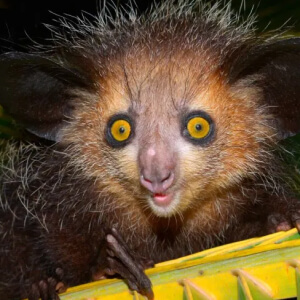
Madagascar also has other distinctive mammals, including lemurs and the aye-aye. All are mammals, but their ways of life differ.
In popular culture
Characters inspired by fossas appear in DreamWorks' Madagascar stories. The stage adaptation Madagascar – A Musical Adventure also features “foosa” characters, described in the production's educational guide.
An animated film or stage show may spark interest in the species, but its characters behave in ways that serve the story. They do not faithfully represent every aspect of wild fossas' social relationships, diet or lives.
Frequently asked questions
- Is a fossa a cat? No. Although it looks like a large cat, it belongs to Eupleridae rather than Felidae.
- Where do fossas live? Their natural range is restricted to Madagascar. They use several forest types, including rainforest, dry forest and montane forest.
- What do fossas eat? They are carnivores. Lemurs are an important food source, alongside tenrecs, rodents, birds and other animals.
- How big is a fossa? Its head and body measure approximately 70–80 cm, with the tail adding around 65–70 cm. Size varies between individuals.
- Are fossas active only at night? No. They can also be active during the day, although in some areas they move more at night or around dusk.
- Why do fossas have such long tails? The tail helps with balance when walking along branches and jumping between them. It does not grasp branches.
- How many young does a fossa have? Usually 2–4 per litter, sometimes up to six. The mother raises them alone.
- Are fossas threatened with extinction? Yes. They are classified as Vulnerable (VU). Forest loss, hunting and conflict with people are important threats.
Cover photograph: Ltshears — Fossa, Cincinnati Zoo · CC BY-SA 3.0. Thumbnail: Ran Kirlian — Fossa, Bioparc Valencia · CC BY-SA 4.0. Both photographs were cropped and resized; each adapted version is available under the licence indicated for its original.
Did you know?
- The fossa looks like a cat but belongs to the family Eupleridae.
- Its long tail helps with balance; it does not grasp branches.
- It is a carnivorous mammal endemic to Madagascar.
- Some males have been observed hunting together.