ChickenInteresting facts and information
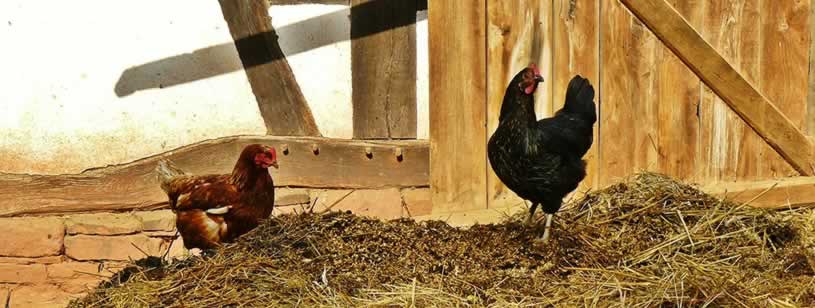
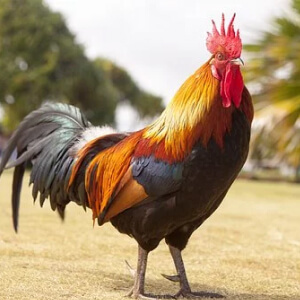
The domestic chicken (Gallus gallus domesticus) is a bird raised in many parts of the world. Hens and roosters are the females and males of the same domestic species, and their size, colour and behaviour vary between breeds.
Chickens are omnivorous, intelligent and sociable birds that live in groups, called flocks, with a clear hierarchy. They play an essential role in farming, raised for meat and eggs, and in some places they are also kept as pets.
Chickens are extremely adaptable and can live almost anywhere, from industrial farms to traditional households. Beyond their economic importance, they are fascinating birds, with a complex set of calls and a good memory.
Quick facts
| Common name | Chicken |
| Scientific name | Gallus gallus domesticus |
| Typical lifespan | 5-10 years (depending on breed and conditions) |
| Maximum speed | About 14 km/h running |
| Dimensions | 30 - 70 cm long |
| Weight | 1 - 4 kg (depending on breed) |
| Diet type | Omnivore (seeds, insects, plants, food scraps) |
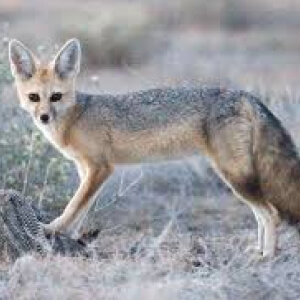
| Main predators | Foxes, polecats, snakes, birds of prey, dogs, humans |
| Conservation status | Domestic animal; many traditional breeds are rare |
| Distribution | Worldwide |
| Habitat | Farms, households, tropical forests (wild ancestor), rural and suburban areas |
- Primary category:Birds
- Explore this animal's categories:
Interesting facts
- Chickens can recognise the people who care for them - They have a good visual memory and can tell apart up to about 100 different faces, of other chickens and of people.
- A hen can make more than 30 different sounds - Chickens use different calls to signal danger, food or their mood.
- Chickens may dream - Studies have shown that chickens have REM sleep, the sleep stage linked with dreaming in humans.
- Roosters crow on schedule - Crowing is triggered not only by light but also by an internal body clock, so roosters crow before dawn even without any light.
- Hens talk to their chicks before they hatch - During the roughly 21 days of incubation, the hen makes soft calls, and the chicks inside the eggs can hear them and even peep back.
- Some eggs are enormous - Giant chicken eggs weighing more than 400 g, with several yolks, have been recorded.
- Chickens have a "pecking order" - This social ranking decides who gets first access to food, shelter and the best resting places.
- A chicken once lived without most of its head - Mike, the "headless chicken", survived for about 18 months in the 1940s because his brain stem was left intact.
- Birds, including domestic chickens, are living members of the dinosaur lineage. Chickens are not uniquely the closest living relatives of Tyrannosaurus rex.
- Egg colour depends on the breed - As a rule of thumb, hens with white earlobes lay white eggs and hens with red earlobes lay brown eggs. Some breeds lay blue or green eggs.
Records and remarkable features
- The domestic chicken (Gallus gallus domesticus) is a bird raised in many parts of the world. Hens and roosters are the females and males of the same domestic species, and their size, colour and behaviour vary between breeds.
Characteristics
Chickens are birds adapted to life both on farms and in semi-wild conditions. Their body, social behaviour and adaptability have made them the most numerous birds in the world.
Main physical features:
| Feature | Details |
|---|---|
| Size | 30 - 70 cm long |
| Weight | 1 - 4 kg (depending on breed) |
| Wings | Short; most chickens can only fly short distances |
| Plumage colour | Varies (white, black, red, buff, grey, speckled) |
| Lifespan | 5-10 years as pets, sometimes up to 15 years |
| Toes | 4 on each foot (some breeds have 5) |
| Movement | Walks and runs much more than it flies |
| Top speed | About 14 km/h |
Special adaptations:
- Varied plumage - Some breeds have dense feathers for cold climates, while others have sparser feathers that help them cope with heat.
- Wide vision - Chickens have a very wide field of view and notice small movements around them.
- Strong feet for scratching - Help them find food in the soil and defend themselves.
- Good visual memory - They can recognise many individuals and learn routes.
- Sensitive hearing - They pick up quiet sounds and recognise the alarm calls of other birds.
Habits and behaviour
Chickens are social birds that live in groups with a clear hierarchy. They are active birds that spend much of their time scratching the ground for food, communicating and defending their space.
Social behaviour:
- The pecking order - Chickens have a strict ranking, set through interactions and pecks.
- The rooster leads the flock - A rooster may live with about 5-15 hens and protects them from danger.
- Friendships - Some chickens prefer to spend time with the same individuals.
Communication:
- More than 30 distinct sounds - Chickens use different calls for danger, food or calling their chicks.
- Predator alarms - Roosters give different alarm calls for threats from the air and from the ground.
- Crowing - Not just a morning wake-up call but also a way of claiming territory and showing dominance.
Feeding habits:
- Opportunistic omnivores - Chickens eat seeds, insects, food scraps and even small animals such as mice or small snakes.
- Constant scratching - They scratch the soil for earthworms, seeds and small creatures, which also helps loosen the soil.
- Frequent drinking - Chickens need water often; they scoop it up and tilt their heads back to swallow.
Breeding habits:
- Laying varies - Some breeds lay almost every day, others mainly in certain seasons.
- Hens guard their eggs - A broody hen becomes protective and can be aggressive.
- Chicks follow their mother right after hatching - They quickly learn how to find food and avoid danger.
Habitat and geographic distribution
The chicken is the most widespread domestic bird in the world and has adapted to many climates and environments.
Habitat types:
| Habitat | Features |
|---|---|
| Industrial farms | Raised for eggs and meat in controlled housing. |
| Village households | More freedom to roam and a more varied diet. |
| Tropical forests | Habitat of the chicken's wild ancestor, the red junglefowl (Gallus gallus). |
| Towns and suburbs | Kept in back gardens and on small family farms. |
Geographic distribution:
- Chickens originally come from Southeast Asia but now live on every continent except Antarctica.
- The United States, China, Brazil and India are among the largest producers of chicken meat and eggs.
- In some places, domestic chickens have gone wild and formed free-living populations, for example in Hawaii and on other Pacific islands.
Human impact on chickens:
- Intensive breeding has produced breeds that lay many more eggs or grow much faster than traditional ones.
- Where they live wild, chickens can affect local ecosystems by eating native seeds and competing with other animals for food.
- Protecting traditional breeds - Some organisations work to preserve old, local breeds for their genetic diversity.
Diet and feeding
Chickens are opportunistic omnivores, which means they eat both plant and animal food. In natural conditions, they scratch the ground for food and eat a wide range of things that give them the nutrients they need for growth, egg-laying and good health.
Types of food:
| Food group | Examples |
|---|---|
| Grain and seeds | Maize, wheat, barley, oats, millet |
| Insects and other invertebrates | Earthworms, crickets, beetles, snails |
| Greens and vegetables | Lettuce, cabbage, spinach, carrots, pumpkin |
| Fruit | Apples, melons, strawberries, bananas |
| Food scraps | Cooked rice, vegetable peelings (bread only in small amounts) |
| Mineral supplements | Crushed eggshells, limestone grit, small stones |
Feeding methods:
- Scratching - Chickens use their feet to rake the soil and uncover insects or seeds.
- Pecking - Their strong beak can crack seeds and catch insects.
- Drinking - Chickens scoop up water and then lift their heads so it runs down their throat.
Feeding behaviour:
- Learning from others - Chicks learn from their mother and other adults which foods are safe to eat.
- Competition at mealtimes - In a flock, dominant chickens eat first.
- Extra food in winter - In cold weather, chickens need more energy-rich food to keep warm.
Reproduction and life cycle
Chickens have a well-defined life cycle, and many hens can lay eggs almost every day. Reproduction depends on the season, the breed and the living conditions.
Life cycle stages:
| Stage | Approximate timing | What happens |
|---|---|---|
| Egg | 21 days | Incubated by the hen or in an incubator. |
| Chick | 0 - 6 weeks | Fluffy; depends on its mother (or a heat lamp) for warmth. |
| Young bird | 6 - 18 weeks | Grows adult feathers and becomes independent. |
| Adult | From about 5 - 7 months | Hens start laying eggs and young roosters start crowing. |
Breeding behaviour:
- Eggs are incubated for 21 days - The hen sits on them and turns them regularly so that the embryos develop evenly.
- Mother and chicks communicate before hatching - The chicks can hear the hen and respond from inside the egg.
- The hen protects her chicks - She keeps them close, warms them and shows them where to find food.
- Roosters do not care for the chicks directly, but they protect the flock from predators and call hens to food.
Egg-laying:
- A hen can lay about 150 to more than 300 eggs a year, depending on the breed.
- Hens lay eggs even without a rooster - but without mating, the eggs are not fertilised and cannot hatch.
- Laying slows down with age - Hens are most productive in their first 2-3 years.
Name and history
The chicken is one of the oldest domestic birds. It was probably first kept for rituals and cockfighting and only later became an important source of food.
Origin of the name:
- The English word "chicken" comes from Old English cicen, meaning "young fowl".
- The scientific name Gallus gallus domesticus shows that the domestic chicken is a domesticated form of the red junglefowl, Gallus gallus; gallus is Latin for "rooster".
Taxonomic classification:
| Taxonomic rank | Name |
|---|---|
| Kingdom | Animalia |
| Phylum | Chordata |
| Class | Aves |
| Order | Galliformes |
| Family | Phasianidae |
| Species and subspecies | Gallus gallus domesticus |
The chicken in history and culture:
- Chickens were domesticated in Southeast Asia; recent research suggests this happened at least 3,500 years ago.
- Ancient Egypt - Chickens reached Egypt in the second millennium BC, where they were first seen as exotic birds.
- Spread through Europe - Chickens reached Europe in the first millennium BC, and the Romans spread them widely, raising them for food, eggs and cockfighting.
- The Middle Ages - Chickens were common farmyard birds, kept for eggs and meat.
- The rooster as a national symbol - In France, the Gallic rooster stands for vigilance and courage.
Chickens remain an essential part of farming and culture and have a great influence on economies and traditions around the world.
Cultural significance and mythology
Chickens are important symbols in many cultures and myths, standing for fertility, protection, courage and sacrifice. Throughout history, they have been part of rituals, superstitions and popular beliefs.
Chickens in myths and beliefs:
- Ancient Egypt - Hens became symbols of fertility, and roosters were linked with the sun.
- Ancient Rome - Priests kept sacred chickens and watched how they ate before important decisions and battles, to learn the will of the gods.
- China - The rooster is one of the animals of the Chinese zodiac and stands for honesty, punctuality and protection from evil spirits.
- Europe - In many traditions, the rooster's crow at dawn was believed to drive away ghosts and the forces of darkness.
- Superstitions - In some places, a hen that crows like a rooster was thought to bring bad luck.
What chickens and roosters symbolise:
- The hen - A symbol of fertility, motherhood and protection.
- The rooster - A symbol of courage, vigilance and pride; it appears on many flags and coats of arms, especially in France.
- Eggs - Linked with life, creation and rebirth, and especially important in Easter traditions.
Conservation status and threats
The domestic chicken is the most numerous bird on the planet, with more than 25 billion alive at any time, but many traditional breeds are rare because of industrial breeding and changes in farming.
Conservation status
| Group | Situation |
|---|---|
| Commercial laying and meat breeds | Extremely numerous, but genetically very uniform |
| Traditional European breeds (e.g. La Flèche, Andalusian) | Many are rare and supported by breed conservation groups |
| Local village breeds in Africa and Asia | Important for genetic diversity; some are declining |
| Red junglefowl (wild ancestor) | Least Concern, but wild populations mix with domestic chickens |
Main threats:
- Loss of genetic diversity - Most chickens raised today come from just a few lines selected for industrial production.
- Bird diseases - Outbreaks such as avian influenza can kill or force the culling of huge numbers of chickens.
- Welfare problems - Many chickens live on industrial farms with very little space.
- Predators - In the countryside, chickens are vulnerable to foxes, polecats and birds of prey.
- Climate change - Extreme heat affects egg-laying and chicken health.
Conservation efforts:
- Organisations such as the FAO and Slow Food support the protection of traditional breeds to stop them disappearing.
- Organic farms and small breeders keep local breeds, which are often better adapted to local conditions.
- Gene banks and breeding programmes help keep the genetic diversity of chickens for the future.
In popular culture
Chickens in literature:
- "The Purse with Two Coins" (Ion Creangă) - A Romanian folk tale in which a clever rooster finds a purse and outwits a greedy nobleman.
- "Chicken Little" - A classic folk tale about a chicken who panics and believes the sky is falling.
- "The goose (or hen) that laid the golden eggs" - A fable told in many versions about a bird that lays golden eggs, warning against greed.
Chickens in cartoons and video games:
- Looney Tunes - Foghorn Leghorn is a big, boastful rooster with a Southern American accent.
- The Legend of Zelda (Nintendo) - The game's chickens, called Cuccos, are famous for attacking the player in swarms if they are hit too many times.
- Minecraft - Chickens appear in the game and can be raised for eggs, feathers and meat.
Chickens as a cultural symbol:
- The Gallic rooster (France) - A national symbol of French pride and courage.
- Folk beliefs - In some places, it is said that if a hen shakes its feathers at the door, a visitor is coming.
The chicken remains one of the most iconic birds in the world, with a major economic, cultural and symbolic role in human society.