Arctic wolfInteresting facts and information
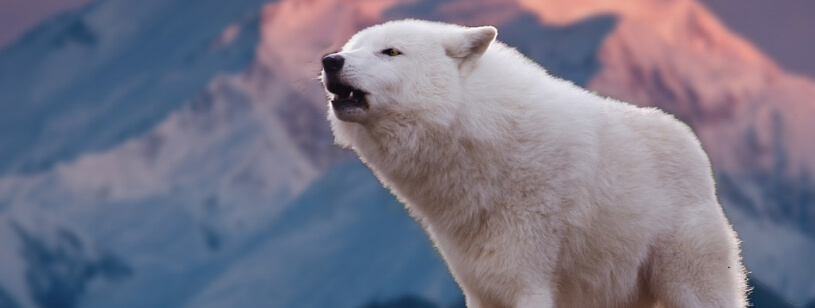
The Arctic wolf (Canis lupus arctos) is a form of grey wolf associated with the high Arctic of North America and Greenland. Its thick coat helps it cope with cold conditions, and it hunts prey available in its range.
Arctic wolves live in family packs and cooperate to hunt muskoxen, Arctic hares and caribou. Because they live so far from people, they are less threatened than most other wolves, but climate change could affect their prey.
Quick facts
| Common name | Arctic wolf |
| Scientific name | Canis lupus arctos |
| Typical lifespan | Usually about 7-10 years in the wild, up to about 17 years in captivity |
| Maximum speed | About 60 km/h in short bursts |
| Dimensions | About 64 - 80 cm at the shoulder; about 1-1.8 m long including the tail |
| Weight | About 30 - 70 kg (males are larger than females) |
| Diet type | Carnivore (muskoxen, Arctic hares, caribou, lemmings, birds) |
| Main predators | No regular natural predators apart from other wolves; people occasionally hunt them |
| Conservation status | Grey wolf: Least Concern (IUCN); the Arctic wolf is not assessed separately |
| Distribution | Canadian High Arctic islands and northern Greenland |
| Habitat | Arctic tundra, rocky plateaus and coastal areas |
- Primary category:Mammals
- Explore this animal's categories:
Interesting facts
- Life in the far north - Arctic wolves live in the Canadian High Arctic and northern Greenland, where winter brings months of darkness and temperatures down to about -50 °C.
- Built for the cold - Their thick, double coat and fur between the toes keep them warm, and their ears and muzzle are shorter than those of southern wolves.
- Howling across the tundra - Their howls carry far over the open, treeless land, helping pack members find each other.
- Huge meals - A wolf can eat about 9 kg of meat at one meal and then go for days without food.
- Vast territories - A pack may need a territory of more than 2,500 km² to find enough prey.
- Not afraid of people - Because they have rarely been hunted, some Arctic wolves on Ellesmere Island are unusually tolerant of people, which has allowed scientists to study them closely.
Records and remarkable features
- The Arctic wolf (Canis lupus arctos) is a form of grey wolf associated with the high Arctic of North America and Greenland. Its thick coat helps it cope with cold conditions, and it hunts prey available in its range.
- An ancient den - One rock den on Ellesmere Island may have been used by wolves for hundreds of years.
- The northernmost wolves - Arctic wolves live farther north than any other wolves.
Characteristics
The Arctic wolf (Canis lupus arctos) is a subspecies of the grey wolf with features that help it survive the extreme climate of the Arctic. Its white coat gives it good camouflage in the snow.
Main physical characteristics:
| Characteristic | Details |
|---|---|
| Size | About 64 - 80 cm at the shoulder; about 1-1.8 m long including the tail |
| Weight | About 30 - 70 kg (males larger than females) |
| Colour | White or very pale grey |
| Fur | Double and very thick |
| Ears | Small and rounded, to reduce heat loss |
| Tail | Bushy, used to cover the nose and face while sleeping |
| Feet | Large, with fur between the pads |
| Senses | Excellent smell and hearing, good eyesight |
Special adaptations:
- Insulating fur - An outer layer of long guard hairs and a dense, woolly undercoat keep in body heat.
- Furry feet - Fur between the toes and pads helps protect against the cold and grip the snow.
- A compact body - Shorter ears, muzzle and legs than southern wolves help reduce heat loss.
- Living on fat - Arctic wolves can survive days without food, using their fat reserves.
Habits and behaviour
Arctic wolves live in packs that are usually families. They cooperate to hunt, raise pups and defend their territory.
Social behaviour:
- Wild wolf packs are often families with breeding adults and their offspring. Pair bonds and breeding arrangements vary; captive dominance labels do not describe every wild pack.
- Strong family ties - Young wolves usually stay with their parents for 1-3 years before leaving to find a mate and territory of their own.
- Communication - Wolves use howls, whines, growls and body language; the position of the tail and ears shows mood and status.
Feeding and hunting methods:
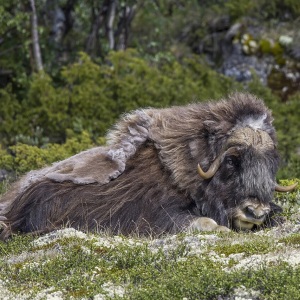
- Big prey - Arctic wolves hunt mainly muskoxen and Arctic hares, as well as caribou and lemmings.
- Teamwork - The pack works together to chase and surround prey; when muskoxen form a defensive circle, the wolves try to make them break and run.
- Feast or famine - Because prey can be scarce, wolves may go days without food and then eat a huge meal.
Defense and Survival Strategies:
- Long journeys - Arctic wolves may travel dozens of kilometres a day in search of food.
- Following prey - In the long, dark winter, they may follow herds of muskoxen and caribou over large areas.
- Shelter - In storms, they curl up in the snow with their tails over their faces, or shelter among rocks.
Habitat and geographic distribution
Arctic wolves live on the tundra of the far north, one of the harshest environments on Earth.
Habitat types:
| Habitat | Predominant regions |
|---|---|
| Arctic tundra | Canadian Arctic islands, northern Greenland |
| Arctic mountains and plateaus | Ellesmere Island and other islands of the Canadian High Arctic |
| Coastal areas | Coasts of the Arctic islands and Greenland |
Geographic distribution:
- Canada - The Queen Elizabeth Islands and other islands of the Canadian Arctic, such as Ellesmere Island.
- Greenland - The northern and north-eastern parts of Greenland.
- Related wolves - Other pale wolves live on the tundra of mainland Canada, Alaska and northern Russia, but they belong to other populations of grey wolves.
Impact of human activities on the Arctic wolf:
- Climate change - Changes in snow and ice can affect the muskoxen, caribou and hares they eat.
- Industry - Mining and oil and gas exploration may disturb some Arctic habitats in the future.
- Hunting - Because they live so far from people, Arctic wolves are hunted far less than most other wolves.
Arctic wolves are well adapted to their environment, but climate change could affect the ecosystem they depend on.
Diet and feeding
The Arctic wolf is a top predator that eats meat. Its diet depends on which prey is available, and it can survive long periods without food and then eat a lot at once.
Types of food consumed:
| Type of prey | Examples and context |
|---|---|
| Large mammals | Muskoxen, Peary caribou |
| Small mammals | Arctic hares, lemmings |
| Birds and eggs | Geese, ducks and their eggs in summer |
| Carrion | Dead animals, including remains of seals and other prey |
Feeding methods:
- Hunting as a team - Arctic wolves work together to bring down large prey.
- Endurance - They can follow a herd of caribou or muskoxen over long distances, looking for a weak animal.
- Nothing wasted - When food is scarce, they eat bones and skin as well as meat.
Adaptations for hunting:
- A strong bite - Powerful jaws can crush thick bones.
- Long legs and large paws - Help them move over ice and snow.
- Cooperation - Pack members coordinate their movements during a hunt.
Arctic wolves are skilled hunters, but when food is scarce they also scavenge.
Reproduction and life cycle
Arctic wolves usually raise fewer pups than wolves in warmer areas, because food is scarce. Usually only one pair breeds in each pack, and the other pack members help raise the pups.
Life cycle stages:
| Stage | Approximate duration | Characteristics |
|---|---|---|
| Mating | March - April | Wild wolf packs are often families with breeding adults and their offspring. Pair bonds and breeding arrangements vary; captive dominance labels do not describe every wild pack. |
| Gestation | About 63 days | The female uses a den in a rock cave or a hollow in the ground, because the frozen soil is hard to dig |
| Birth | May - June | Usually about 2-3 pups, sometimes more |
| Care of the pups | Several months | The pack brings food back for the pups and guards them |
| Sexual maturity | About 2 years | Some young wolves leave the pack to form their own |
| Lifespan | Usually about 7-10 years in the wild, up to about 17 years in captivity | Starvation and injuries are common causes of death |
Reproductive behavior:
- Wild wolf packs are often families with breeding adults and their offspring. Pair bonds and breeding arrangements vary; captive dominance labels do not describe every wild pack.
- Rock dens - Because the ground is frozen, pups are often born in rock caves or old dens used for generations.
- Learning through play - Pups develop their hunting skills by playing with each other and with older wolves.
Because of the harsh climate, many pups do not survive their first year, especially when prey is scarce.
Name and history
Because they live in such remote places, Arctic wolves have been studied much less than other wolves.
Origin and etymology of the name:
- "Arctic wolf" - It is also called the white wolf or polar wolf.
- The scientific name Canis lupus arctos - Canis means "dog", lupus means "wolf", and arctos comes from the Greek word for "bear", which also gave us the word "Arctic", referring to the stars of the Great Bear in the northern sky.
- The subspecies was scientifically described by the British zoologist Reginald Pocock in 1935.
Taxonomic classification:
| Taxonomic category | Name |
|---|---|
| Kingdom | Animalia |
| Phylum | Chordata |
| Class | Mammalia |
| Order | Carnivora |
| Family | Canidae |
| Genus | Canis |
| Species | Canis lupus |
| Subspecies | Canis lupus arctos |
The Arctic wolf in history:
- Polar explorers - European explorers of the Arctic in the 19th and early 20th centuries described the white wolves they met.
- Inuit traditions - For the Inuit, the wolf was a respected hunter, and Inuit stories tell of Amarok, a giant wolf that hunted people who went out alone at night.
- Modern research - Since 1986, the American biologist L. David Mech has studied the wolves of Ellesmere Island, watching them from very close.
Because they have had little contact with people, Arctic wolves have been much less affected by hunting than other wolves.
Cultural significance and mythology
For the peoples of the Arctic, the wolf was a respected and sometimes feared hunter. Because Arctic wolves live in such remote places, they have also become a symbol of untouched wilderness.
Arctic wolf in mythology and popular beliefs:
- Inuit mythology - Amarok, a giant lone wolf, appears in Inuit stories; in some versions it punishes hunters who do not respect the rules.
- North American Indigenous traditions - Many Indigenous peoples saw the wolf as a teacher and a symbol of family and good hunting.
- Norse mythology - Wolves such as Fenrir, Sköll and Hati appear in Norse myths; they are not Arctic wolves, but show how important wolves were to northern peoples.
The symbolism of the Arctic wolf:
- Strength and endurance - The Arctic wolf is a symbol of survival in extreme conditions.
- Wilderness - Living far from people, it stands for untouched nature.
- Family and teamwork - Its pack life is linked with family and cooperation.
Arctic wolves have had far less contact with people than grey wolves in other regions.
Conservation status and threats
The Arctic wolf is not considered threatened. It is hunted little and has no natural predators apart from other wolves, but climate change could affect its prey.
Conservation status
| Species / Subspecies | Status |
|---|---|
| Grey wolf (Canis lupus), including the Arctic wolf | Least Concern (IUCN); the Arctic wolf is not assessed separately |
Main threats:
- Climate change - Unusual weather, such as rain that freezes over the snow, can kill many muskoxen and hares, leaving wolves short of food.
- Industry - Mining and oil and gas exploration may disturb wolf territories in the future.
- Small populations - Arctic wolf populations are small and isolated, so they can be badly affected when prey numbers crash.
- Contact with people - More research stations, tourism and mining could bring wolves into more contact with people.
Conservation efforts:
- Research - Scientists use GPS collars and cameras to study Arctic wolves and their movements.
- Protected areas - National parks such as Quttinirpaaq on Ellesmere Island and the Northeast Greenland National Park protect their habitat.
- Careful development - Rules aim to limit the effects of industry and tourism on Arctic wildlife.
Arctic wolves are not in immediate danger, but scientists are watching the effects of climate change on them and their prey.
In popular culture
Arctic wolves in literature:
- L. David Mech's books, such as The Arctic Wolf: Living with the Pack (1988), describe years of watching wolves on Ellesmere Island.
- Nature books - Arctic wolves often appear in books about polar wildlife.
Arctic wolves on screen:
- Snow Wolf Family and Me (BBC, 2014) - A documentary in which the wildlife cameraman Gordon Buchanan follows a family of Arctic wolves on Ellesmere Island.
- Video games - White wolves are common enemies and companions in survival and fantasy games set in snowy lands.
Arctic wolves as a cultural symbol:
- Art - Arctic wolves are popular subjects for painters, photographers and sculptors.
- Logos - Some organisations and sports teams use the white wolf as a symbol of strength and the far north.