Prairie dogCynomys — habitat, diet and reproduction
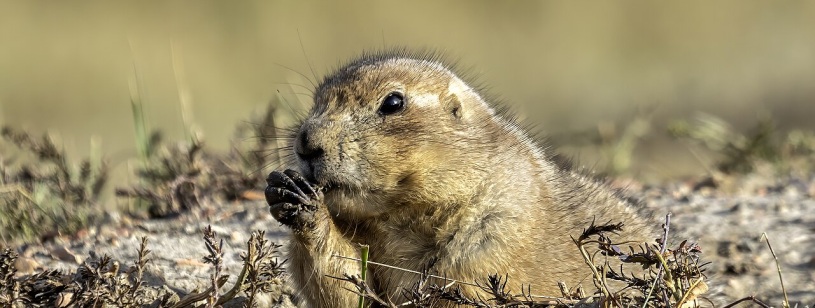
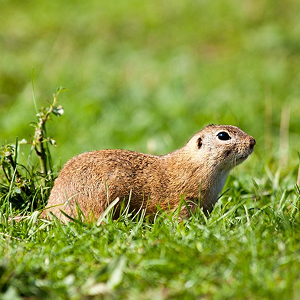
A black-tailed prairie dog, Cynomys ludovicianus, in Theodore Roosevelt National Park. · Acroterion / CC BY-SA 4.0 (https://creativecommons.org/licenses/by-sa/4.0). Cropped and resized.
Prairie dogs are social North American rodents, not miniature dogs. Members of the squirrel family, they dig burrows in open grasslands. The genus Cynomys contains five species. One familiar example, the black-tailed prairie dog, lives in colonies where warning calls help neighbours detect danger.
Quick facts
| Common name | Prairie dog; five species |
| Scientific group | Genus Cynomys; photograph shows Cynomys ludovicianus |
| Typical lifespan | C. ludovicianus: usually 3–4 years in the wild |
| Diet | Mainly herbivorous: grasses and other plants |
| Main predators | Coyotes, American badgers, black-footed ferrets and birds of prey |
| Conservation status | Varies by species; habitats and populations have declined |
| Distribution | North America |
| Habitat | Open grassland and prairie; some species use mountain meadows |
| Length | C. ludovicianus: approximately 30–41 cm |
| Weight | C. ludovicianus: approximately 0.5–1.4 kg |
| Family | Sciuridae |
| Reproduction | Usually one litter per year |
- Primary category:Rodents
- Explore this animal's categories:
Interesting facts
- Their dog-like name refers to barking calls.
- They are related to squirrels and marmots.
- Burrows contain tunnels and chambers with different uses.
- Abandoned burrows may shelter other animals, including owls.
Characteristics
A compact body, small ears and strong paws suit a burrowing life. Claws excavate soil, while brownish fur blends with earth and low vegetation.
The black-tailed species has a dark tail tip, with adults typically around 30–41 cm long and 0.5–1.4 kg. Other species differ in appearance and distribution. Standing upright to look around is shared behaviour, not a sufficient species identification.
Behaviour
Colonies are organised into family groups that defend particular territories. Living next door does not mean every animal belongs to one unrestricted family.
Much above-ground time involves watching for danger. Alarm calls can make neighbours pause, scan or retreat underground. Sounds, postures and scent all contribute to communication, helping these rodents live in open landscapes with many predators.
Habitat and distribution
Prairie dogs occur in North America, with different species occupying lowland prairie or higher mountain meadows. Soil must permit digging, while vegetation supplies food.
Entrance mounds provide lookout positions and can limit water entering the burrow. Habitat therefore includes both the grassland surface and underground chambers. A colony is more complex than the row of holes visible from a distance.
Diet and feeding
Grasses and other plants provide most food, with choices changing by season and availability. Moist plant parts also contribute water.
Prairie dogs sometimes clip plants they do not eat, maintaining a clearer view and reducing cover for approaching predators. Grazing and digging alter soil and vegetation. Their effects extend beyond removing grass, creating conditions useful to other organisms.
Reproduction and life cycle
Female black-tailed prairie dogs usually produce one litter annually. Pregnancy lasts about five weeks, and young are born inside the burrow.
They emerge after developing underground, gradually learning to forage and respond to group signals. Timing differs among species and regions. Some remain near relatives while others disperse to new territories or colonies, where suitable space must be found.
Name and history
The common name combines prairie habitat with barking sounds. Cynomys likewise means dog-mouse, although these animals are relatives of squirrels rather than domestic dogs or wolves.
Their colonies are often called towns because of the many entrances and busy surface activity. The name describes the observer’s impression rather than a human-like organisation of underground streets.
Conservation and threats
Grassland conversion, settlement expansion and eradication campaigns have reduced many colonies. Disease can also cause severe population declines.
Burrows shelter owls, other rodents and small organisms, while prairie dogs feed coyotes, badgers, raptors and black-footed ferrets. Their conservation preserves wider grassland relationships, but the status and needs of each species must be assessed separately.
Frequently asked questions
Is a prairie dog a kind of dog?
No. It is a rodent in the squirrel family, Sciuridae.
How many species are there?
The genus Cynomys contains five prairie dog species.
Why does it stand on its hind legs?
The posture helps it watch the surroundings and detect danger.
How do burrows help other animals?
Abandoned tunnels provide shelter or nesting sites, including for burrowing owls.