MinkInteresting facts and information
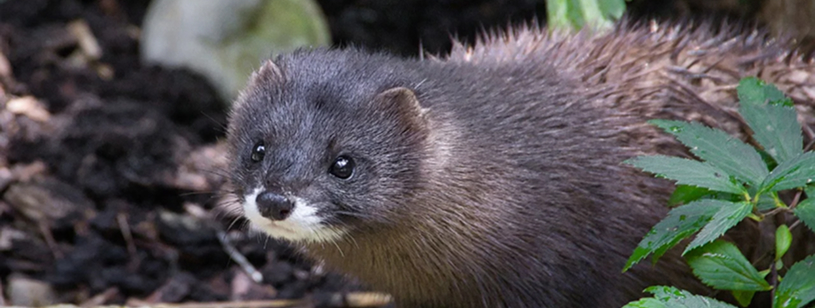
Mink are semi-aquatic mammals in the weasel family. The European mink (Mustela lutreola) and American mink (Neogale vison) are distinct species with different native ranges and conservation situations.
The American mink comes from North America but has been introduced to Europe and Asia, where it is invasive. The European mink is native to Europe but is now critically endangered, threatened by habitat loss and competition with the American mink.
Mink are skilled hunters with thick, water-repellent fur, which is why they have long been farmed and trapped for the fur trade.
Quick facts
| Common name | Mink |
| Scientific name | Mustela lutreola (European mink); Neogale vison (American mink) |
| Typical lifespan | A few years in the wild; about 10 years or more in captivity |
| Maximum speed | Varies with species or individual, distance and conditions |
| Size | About 30 - 50 cm (without tail) |
| The length of the tail | About 12 - 25 cm |
| Weight | About 0.5 - 2 kg (males are larger than females) |
| Diet type | Carnivore (fish, amphibians, rodents, birds, crayfish) |
| Main predators | Owls, eagles, foxes, lynxes, otters, people |
| Conservation status | Assess separately by species and population; different taxa and regions have different needs |
| Habitat | Rivers, lakes, marshes, coasts |
| Distribution (continents) | North America, Europe, Asia (invasive American mink) |
- Primary category:Mammals
- Explore this animal's categories:
Interesting facts
- Thick, glossy fur - Mink fur has a dense underfur and oily guard hairs that keep water out, which is why it was so valued by the fur trade.
- Swimming hunters - Mink dive after fish and other prey; most dives are short, usually less than half a minute.
- Small but fierce - Although mink weigh only about 0.5-2 kg, they can kill prey as large as ducks, rabbits and muskrats.
- A rare European species - The European mink has disappeared from most of its former range and is now one of Europe's most threatened mammals.
- Territories along water - Mink usually hold territories along rivers and lake shores, often a few kilometres long.
Records and remarkable features
- Mink are semi-aquatic mammals in the weasel family. The European mink (Mustela lutreola) and American mink (Neogale vison) are distinct species with different native ranges and conservation situations.
- The Danube Delta in Romania is home to one of the last important populations of the European mink.
Physical characteristics and adaptations
Mink are agile semi-aquatic predators, well adapted to hunting both in water and on land.
Distinguishing physical appearance
- A long, slim body - Lets them move quickly and slip into burrows and between rocks.
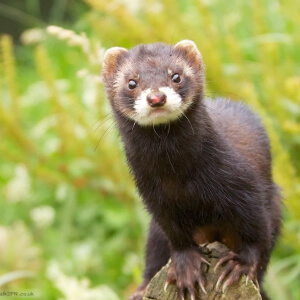
- Dense, water-repellent fur - Usually dark brown, keeping them warm and dry.
- Telling them apart - The European mink has white on both the upper and lower lip, while the American mink usually has white only on the chin and lower lip.
- Partly webbed feet - Help them swim.
- A bushy tail - Helps with balance and steering.
- Sharp teeth - Used to catch and kill prey.
Adaptations for hunting and survival
- A killing bite - Mink usually kill prey with a bite to the back of the head or neck.
- Camouflage - Their dark fur helps them stay hidden along riverbanks.
- Swimming - They swim well and dive to catch fish, frogs and crayfish.
- Agility on land - They can run, jump and climb to catch prey.
Habits and behaviour
Mink are solitary, territorial predators that rarely meet outside the breeding season.
Life mode and daily routine
- Active at dusk and night - Mink are most active around dawn, dusk and at night, though they can be seen by day.
- Patrolling their territory - They travel along banks searching for food.
- Scent marking - They mark their territory with strong-smelling secretions.
- Dens near water - They use old burrows of other animals, holes among tree roots or rock piles.
Social behaviour and interactions
- Solitary - Mink usually live alone, except for mothers with young.
- Territorial - They defend their areas, especially from mink of the same sex.
- Mothers raise the young alone - Males do not help.
Defence strategies
- Escaping into water - When threatened, mink dive or hide in dense vegetation.
- A bad smell - Like other weasels, mink can release a strong-smelling liquid from glands near the tail.
- Fighting - When cornered, they defend themselves fiercely.
Habitat and geographic distribution
Mink always live near water, along rivers, streams, lakes, marshes and coasts.
Geographical distribution
| Region | Species and habitats |
|---|---|
| North America | American mink (native) - USA and Canada, rivers, lakes, marshes and coasts |
| Europe (introduced American mink) | Many countries, including Britain, Scandinavia, Germany, Poland and Romania |
| Europe (native European mink) | Small populations in northern Spain, western France, the Danube Delta (Romania), Ukraine and Russia; reintroduced in Estonia |
| Asia (introduced American mink) | Parts of Russia, China and Japan |
Habitats
- Rivers and streams - Especially those with thick vegetation along the banks.
- Marshes and wetlands - Rich in fish, frogs and other prey.
- Coasts - American mink also hunt along rocky seashores.
Habitat threats
- Loss of wetlands - Drainage and the straightening of rivers reduce their habitat.
- Pollution - Pollution of rivers reduces fish and amphibians, their main prey.
- The American mink - In Europe, escaped American mink compete with the European mink and have helped push it towards extinction.
Diet and feeding
The mink is an opportunistic predator that eats fish, amphibians, small mammals, birds and crustaceans, hunting both on land and in water.
What do mink eat?
| Food type | Examples |
|---|---|
| Fish | Perch, trout, small pike and other fish |
| Amphibians | Frogs, newts |
| Small mammals | Mice, voles, water voles, rats, young rabbits, muskrats |
| Birds and eggs | Ducks, moorhens, chicks of water birds, eggs |
| Crustaceans and invertebrates | Crayfish, crabs, water insects |
Hunting methods
- Diving - Mink swim and dive to catch prey underwater.
- Surprise attacks - On land, they creep up and pounce on prey.
- Storing food - They sometimes store extra prey in their dens.
- A quick bite - They grab prey by the neck or head and kill it quickly.
Food behaviour
- Mink need a lot of food for their size.
- They eat mainly fresh prey, but sometimes also carrion, especially in winter.
- Surplus killing - Sometimes they kill more animals than they can eat, for example in poultry houses or bird colonies.
Reproduction and life cycle
Mink breed once a year, in late winter or early spring.
Breeding and birth
| Characteristic | Details |
|---|---|
| Sexual maturity | About 10-12 months |
| Breeding season | About February - April |
| Gestation | 40-75 days (American mink may have delayed embryo implantation) |
| Number of young | Usually 3-6, sometimes up to 10 |
| Nursing | About 6-8 weeks |
| Independence of young | At about 3 months |
Reproductive behaviour
- Rough mating - The male holds the female by the neck with his teeth during mating.
- Mothers alone - The female raises the young without help from the male.
- Helpless young - The kits are born blind and almost naked and depend completely on their mother.
- Learning to hunt - At about two months, the young start following their mother and learning to hunt.
Longevity
- In the wild, most mink live only a few years.
- In captivity, they can live about 10 years or more.
Name and history
Origin of the name "Mink"
- The English word "mink" probably comes from a Scandinavian word, such as the Swedish dialect word mänk.
Taxonomic Classification
| Kingdom | Animalia |
|---|---|
| Phylum | Chordata |
| Class | Mammalia |
| Order | Carnivora |
| Family | Mustelidae |
| Genus | Neogale (American mink), Mustela (European mink) |
History and documentation
- Fur farms - In the 20th century, American mink were taken to Europe and Asia to be farmed for their fur; many escaped or were released.
- An invasive species - Wild American mink are now widespread in Europe, where they harm water voles, ground-nesting birds and the European mink.
- COVID-19 - In 2020, Denmark culled about 17 million farmed mink after a coronavirus variant spread between mink and people.
Cultural significance and mythology
The mink is best known for its fur, which became a symbol of luxury, and it also appears in some traditional stories.
Mink in history and traditions
- A symbol of luxury - In the 20th century, especially in the 1950s, a mink coat was a symbol of wealth and glamour.
- Indigenous stories - In stories of some Indigenous peoples of the Pacific Northwest of North America, Mink is a mischievous trickster character.
- The fur debate - Today, the mink is at the centre of debates about fur farming, and several countries have banned it.
Mink in cultural symbolism
| Context | Meaning |
|---|---|
| 20th-century fashion | Luxury and glamour |
| Pacific Northwest stories | A trickster character |
| Animal welfare movement | A symbol of the campaign against fur farming |
| Conservation in Europe | The European mink, a symbol of disappearing wetland wildlife |
Conservation status and threats
European mink - critically endangered
The European mink (Mustela lutreola) is one of the most threatened mammals in Europe; it has disappeared from most of its former range during the last century.
Main threats to the European mink
- The American mink - Larger and more adaptable, the American mink competes with the European mink for food and territory.
- Habitat loss - Drainage of wetlands and changes to rivers have destroyed much of its habitat.
- Water pollution - Pollution reduces its prey.
- Past hunting and accidents - Hunting for fur in the past, and road deaths and trapping today, have reduced populations.
Conservation status (IUCN)
| Species | Status |
|---|---|
| Neogale vison (American mink) | Least Concern; invasive in Europe and Asia |
| Mustela lutreola (European mink) | Critically Endangered |
Conservation efforts
- Captive breeding - European mink are bred in captivity in several countries and released into the wild, for example on the Estonian island of Hiiumaa.
- Controlling American mink - Some countries trap American mink to protect native wildlife.
- Protecting wetlands - Projects restore rivers and wetlands, including in the Danube Delta.
In popular culture
Because of its luxurious fur, the mink often appears in films, fashion and debates about animal welfare.
Mink in films and television
- "That Touch of Mink" (1962) - A romantic comedy starring Cary Grant and Doris Day; the title refers to the luxury of mink furs.
- Nature documentaries describe the damage caused by American mink in Europe.
Mink in modern culture
- Fashion - Mink coats and stoles were once a sign of high status, especially among Hollywood stars.
- Animal rights - Campaigns against fur often use the mink as a symbol.