Common carpCyprinus carpio — habitat, diet and reproduction
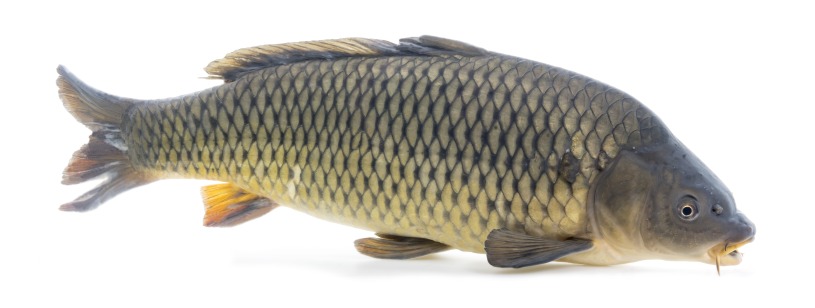
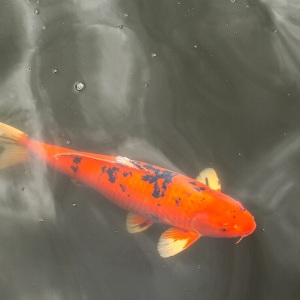
Common carp (Cyprinus carpio). · Sam Stukel / U.S. Fish and Wildlife Service, public domain
The common carp (Cyprinus carpio) is an omnivorous freshwater fish with a sturdy body, a long dorsal fin and two pairs of barbels beside its mouth. It favours still or slow-moving water and often searches for food on the bottom. People have raised carp in ponds for centuries, both for food and for recreational fishing.
Quick facts
| Common name | Common carp |
| Scientific name | Cyprinus carpio |
| Lifespan | About 13–20 years in the wild; some individuals live longer |
| Length | Usually measured in tens of centimetres; very large individuals can exceed 1 m |
| Weight | Varies with age and conditions; large fish can exceed 10 kg |
| Diet | Omnivorous: aquatic invertebrates, seeds and other plant material |
| Predators | Predatory fish and fish-eating birds, especially for young carp; other fish also eat the eggs |
| Conservation status | Least Concern (LC), globally |
| Distribution | Native to Eurasia; introduced widely elsewhere |
| Habitat | Lakes, ponds and slow river reaches, often with soft bottoms and vegetation |
| Family | Cyprinidae |
| Reproduction | Sticky eggs laid on plants in shallow water |
Interesting Facts
- Carp can find food in mud. Their sensitive barbels and downward-facing mouths help them search the bottom.
- Their grinding teeth are in the throat. These pharyngeal teeth help process food.
- Mirror carp are the same species. They have fewer, larger, irregularly arranged scales.
- Feeding can change a habitat. Carp stir up sediment and may uproot shallow-rooted plants.
Records and Extremes
Very large carp can exceed one metre, although this is exceptional. Growth varies with age, food and water conditions. FishBase lists a maximum reported age of 38 years, which should not be confused with the usual lifespan. Angling records are a separate, changing record of catches.
Characteristics
Common carp usually have large scales, an olive or brown back, bronze-gold sides and a paler underside. Body shape varies: some fish are relatively elongated, while selected farmed forms may have a deeper body.
| Feature | What to look for |
|---|---|
| Barbels | Two pairs close to the mouth. |
| Mouth | Thick lips, directed downwards for bottom feeding. |
| Dorsal fin | A long fin extending along much of the back. |
| Scales | Usually numerous; fewer and irregular in mirror carp. |
Common carp and grass carp are different species. Grass carp are Ctenopharyngodon idella; the word “carp” is used for several kinds of fish and does not identify a species by itself.
Behaviour
Carp may gather in groups and spend much of their time searching soft bottoms for food. They also feed higher in the water when food is available there.
They tolerate murky water and low oxygen better than many other fish. This helps them occupy varied habitats, but they still depend on oxygen dissolved in the water.
Habitat and Distribution
The species has a Eurasian native range and has been spread far beyond it by people. Carp have a long history in the natural waters and fishponds of Central and Eastern Europe. In Romania, they occur in the Danube and its delta, reservoirs and slow-moving lowland rivers.
They favour lakes and slow-moving river reaches. Shallow, vegetated areas provide feeding and spawning habitat. Many populations in Australia and North America originated from introductions rather than natural expansion.
Diet and Feeding
Common carp are omnivores. They eat insect larvae, worms, molluscs, small crustaceans, seeds and other plant material. The balance depends on what is available.
They suck up bottom material and sort edible particles from the rest, often raising a cloud of sediment. They may also take surface insects or fish eggs. Cereals used in fish farming are only one part of the wider range of foods carp can use.
Reproduction and Life Cycle
In temperate regions, spawning usually takes place in spring and early summer as the water warms. Adults gather in shallow water, where eggs are fertilised externally and attach to vegetation.
| Stage | Development |
|---|---|
| Eggs | Numerous sticky eggs are laid on plants. Hatching takes several days, depending on temperature. |
| Larvae and juveniles | Young fish begin with tiny food organisms and use larger prey as they grow. |
| Maturity | In many temperate populations, males mature at about 2–4 years and females at 3–5 years. Local conditions affect these ages. |
Only a small proportion of the many eggs and larvae survives to adulthood. Other animals eat the eggs and young fish. Water conditions, temperature, vegetation and predators influence breeding success.
Name and History
The accepted scientific name is Cyprinus carpio, described by Carl Linnaeus in 1758. It belongs to the family Cyprinidae.
Romans held carp in ponds, and medieval European monasteries helped develop pond culture. Selection across generations produced farmed forms with differing appearances. Carp remain important for aquaculture and recreational fishing; these uses also helped spread them beyond their native range.
Conservation and Threats
Common carp are currently classified globally as Least Concern (LC). The IUCN 2024 change table records the move from Vulnerable to LC as a non-genuine change: it reflects assessment or information changes, rather than demonstrating a recent recovery across all populations. Older sources may retain the former category.
Where introduced carp become abundant, their feeding can stir sediment, release nutrients and reduce aquatic vegetation. The effects depend on fish density and habitat conditions.
The global category does not describe every local population. Protecting native freshwater habitats and managing introduced populations are separate conservation questions.
Frequently asked questions
Are common carp freshwater fish?
Yes. Their main habitats are lakes, ponds and slow-moving rivers.
What do they eat?
Aquatic invertebrates, seeds and other plant material, depending on availability.
What are the barbels for?
They are sensory structures that help detect food near the mouth and bottom.
How long do they live?
Around 13–20 years in the wild, with some individuals living longer.
How large can they grow?
Very large individuals can exceed one metre, but size varies greatly with age and conditions.
Are mirror carp a separate species?
No. They are a form of common carp with fewer, larger, irregularly arranged scales.
When do carp spawn?
Usually in spring and early summer in temperate regions, in shallow vegetated water.
Are common carp endangered?
Their current global category is Least Concern. Local populations still require their own assessment.