AnacondaInteresting facts and information
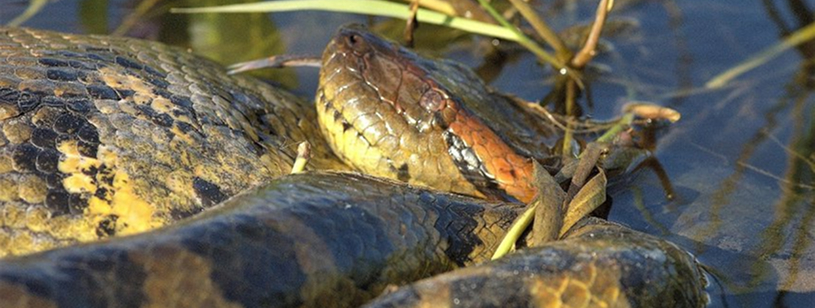
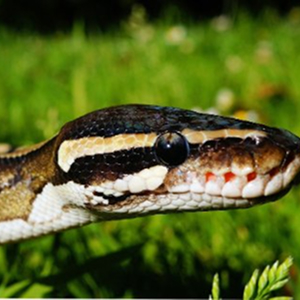
Anacondas are non-venomous, semi-aquatic snakes in the genus Eunectes. They live in tropical South America. They capture prey with their mouths and may kill it by constriction, which compresses the body and disrupts circulation.
The genus includes the green anacondas, the largest and best known, as well as the smaller yellow anaconda and other, less known species. In 2024, scientists described the northern green anaconda as a separate species.
Because of their size and strength, anacondas have become the subject of many myths and legends and are often shown as giant monsters in films.
Quick facts
| Common name | Anaconda |
| Scientific name | Eunectes (genus) |
| Typical lifespan | About 10-30 years in the wild; more than 30 years in captivity |
| Length | Size varies by species and sex; females of large species can reach several metres |
| Weight | Up to about 100 kg or more in the largest green anacondas |
| Maximum speed | Faster in water than on land |
| Diet type | Carnivore (mammals, birds, reptiles, fish) |
| Main predators | Jaguars and large caimans; humans |
| Conservation status | Assess separately by species and region; habitat damage and hunting affect some populations |
| Habitat | Rivers, swamps, flooded grasslands and forests of tropical South America |
Interesting facts
- The heaviest snake - The green anaconda is the heaviest snake in the world; the largest females can weigh around 100 kg or more.
- At home in water - Anacondas spend much of their time in water, where they move far more easily than on land, and can stay submerged for about 10 minutes.
- Constriction, not venom - Anacondas are not venomous; they grab prey with their teeth, coil around it and squeeze until its blood circulation stops.
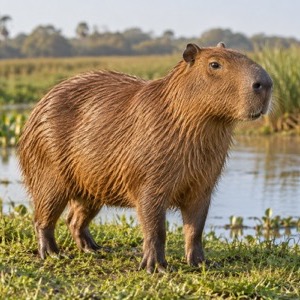
- Large meals – Larger anacondas can swallow substantial prey, including capybaras and other vertebrates, but diet varies by size and habitat. Related profile: Roe deer.
- Females are much bigger - Female anacondas are much larger than males and can weigh several times as much.
- Live birth - Anacondas do not lay eggs; the young develop inside the mother and are born alive.
- Long fasts - After a very large meal, an anaconda may not need to eat for weeks or even months.
- Jaguars are among the few predators that can kill an adult anaconda, although even jaguars usually avoid very large ones.
Records and remarkable features
- Length - Reliable measurements of green anacondas reach about 5-6 metres; reports of much longer snakes have never been confirmed.
- Heavy snakes – Green anacondas are among the heaviest living snakes; an exact record needs a documented measurement.
- Big prey - Large anacondas have been recorded eating capybaras, deer and caimans.
- Live young – Female anacondas give birth to live young; litter size varies with species and individual condition.
- A new species - In 2024, scientists described the northern green anaconda (Eunectes akayima) as a species separate from the southern green anaconda.
- Long-lived - Anacondas can live for more than 30 years in captivity.
Physical characteristics and adaptations
The anaconda is one of the most impressive snakes in the world, with a body built for life in water and for overpowering large prey.
Distinctive appearance
- A thick, muscular body - Anacondas have a heavy body covered in small, smooth scales.
- Eyes and nostrils on top of the head - They can watch and breathe while almost completely under water.
- Camouflage colours - The green anaconda (Eunectes murinus) is olive-green with black oval spots, which helps it hide in murky water and vegetation.
- Belly scales - Broad belly scales help it move over muddy banks and through vegetation.
Survival adaptations
- Breathing in water - Nostrils on top of the snout, which can be closed, let the anaconda stay almost submerged.
- Powerful constriction - Strong muscles let it squeeze prey until the blood flow stops.
- Stretchy jaws - The jaw bones are joined by stretchy ligaments, so it can swallow animals much wider than its head.
- Slow metabolism - After a large meal, it can go without food for a long time.
Habits and behaviour
The anaconda is a solitary ambush predator that spends much of its time in or near water.
Hunting behaviour
- Ambush - The anaconda does not chase prey but waits hidden in water or vegetation and strikes by surprise.
- Constriction - It grabs prey with its backward-curved teeth, then quickly coils around it and squeezes.
- Swallowing prey – An anaconda swallows food whole. The time needed for digestion depends on the meal and temperature. Related profile: Snake.
Interaction with other animals
- People - Despite their reputation, there are very few reliable records of anacondas attacking people.
- Predators and competitors – Young anacondas are vulnerable to several predators. Large adults have fewer natural enemies, but the jaguar is not the only animal that can threaten them.
- Caimans - Anacondas and caimans compete for food, and each may sometimes eat the other.
Life and Reproductive Mode
- Solitary - Except in the breeding season, anacondas live alone.
- Active day and night - They often bask by day and hunt at night or whenever prey comes near.
- Breeding season - Males find females by following scent trails.
Habitat and geographic distribution
Anacondas live only in tropical South America and on the island of Trinidad, in rivers, swamps and flooded grasslands.
Geographic distribution
| Region | Anaconda species present |
|---|---|
| Amazon and Orinoco basins | Green anacondas (Eunectes murinus, Eunectes akayima) |
| Venezuela, Colombia, the Guianas and Trinidad | Green anacondas |
| North-eastern South America | Eunectes deschauenseei (dark-spotted anaconda) |
| Paraguay, Bolivia, southern Brazil, northern Argentina | Eunectes notaeus (yellow anaconda) |
| Northern Bolivia | Eunectes beniensis (Beni anaconda) |
Habitat types
- Rivers and swamps - Anacondas are semi-aquatic and spend much of their lives in water.
- Flooded grasslands - The llanos of Venezuela and the Pantanal of Brazil are important anaconda habitats.
- Lakes and slow streams - They prefer calm, shallow water, where they can wait for prey.
Habitat pressures
- Deforestation - The loss of forests and wetlands reduces their habitat.
- Water pollution - Chemicals and mining pollution harm rivers and wetlands.
- Hunting - Anacondas are killed for their skins and out of fear.
Diet and feeding
The anaconda is a carnivorous predator that eats many kinds of animals. Its prey gets larger as the snake grows.
What does the anaconda eat?
| Type of prey | Examples |
|---|---|
| Large mammals | Capybaras, deer, peccaries, tapirs (young) |
| Small mammals | Rodents, opossums, monkeys |
| Birds | Ducks, herons, ibises and other water birds; occasionally flamingos |
| Reptiles | Caimans, turtles, iguanas, other snakes |
| Fish | Large freshwater fish |
Feeding methods and hunting techniques
- Ambush - The anaconda hides in water or dense vegetation and attacks when prey comes close.
- Constriction - It seizes its prey with its teeth and squeezes it with its coils until it dies.
- Flexible jaws - Its jaws stretch so it can swallow animals much larger than its head.
- Slow digestion - A big meal can take days or weeks to digest.
Reproduction and life cycle
In anacondas, the females are much larger than the males, and several males often try to mate with the same female.
Breeding and birth
| Characteristic | Details |
|---|---|
| Sexual maturity | About 3-4 years |
| Breeding season | Usually in the dry season, before the rains |
| Gestation | About 6-7 months |
| Number of young | Usually about 20-40, sometimes more |
| Reproduction type | Live-bearing: the young develop inside the mother and are born alive |
| Size at birth | About 60-80 cm long |
Reproduction
- "Breeding balls" - Several males wrap around one female, sometimes for weeks.
- Competition - The males push and wrestle, and the female mates with one or more of them.
- Cannibalism - Females have sometimes been seen eating a male after mating, which may help them through the long pregnancy without food.
Raising young
- No parental care - The young are independent from birth.
- High mortality - Many young anacondas are eaten by caimans, birds of prey, jaguars and other predators.
- Fast growth - Young anacondas grow quickly in their first years.
Name and history
Origin of the name "Anaconda"
- The word "anaconda" probably comes from a Sinhalese or Tamil name used in Sri Lanka for a large python, perhaps meaning "elephant killer"; Europeans later applied it to the giant snakes of South America.
- The genus name Eunectes comes from Greek and means "good swimmer".
Taxonomic classification
| Kingdom | Animalia |
|---|---|
| Phylum | Chordata |
| Class | Reptilia |
| Order | Squamata |
| Family | Boidae |
| Genus | Eunectes |
Historical and cultural accounts
- Scientific documentation - The green anaconda was first described by Carl Linnaeus in 1758, under the name Boa murina.
- Explorers' tales - European explorers brought back many exaggerated stories of giant anacondas.
Cultural significance and mythology
Because of its huge size and power, the anaconda has an important place in the myths and legends of South America, both as a creator and protector of waters and as a dangerous monster.
Anaconda symbolism
| Culture | Meaning |
|---|---|
| Tukano and other peoples of the north-west Amazon | In origin stories, the first people travelled up the rivers inside a giant anaconda-canoe |
| Brazilian folklore | The Boiúna or Cobra Grande, a giant river serpent, is said to live in the Amazon |
| Amazonian peoples | The anaconda is often linked with water, rivers and fertility |
| The modern world | Associated with brute force, mystery and danger |
Beliefs about the anaconda
- Stories of anacondas over 10 metres long are common, but none has ever been confirmed with a reliable measurement.
- A popular belief says anacondas can hypnotise prey with their stare, but this has no scientific basis.
Conservation status and threats
Anacondas are not considered globally threatened, but habitat loss and hunting can affect local populations.
Main threats
- Habitat loss - Deforestation and the draining of wetlands reduce the rivers and swamps where anacondas live.
- Hunting and trade - Anacondas are hunted for their skins and caught for the exotic pet trade.
- Fear - In many rural areas, anacondas are killed out of fear, although they rarely harm people.
- Pollution - Mining and farm chemicals pollute their rivers.
Conservation status
| Species | Status |
|---|---|
| Eunectes murinus (green anaconda) | Widespread; not considered threatened |
| Eunectes notaeus (yellow anaconda) | Widespread; heavily harvested for skins in some areas |
| Eunectes deschauenseei (dark-spotted anaconda) | Little known |
| Eunectes beniensis (Beni anaconda) | Little known |
Conservation efforts
- Protected areas - Reserves in the Amazon, the Pantanal and the llanos protect anaconda habitats.
- Trade controls - International trade in anacondas and their skins is controlled under CITES.
- Education - Programmes teach local communities about the role of anacondas in ecosystems.
In popular culture
Because of its huge size, the anaconda has appeared in many films, books and songs, usually shown much larger and more aggressive than it really is.
Anaconda in books
- Explorers' stories - Books by early explorers of the Amazon often included tales of giant snakes.
- Adventure novels - The anaconda is a common danger in jungle adventure stories.
Anaconda in films and television
- "Anaconda" (1997) - The best-known film about the snake, featuring a giant anaconda that hunts people, followed by several sequels.
- Documentaries - Many nature programmes show anacondas hunting and their "breeding balls".
Anaconda in music and digital culture
- "Anaconda" (2014) - A hit song by Nicki Minaj.
- Memes and symbols - The anaconda is often used online as a symbol of strength and danger.