OwlInteresting facts and information
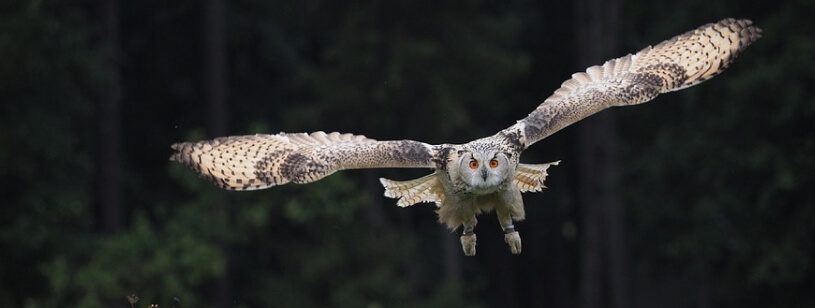
Owls are birds of prey in the order Strigiformes. Many hunt at night or at dusk, but some are active during daylight. Their vision, hearing and flight adaptations differ among species; they cannot see without any light at all.
Owls occur on every continent except Antarctica. Different species use different combinations of sight and hearing. Large eyes use available light; they do not allow vision in total darkness.
Some owls use habitats near people, while others depend on particular forests, grasslands or other environments. Habitat loss and poisoning threaten some populations.
Quick facts
| Common name | Owl |
| Scientific name | Strigiformes |
| Typical lifespan | Often 5-15 years in the wild; large owls can live 20-30 years or more in captivity |
| Length | About 13 cm - 84 cm |
| Weight | About 40 g - 4.5 kg |
| Diet type | Carnivorous (small mammals, birds, reptiles, insects, fish) |
| Main predators | Larger owls, eagles, hawks and mammals; varies by species and life stage |
| Conservation status | Assess separately by species and population; some owls are seriously threatened |
| Distribution | On all continents except Antarctica |
| Living environment | Forests, grasslands, mountains, deserts, tundra, towns and cities |
- Primary category:Birds
- Explore this animal's categories:Animals of AfricaAnimals of AsiaAnimals of AustraliaAnimals of EuropeAnimals of North AmericaAnimals of RomaniaAnimals of Romania’s forestsAnimals of Romania’s gardens and parksAnimals of South AmericaBirdsBirds of preyBirds of RomaniaBirds that winter in RomaniaCamouflaged animalsCarnivoresEgg-laying animalsFeathered animalsFlying animalsForest animalsInsect-eating animalsNocturnal animalsOPredatory animals of RomaniaVertebratesWild animals
Interesting facts
- Owls can turn their heads about 270 degrees - Special blood vessels and extra neck bones let them twist their heads very far without cutting off the blood supply to the brain.
- Silent flight - Soft, fringed feathers break up the flow of air over the wings, so many owls fly almost silently and can surprise their prey.
- A snake impression - When disturbed in its burrow, the burrowing owl can make a hissing sound that resembles a rattlesnake, scaring away predators.
- Owls cannot move their eyes - Their eyes are tube-shaped and fixed in the skull, so owls must turn their whole head to look around.
- From the Arctic to the desert - The snowy owl (Bubo scandiacus) lives on the Arctic tundra, while the burrowing owl (Athene cunicularia) nests underground in open grasslands and deserts.
Records and remarkable features
- The largest owls - Blakiston's fish owl and the Eurasian eagle-owl are the heaviest owls, weighing up to about 4.5 kg, while the great grey owl is the longest.
- The smallest owls - The elf owl of North America weighs only about 40 g, about as much as a large egg.
- The owl with the best hearing - The barn owl (Tyto alba) can catch mice in complete darkness, using sound alone.
- Flight speed differs between owl species and conditions.
- Long-lived - Large owls can live for more than 20-30 years in captivity, and some eagle-owls have lived even longer.
Physical characteristics and adaptations
Owls have a compact, muscular body built for hunting, often at night. Their soft feathers allow them to fly almost without a sound.
Key physical adaptations
- Large, tube-shaped eyes - Many owls see extremely well in dim light, but their eyes are fixed in place, so they must turn their heads to look in different directions.
- Exceptional hearing - In many owls, one ear opening is higher than the other, which helps them pinpoint the exact position of a sound.
- Silent wings - Comb-like edges on the flight feathers and a velvety surface reduce the noise of flight.
- Strong beak and sharp talons - Used to catch and kill prey quickly.
- A very flexible neck - Owls can turn their heads about 270°, making up for their fixed eyes.
What do owls look like?
| Characteristic | Details |
|---|---|
| Colour | Brown, grey, white or reddish, with camouflage patterns |
| Length | About 13 cm - 84 cm |
| Weight | About 40 g - 4.5 kg |
| Wingspan | About 27 cm - 2 m |
| Eyes | Large, yellow, orange or dark brown |
| Beak | Short, hooked and sharp |
Habits and behaviour
Owls are birds of prey that spend much of their time resting hidden or waiting for prey.
Daily life
- Mostly nocturnal - Most owls hunt at night or at dusk, using their excellent hearing and eyesight; some, such as the snowy owl and the northern hawk owl, also hunt by day.
- Territorial - Many owls defend a territory all year, calling to warn off rivals.
- Opportunistic hunters - They catch whatever suitable prey is available.
- Camouflage - Their patterned feathers help them blend in with tree bark and branches during the day.
Specific behaviours
- Hunting from a perch or in flight - Many owls wait on a branch and swoop down on prey, while others quarter low over fields.
- Pellets - Owls cough up pellets of the bones, fur and feathers they cannot digest.
- Calls - Owls make many different sounds, from deep hoots to screeches, whistles and hisses.
- Hiding in plain sight - Some owls, such as the Eurasian scops owl (Otus scops) and long-eared owl, stretch their bodies thin and raise their ear tufts to look like a broken branch.
Survival strategies
- Silent flight to surprise prey.
- Camouflage to hide from predators and from mobbing songbirds.
- Fast, precise attacks with their talons.
- A flexible diet that lets them live in many habitats.
Habitat and geographic distribution
Owls live on every continent except Antarctica, in habitats ranging from dense forests to deserts, tundra and cities.
Distribution context
| Region | Notable species | Habitat examples |
|---|---|---|
| North America | Great horned owl (Bubo virginianus) | Forests, deserts, cities |
| Europe | Tawny owl (Strix aluco) | Woods, parks |
| Africa | Pel's fishing owl (Scotopelia peli) | Rivers and wetlands |
| Asia | Collared owlet (Glaucidium brodiei) | Mountain forests |
| Australia and New Zealand | Boobook owls, such as the morepork (Ninox novaeseelandiae) | Forests and woodlands |
| Arctic | Snowy owl (Bubo scandiacus) | Tundra |
Habitat types
- Forests - Home to most owl species.
- Towns and cities - Some owls, such as the tawny owl and the barn owl, live in parks, gardens and old buildings.
- Deserts and savannas - Owls such as the burrowing owl and the desert eagle-owl live in dry, open country.
- Mountains - Some owls live high in the mountains, such as the Himalayas.
Environmental change
- Cutting down old forests removes the hollow trees many owls need for nesting.
- Artificial light and traffic make hunting harder.
- Pesticides and rat poisons kill owls that eat poisoned prey.
Diet and feeding
Owls are carnivores that eat small mammals, birds, reptiles, amphibians, insects and, in some species, fish. They are very skilful hunters, using their sight and especially their hearing to find prey in dim light.
What do owls eat?
| Food group | Examples of prey |
|---|---|
| Small mammals | Mice, voles, rats, squirrels, young rabbits |
| Birds | Sparrows, pigeons, starlings, ducks |
| Reptiles and amphibians | Lizards, frogs, small snakes |
| Insects and other invertebrates | Beetles, moths, crickets, earthworms |
| Fish (only in some species) | Caught with the talons by fish owls and fishing owls |
Hunting methods
- Silent flight - They approach without a sound to surprise prey.
- Strike with the talons - They seize prey with their powerful feet.
- Waiting on a perch - Many owls watch and listen from a branch or post.
- Hunting on the ground - Some species, such as the burrowing owl, catch insects and rodents on the ground.
Ecological role
- Controlling rodents - A single barn owl family can eat thousands of rodents a year, so farmers often welcome them.
- Balance in the ecosystem - As predators, owls help keep populations of small animals in check.
Reproduction and life cycle
Owls breed in many different ways, but most species are monogamous, and many pairs stay together for years.
Breeding season
- Most owls breed in late winter, spring or summer, depending on the species and climate.
- Males attract females with calls, and some perform display flights.
- Pairs often use the same territory and nest site year after year.
Egg laying and raising owlets
| Stage | Duration | Characteristics |
|---|---|---|
| Choosing a nest | Weeks before laying | Most owls do not build nests; they use tree holes, old nests of other birds, buildings or the ground |
| Egg laying | 1-12 eggs | Depending on the species and the amount of food |
| Incubation | About 21-36 days | Usually the female incubates, and the male brings her food |
| Hatching | Sequential | Eggs may hatch at different times, so chicks can differ in size and compete for food. |
| Independence | From a few weeks to several months after leaving the nest | Young owls develop hunting skills as they grow and become independent. |
Adaptations for survival
- Laying many eggs in good years - In years with plenty of voles or lemmings, some owls lay many more eggs.
- Parents feed the young until they can hunt for themselves.
- Owlets are born covered with white down that keeps them warm.
- Young owls call loudly to tell their parents they are hungry.
Name and history
Origin of the name
- The English word "owl" comes from Old English ūle, which probably imitated the bird's call.
- The order name Strigiformes comes from the Latin strix, "owl", a word also used for a screeching night bird in Roman legends.
- In other languages, owls are called hibou or chouette in French and Eule in German.
Taxonomic classification
| Classification | Name |
|---|---|
| Kingdom | Animalia |
| Phylum | Chordata |
| Class | Aves |
| Order | Strigiformes |
| Families | Tytonidae (barn owls), Strigidae (typical owls) |
| Species | About 250 species |
Evolution and fossils
- Owls are an ancient group: the oldest known owl fossils are about 60 million years old.
- Early owls lived in the Paleocene, soon after the dinosaurs died out.
- Their closest living relatives are still debated, but they are not closely related to hawks and eagles.
Cultural significance and mythology
Owls have been powerful symbols in the myths and folklore of many cultures, linked with wisdom in some and with death and bad luck in others.
Owls in myths and symbolism
- Owls appear with Athena on ancient Greek coins; a British Museum example shows Athena on one side and an owl on the other.
- Ancient Rome - The Romans saw the owl's call as a bad omen, said to have been heard before the deaths of several emperors.
- Hinduism - A white owl is the vehicle of Lakshmi, the goddess of wealth.
- Japan - The Japanese word for owl, fukurō, sounds like "no hardship", so owls are popular good-luck charms.
- The Ainu of Japan - Blakiston's fish owl was honoured as a god, the protector of the village.
Conservation status and threats
Many owl species are common, but others are declining fast because of human activities.
Main pressures
- Deforestation - The loss of old forests removes nesting holes and hunting areas.
- Pesticides and rat poisons - Owls that eat poisoned prey can be poisoned themselves.
- Light pollution - Bright lights can disturb owls and their prey.
- Vehicle collisions - Many owls are hit by cars while hunting along roads.
- Illegal hunting and trade - In some regions, owls are killed for superstitious beliefs, traditional medicine or the pet trade.
Protection efforts
| Measure | Organization / Action |
|---|---|
| Protection of natural habitats | Protecting old forests and wild grasslands |
| Limits on toxic poisons | Government rules and conservation groups |
| Nest boxes | Nest boxes for barn owls, tawny owls and other species |
| Education and awareness | Campaigns against superstitions and illegal hunting |
Threatened species
- Blakiston's fish owl (Ketupa blakistoni) - Endangered; one of the rarest large owls, with probably fewer than about 2,000 in the wild.
- Snowy owl (Bubo scandiacus) - Listed as Vulnerable; climate change may affect its lemming prey.
- Northern spotted owl - Threatened in the United States because of logging of old forests and competition with the barred owl.
Owls in popular culture
Owls appear in literature, art, films and cartoons, often as symbols of mystery and wisdom.
Owls in literature and art
- Hedwig - Harry Potter's snowy owl is one of the most famous owls in modern culture.
- Aesop's fables - The owl often appears as a wise adviser.
- Ancient art - Owls were painted on cave walls in France more than 30,000 years ago and appear in Egyptian hieroglyphs.
Owls in movies and cartoons
- Legend of the Guardians: The Owls of Ga'Hoole (2010) - An animated film based on Kathryn Lasky's books about warrior owls.
- Winnie-the-Pooh - Owl is a wise, if rather pompous, friend of Pooh.
- The Secret of NIMH (1982) - The Great Owl is a wise and mysterious character in this animated film.
Owls as symbols
- Learning - The owl is a symbol of many universities, schools and libraries.
- Duo - The green owl Duo is the mascot of the language-learning app Duolingo.
- Art and jewellery - Owls are popular in sculpture, painting and jewellery.