South China tigerInteresting facts and information
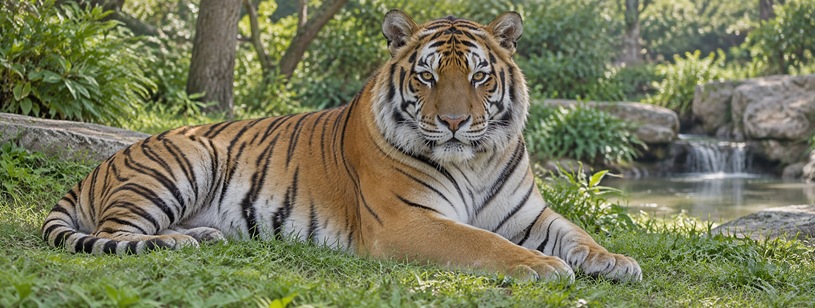
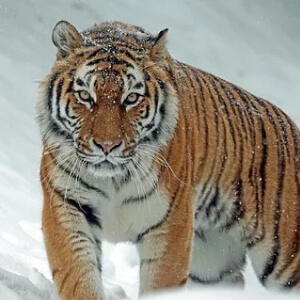
AI illustration of south china tiger.
The South China tiger once lived in the forests of southern China, but today it survives only in captivity. No wild South China tiger has been confirmed for decades, and it is considered extinct in the wild, but more than 150 live in Chinese zoos and breeding centres.
Its traditional name is Panthera tigris amoyensis. All captive South China tigers descend from just six wild-caught tigers, so careful breeding is needed to keep them healthy and genetically diverse.
Quick facts
| Species | Panthera tigris |
| Traditional subspecies name | Panthera tigris amoyensis |
| Two-subspecies classification | Panthera tigris tigris; subspecies boundaries are under review |
| Class / order / family | Mammalia / Carnivora / Felidae |
| Distribution | Formerly southern and central China; today only in captivity |
| Habitat | Historically forests and wooded hills; today, zoos and breeding centres |
| Diet | Carnivorous (historically deer and wild pigs) |
| Size | One of the smaller tigers; males about 130–175 kg, females about 100–115 kg |
| Social organisation | Mainly solitary; the female raises the cubs |
| Gestation | Approximately 100–106 days |
| Independence of young | Usually around two years old, with variation |
| Conservation | Considered extinct in the wild; survives in captivity |
Interesting facts
- Extinct in the wild, but not gone. No wild South China tiger has been confirmed for decades, but more than 150 live in Chinese zoos and breeding centres.
- All from a few ancestors. Today's captive South China tigers descend from only six wild-caught tigers, so avoiding inbreeding is a major challenge.
- DNA checks ancestry. Genetic tests showed that some "South China" tigers in zoos had ancestors from other tiger populations.
- A famous fake photo. In 2007, a farmer's photos of a wild South China tiger caused excitement in China, but they turned out to show a paper poster of a tiger.
- Still a wild animal. A tiger raised by people remains a wild animal and is not domesticated.
Characteristics
It has orange fur, dark stripes and white areas on the face and underside. It is one of the smaller tigers: males weigh about 130–175 kg and females about 100–115 kg.
Its build is that of a predator: powerful shoulders, large paws, retractile claws and meat-eating teeth. Whiskers provide information about contact near the muzzle.
| Feature | Role |
| Individual stripe patterns | Camouflage and individual recognition |
| Canines and jaws | Grasping prey |
| Retractile claws | Gripping, marking and protecting claws while walking |
| Flexible body | Quiet movement and short attacks |
Its stripes are often described as broader and more widely spaced than those of Bengal and Siberian tigers. Because appearance alone can mislead, breeding programmes also use pedigree records and DNA tests.
It is considered close to the ancestral form of tigers, and some scientists have suggested that tigers first spread from this part of Asia.
Habits and behaviour
Like other tigers, South China tigers live mainly alone. Females with cubs and breeding encounters are the main exceptions. Communication includes scent signals, scratches, roars and shorter sounds.
Almost everything known about living South China tigers comes from animals in human care. In zoos, feeding times and enclosures influence when they are active.
Modern care provides hiding places, room to move and activities that encourage tigers to use their sense of smell and explore.
Behaviour is crucial for any return to the wild: a released tiger must be able to hunt and avoid danger on its own.
Habitat and geographic distribution
It once lived across southern and central China, in forests and wooded hills with plenty of cover and prey.
Its situation can be summed up in two parts:
- Historical natural habitat: forests and other covered landscapes in southern China.
- Where it lives today: zoos and breeding centres in China.
A site for returning tigers to the wild would need enough prey, space, connections between forests and protection, as well as support from local communities.
In the early 2000s, a project called Save China's Tigers took a few South China tigers to a reserve in South Africa to learn to hunt, and cubs were born there.
Diet and feeding
The South China tiger is carnivorous, like other tigers. In the wild, it hunted mainly hoofed mammals, such as deer and wild pigs.
Tiger hunting combines stalking, a slow approach and a short attack. Powerful paws and jaws help bring down prey. Efficient hunting requires experience as well as instinct and strong teeth.
In zoos, keepers plan each tiger's diet. Being fed by people is very different from hunting independently, so tigers for any future release must first learn to hunt.
Bringing tigers back would also require forests with enough deer and wild pigs to feed them.
Reproduction and life cycle
As in other tigers, gestation lasts approximately 100–106 days. Cubs are born with closed eyes and depend on their mother's milk and protection. Later they begin eating meat and exploring.
In captive populations, breeding pairs are chosen carefully to avoid mating close relatives. A studbook records parents and offspring, and DNA tests help check these records.
| Objective | Why it matters |
| Healthy cubs | Maintaining the population |
| Carefully planned pairings | Limiting breeding between close relatives |
| Checking ancestry | Retaining the population’s conservation value |
| Long-term monitoring | Tracking health and breeding success |
A genetic study published in 2024 examined many captive South China tigers and found low genetic diversity, but also ways to manage it better.
Name and history
“South China” refers to the region where it once lived. The traditional name is Panthera tigris amoyensis, from Amoy, the old name of the city of Xiamen, where the first scientifically described tiger came from (1905).
The two-subspecies classification includes it in the mainland Panthera tigris tigris group. Taxonomy remains under review, but all tigers belong to the same species, Panthera tigris.
In the 1950s, there were still about 4,000 South China tigers, but campaigns that treated them as pests killed thousands. Hunting was banned in 1979, too late: no wild tiger has been confirmed since about the 1980s.
Cultural significance and mythology
The tiger is one of the most important animals in Chinese culture. It is one of the twelve animals of the Chinese zodiac, and the White Tiger is one of the Four Symbols of the Chinese constellations.
The marks on a tiger's forehead are said to look like the Chinese character 王 (wáng), meaning "king", which is why the tiger is called the king of the animals.
Conservation status and threats
The South China tiger is considered extinct in the wild, or very likely so, and survives only in captivity.
The main risks for the captive population are inbreeding and loss of genetic diversity. Genetic research helps keepers plan pairings.
Returning tigers to the wild would require suitable habitat, enough prey, healthy tigers with checked ancestry, training in hunting and monitoring after release.
Breeding centres have prevented the complete loss of the South China tiger. Bringing it back to China's forests remains a long-term goal.
Discover other tigers
Read about Tiger or explore: Sumatran tiger · Bengal tiger · Siberian tiger · Indochinese tiger · Malayan tiger.
Frequently asked questions
- Does the South China tiger still exist? Yes, more than 150 live in captivity, mainly in Chinese zoos. No wild population has been confirmed for decades.
- Is it completely extinct? No. It is considered extinct in the wild, but tigers survive in human care.
- Where did it live naturally? In the forests and wooded hills of southern and central China.
- What does it eat? It is carnivorous. In the wild, it hunted mainly deer and wild pigs; in zoos, keepers plan its diet.
- What is its scientific name? The species is Panthera tigris; the traditional subspecies name is Panthera tigris amoyensis. The two-subspecies classification includes it in mainland Panthera tigris tigris.
- Why does genetic diversity matter? All captive South China tigers descend from six wild-caught tigers, and inbreeding can cause health and breeding problems.
- How long is gestation? As in other tigers, approximately 100–106 days. Cubs are born dependent on their mother.
- Can zoo tigers simply be released? No. They would need suitable habitat, enough prey, training in hunting and careful monitoring.