Carpathian red deerInteresting facts and information
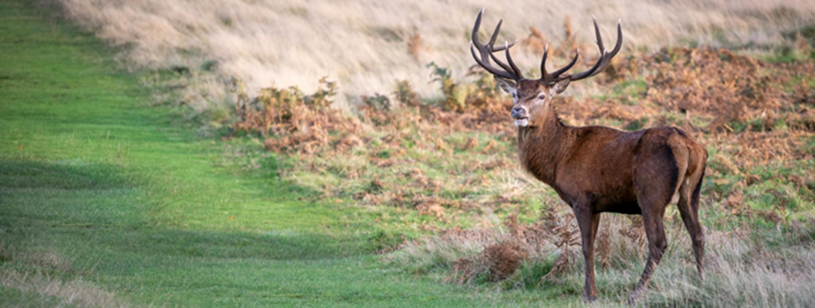
Carpathian red deer are red deer (Cervus elaphus) living in the Carpathian region. They use forests and neighbouring feeding areas, and males grow and shed antlers. Regional names and subspecies classifications differ between references; the name alone does not establish a separate species.
Male Carpathian red deer grow antlers used in display and competition. Red deer can form social groups outside the breeding season; they should not be described as universally solitary.
Carpathian red deer face pressures that differ between places, including hunting, disturbance and habitat change. Local monitoring is needed to describe population trends.
Quick facts
| Common name | Carpathian red deer |
| Scientific name | Cervus elaphus |
| Typical lifespan | About 12-18 years in the wild, more than 20 years in captivity |
| Maximum speed | Varies with species or individual, distance and conditions |
| Size | About 110 - 150 cm (height at the shoulder) |
| Weight | About 150 - 300 kg (stags), 80 - 150 kg (hinds) |
| Diet type | Herbivore (grasses, herbs, leaves, shoots, acorns, fruit) |
| Main predators | Wolves, lynx, bears (calves), humans (by hunting) |
| Conservation status | Red deer: Least Concern (IUCN); Carpathian populations managed by hunting |
| Habitat | Mountain forests, meadows and clearings, lower forests in winter |
| Distribution (continents) | The Carpathian region of Europe; the wider red deer species has a broader range. |
- Primary category:Mammals
- Explore this animal's categories:
Interesting facts
- Famous antlers - Carpathian stags are known for large, heavy antlers; the antlers of big old stags can weigh more than 10 kg.
- Loud roaring - In autumn, stags roar loudly to challenge rivals and attract females; the sound can be heard a long way through the forest.
- Good senses - Red deer have an excellent sense of smell and hearing, which help them detect danger early.
- Antlers show condition - Stags in good health and with good food usually grow larger antlers.
- Good jumpers - Red deer can jump fences and obstacles about 2 metres high.
Records and remarkable features
- Male red deer grow antlers that are shed and replaced; size varies with age, nutrition and individual condition.
- Trophy stags - Romania and the Carpathian region are famous for some of the largest red deer antlers in Europe.
- New antlers every year - Antlers are among the fastest-growing tissues of any mammal, growing a new set in just a few months.
Physical characteristics and adaptations
Carpathian red deer are large, strong deer adapted to life in mountain forests.
Distinguishing physical appearance
- A large body - Big stags can weigh more than 250 kg, while females are much smaller.
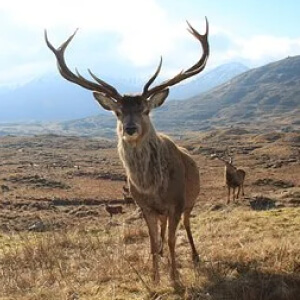
- Branched antlers - Carpathian stags often have large, heavy antlers with many points; antlers more than 1 metre long are possible.
- Seasonal coat - In summer the coat is reddish-brown; in winter it becomes thicker, longer and greyish-brown.
- A pale rump patch - Red deer have a light patch on the rump and a short tail.
- Long legs - Their long, strong legs allow them to run and jump well.
Adaptations for survival
- Renewable antlers - Stags shed their antlers in late winter or spring and grow new ones by late summer.
- Camouflage - The brown coat helps deer blend in with the forest.
- Sharp senses - Red deer rely on smell, hearing and sight to detect predators.
- Saving energy in winter - In winter, red deer lower their activity and metabolism to use less energy.
Habits and behaviour
Red deer are social animals; their groups change with the seasons, food and the mating period.
Social structure and hierarchy
- Stag groups - Outside the rut, adult males often live in small groups of stags, while old stags may live alone.
- Female groups - Females (hinds) and their young form groups, often led by an older female.
- Fights between males - During the rut, stags compete by roaring, walking side by side and clashing antlers.
Communication and territorial signals
- Roaring in autumn - During the rut, stags roar loudly, especially at dawn and dusk.
- Marking - Stags thrash bushes and rub trees with their antlers and use scent glands, for example near the eyes.
- Alarm signals - When alarmed, red deer may bark, raise their heads and run off.
Defending strategies against predators
- Running - Red deer can run at around 50 km/h and jump over obstacles.
- Camouflage - Their coat helps them blend in with the forest.
- Hiding in dense forest - When disturbed, deer retreat to thick forest or steep slopes.
Habitat and geographic distribution
Carpathian red deer live in the forests of the Carpathian Mountains and nearby hills; red deer as a species live across much of Europe and parts of Asia and North Africa.
Geographical distribution
| Region | Countries and areas |
|---|---|
| Eastern and Southern Carpathians | Romania, Ukraine |
| Western Carpathians | Slovakia, Poland, Czech Republic |
| Carpathian foothills and the Pannonian Basin | Hungary, Serbia |
| Romanian Western Carpathians | Apuseni Mountains, Banat Mountains (Romania) |
Habitats
- Mountain forests - They prefer beech, oak, mixed and coniferous forests, where they find food and shelter.
- Meadows and clearings - In summer, deer feed in mountain meadows and forest clearings.
- Lower areas in winter - In winter, many deer move down to lower forests, where there is less snow.
Habitat threats
- Deforestation - Logging reduces food and shelter for deer.
- Poaching - Illegal hunting, especially of trophy stags, is a problem in some areas.
- Habitat fragmentation - Roads, fences and new buildings block the movements of deer.
- Disturbance - Too many people in the forest, especially during the rut, can disturb deer.
Diet and feeding
Red deer are herbivores that eat grasses, herbs, leaves, shoots, fruits and bark, depending on the season.
What do Carpathian red deer eat?
| Food type | Examples of plants eaten |
|---|---|
| Grasses and herbs | Mountain meadow grasses and flowering plants |
| Leaves and shoots | Oak, beech, birch, raspberry and other shrubs |
| Fruits and seeds | Acorns, beech nuts, chestnuts, wild apples, berries |
| Bark and twigs | Young trees, especially in winter |
| Other plants | Ferns, heather, bramble leaves in winter |
Method of feeding
- Grazing in open areas - In spring and summer, deer feed in meadows and clearings, where grass is fresh and nutritious.
- Browsing - In autumn and winter, they eat more shoots, bark and leaves of shrubs and trees.
- Building reserves - In autumn, acorns and beech nuts help deer build up fat for winter.
Food behaviour
- Choosing food - Deer pick the most nutritious plants and parts of plants.
- Feeding at dawn and dusk - Red deer feed mostly at dawn, dusk and at night, especially where people disturb them.
- Salt and minerals - Deer visit salt licks and mineral-rich places, which are important for growing antlers.
Reproduction and life cycle
Red deer mate in autumn, during the rut, when stags roar and fight for groups of females.
Breeding and birthing of calves
| Characteristic | Details |
|---|---|
| Sexual maturity | About 1.5 - 2.5 years (females); males usually mate only from about 5 years old |
| Breeding season | September - October |
| Gestation | About 8 months |
| Number of calves per birth | 1 calf (twins are rare) |
| Nursing | About 4 - 7 months |
| Birth interval | Usually 1 year |
Reproductive behaviour
- Roaring - Stags roar to attract females and warn off rivals.
- Fights between males - Evenly matched stags lock antlers and push; the winner gains access to a group of hinds, called a harem.
- Choice of mates - Hinds tend to prefer stags that roar often and loudly.
Childbirth and rearing
- Spring births - Calves are born in May - June, when food is plentiful.
- Spotted calves - Calves have spotted coats that help them hide in vegetation.
- Nursing and growth - Calves start to eat plants after a few weeks, but continue to suckle for several months.
- Hidden calves - For the first days, the mother hides her calf in tall grass or bushes and returns to feed it.
Longevity and Survival
- In the wild, red deer usually live about 12-18 years, but few stags reach old age because of hunting.
- Females usually live longer than males, which use a lot of energy and get injured during the rut.
- In captivity, they can live more than 20 years.
Name and history
Origin of the name "Carpathian red deer"
- The English word "deer" comes from the Old English dēor, which originally meant any wild animal; the scientific name Cervus is Latin for "deer".
- "Carpathian" refers to the Carpathian Mountains; in German it is called "Karpatenhirsch" and in Romanian "cerb carpatin".
Taxonomic Classification
| Kingdom | Animalia |
|---|---|
| Phylum | Chordata |
| Class | Mammalia |
| Order | Artiodactyla |
| Family | Cervidae |
| Genus | Cervus |
| Species | Cervus elaphus |
| Subspecies | Sometimes named Cervus elaphus montanus; not recognised by all authorities |
History and cultural importance
- Prehistory - Red deer have been hunted since prehistoric times, and their bones and antlers are found at many archaeological sites in Europe.
- Tools - Prehistoric people used red deer antlers to make tools, such as picks for digging.
- Hunting traditions - In the Carpathians, red deer hunting has long been part of aristocratic and modern hunting traditions.
Cultural significance and mythology
The red deer has been an important symbol in Europe for thousands of years, linked with nobility, renewal and the forest.
Deer in mythology and folklore
- Romanian carols - In Romanian folk carols (colinde), the stag is a magical animal, and in some regions people perform a stag mask dance, called "cerbul", at New Year.
- Ancient gods - In Roman mythology, deer were linked with Diana, goddess of hunting, and the Celts worshipped Cernunnos, a god with deer antlers.
- Saint Hubert - According to legend, Saint Hubert, patron saint of hunters, saw a stag with a shining cross between its antlers and changed his life.
Deer in cultural symbolism
| Culture | Meaning |
|---|---|
| Romanian folklore | Magical stag in carols and New Year customs |
| Hungarian legend | The "Wondrous Stag" that led the brothers Hunor and Magor to a new homeland |
| Medieval Europe | A noble animal on coats of arms |
| Christian tradition | Linked with Saint Hubert and Saint Eustace |
Conservation status and threats
The red deer as a species is listed as Least Concern by the IUCN, and the Carpathian populations are large, but they are affected by hunting, poaching and habitat change.
Main threats to Carpathian red deer
- Poaching - Illegal hunting, especially of large trophy stags, affects some populations.
- Habitat loss - Logging reduces feeding and shelter areas.
- Climate change - Changes in weather may affect plant growth and food supplies.
- Habitat fragmentation - Roads and settlements block deer movements and increase the risk of collisions with vehicles.
- Unbalanced hunting - Shooting too many large stags can change the age and sex structure of populations.
Conservation status (IUCN, International Union for Nature Conservation)
| Region | Status |
|---|---|
| Red deer (whole species) | Least Concern (IUCN) |
| Carpathians | Large, generally stable populations, managed by hunting |
| Romania | Game species with regulated hunting seasons |
| National parks | Protected from hunting in parks such as Retezat |
Conservation efforts
- Hunting rules - In Carpathian countries, red deer hunting is allowed only in set seasons and with quotas.
- Protected areas - Several Carpathian national parks protect red deer, for example Retezat National Park in Romania.
- Monitoring - Researchers count deer and use GPS collars to study how they move.
- Large predators - Wolves, bears and lynx still live in the Carpathians and help keep deer populations healthy.
In popular culture
Red deer appear in films, festivals, art and video games as symbols of wild nature and nobility.
Deer in movies and television
- "Bambi" (1942) - The famous Disney film about a young deer; Bambi is a white-tailed deer in the film, but his story is loved across Europe.
- Nature documentaries - Films about the Carpathians often show red deer roaring during the autumn rut.
Deer in literature and mythology
- "The Wondrous Stag" - In Hungarian legend, a magical stag leads the brothers Hunor and Magor to a new land.
- Golden Stag - Brașov in Romania hosted the "Golden Stag" (Cerbul de Aur) international music festival, named after the deer.
Deer in video games and digital culture
- "Red Dead Redemption 2" - Players can hunt deer and use their skins and antlers.
- "The Elder Scrolls V: Skyrim" - Deer and elk live in the game's forests and can be hunted for food and materials.